Reviewed · TOURS
Hidden Gems Tour: visit 5 unforgettable places from Amsterdam
Quiet towns, big Dutch ideas, in one day. This 5-stop outing runs beyond central Amsterdam to places that feel like they belong to another pace of life. I love that it mixes real small towns with hands-on engineering and oddball curiosities, and it keeps you moving at a comfortable rhythm for an 8 hours 30 minutes day.
Two things I especially like. First, the group stays small, with a maximum of 7 travelers, so your guide can actually pace the day around the group. Second, the stops are chosen for variety, from the oldest working planetarium to a church crypt with mummies, plus a serious water-management stop at Afsluitdijk. One drawback to weigh: it is not recommended for people with limited physical movement, since you’ll be walking at several sites.
If you get lucky with the guide, it can make a big difference. In past departures, guides such as Simon, Adrian, and Jan have been praised for clear English and for explaining how the Netherlands got built with windmills and dikes and dams. Expect a day that is more story-driven than checklist sightseeing.
In This Review
- Quick take: what makes this 5-stop route work
- A smarter way to see beyond central Amsterdam
- Small-group comfort, snacks, and a guide who actually connects the dots
- Stop 1: De Rijp, a real village that looks like an open-air museum
- Stop 2: Schermerhorn windmills and how draining land works
- Stop 3: Franeker’s Koninklijk Eise Eisinga Planetarium, the oldest working one
- Stop 4: Wieuwerd mummies in the church crypt, a true curiosity stop
- Stop 5: Afsluitdijk, the dyke that reshaped the water
- Price and value: where the $155 really goes
- What the 9:00 schedule feels like on the ground
- Who should book this, and who should skip it
- Should you book this 5-stop Amsterdam day trip?
- FAQ
- How long is the tour?
- What time does it start?
- Where does the tour meet, and where does it end?
- Is the tour in English?
- How many people are in the group?
- Are admission tickets included?
- What about food and lunch?
- Is there air conditioning on the vehicle?
- Is it suitable for limited physical movement?
- Is the tour dependent on weather?
- What is the cancellation policy?
Quick take: what makes this 5-stop route work
- Small group day with a maximum of 7, which helps at quieter sites.
- Admission fees are included for the mill, the planetarium, and the mummy crypt, so you do not nickel-and-dime your way through.
- Aged-in-place highlights, like De Rijp’s golden-age townhall vibe and the planetarium’s long run since the 1700s.
- A truly Dutch contrast between draining land with wind power and reshaping water with the Afsluitdijk.
- Comfort built in, since there is an air-conditioned vehicle and snacks included.
A smarter way to see beyond central Amsterdam
Amsterdam is great, but it is only one slice of the country. This tour uses Amsterdam as a starting point, then shifts you into Dutch countryside and Friesland province, where you can see how people have lived with water, and how that shaped daily life.
What makes the day feel good is the mix of types of places. You get classic town walking time, then you get technical, hands-on sights like a working windmill and a dyke with big views. Then you finish with two unusual stops that break up the monotony of more canals and more museums.
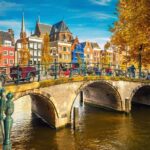
Also flying a pennant in Amsterdam


Small-group comfort, snacks, and a guide who actually connects the dots
This runs as an English-language tour with a maximum of 7 people, and it uses an air-conditioned vehicle. That matters on a day like this because the schedule includes multiple transfers, and comfort makes those transit windows feel less painful.
You also get a snack pack, and water is often provided as part of the onboard setup. That is not a minor detail. When your day includes several short stops, snacks help you stay steady without hunting for food immediately at each location.
And the guide quality shows up in the way the day is described. Guides like Simon, Adrian, and Jan have been singled out for being welcoming and for explaining Dutch history in plain language, especially the country’s water-management systems. If you like understanding why a place looks the way it does, this format fits.
Stop 1: De Rijp, a real village that looks like an open-air museum
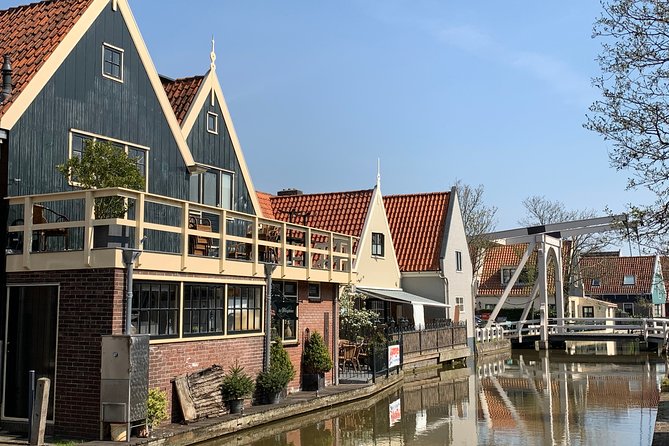
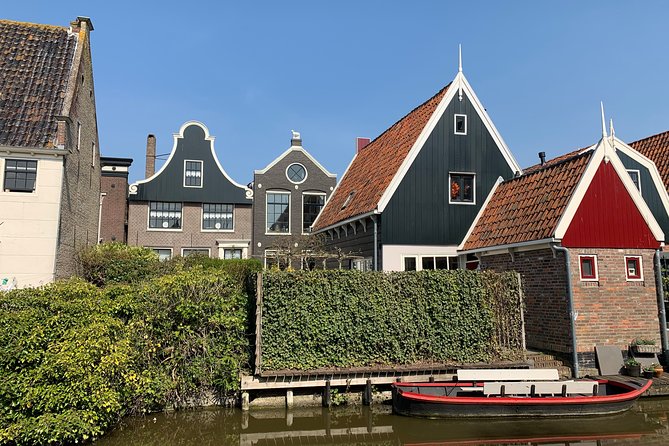
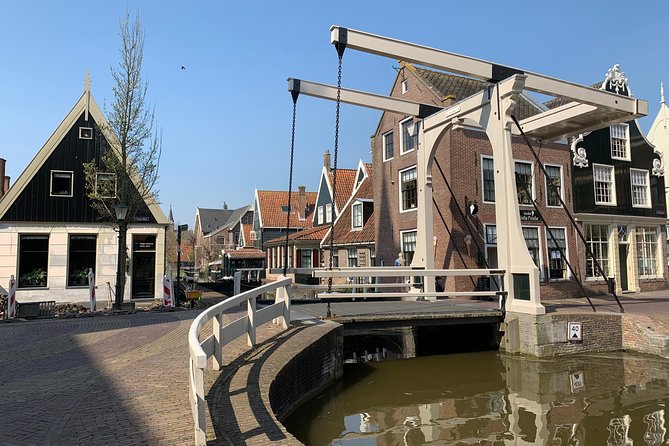
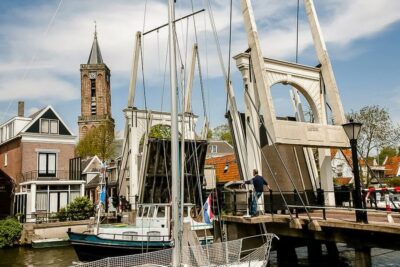
De Rijp is the first stop, and it is exactly the kind of place you hope for on a countryside day trip. You’ll walk through a village that feels preserved, with wooden houses topped by red rooftops, plus an old white bridge crossing water.
This is also where the Dutch golden age shows up close to street level. The townhall is highlighted as an “incredible” example from that period, and the overall effect is that you are not just taking photos, you’re getting a sense of how these communities were built and organized.
Time is 1 hour here, so it is enough to wander at an easy pace without feeling rushed. The main consideration is that you’ll want comfortable shoes, since the appeal is in strolling and taking in the details rather than standing still for long.
Stop 2: Schermerhorn windmills and how draining land works
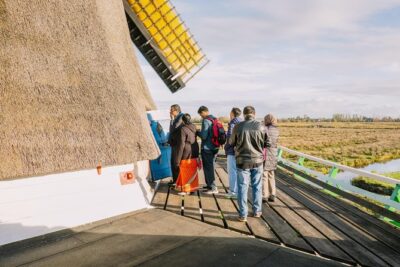
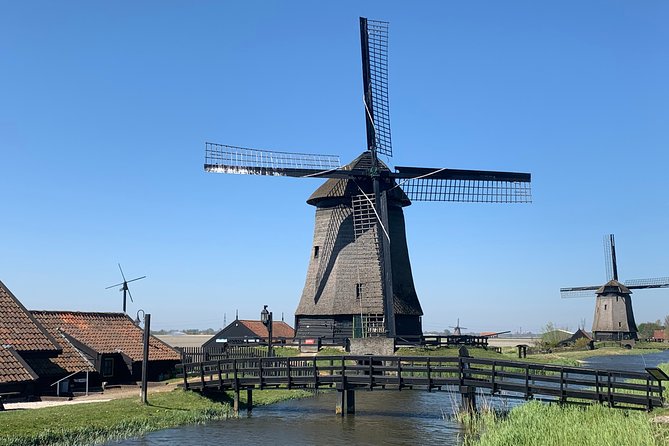
Next comes Schermerhorn, and the big idea is land reclamation. In the golden age, this area was drained by 52 windmills, and you’ll visit one of the few still left.
Unlike many windmill areas that feel like a single curated viewpoint, this stop includes the chance to explore the windmill from top to bottom. That is a meaningful difference because it turns a photo-op into actual engineering appreciation. You also get views across the surrounding area, which helps you understand why the windmill network mattered where it was built.
This stop runs 45 minutes. It’s short, so I’d treat it as your “active” moment on the day. You’ll likely spend part of that time walking inside and looking around, and the rest catching your bearings in the open air.
Stop 3: Franeker’s Koninklijk Eise Eisinga Planetarium, the oldest working one

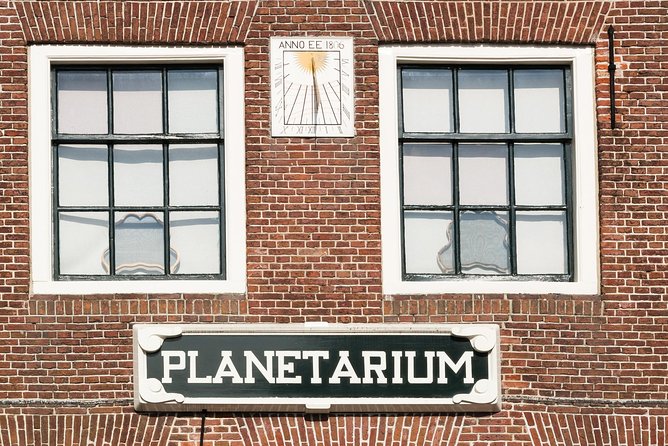
Now you switch from wind power to cosmic accuracy, and it’s a fascinating change of pace. The Koninklijk Eise Eisinga Planetarium in Franeker is presented as the oldest working planetarium in the world, and it is not a modern projection show.
Instead, what makes it special is that the solar system model moves accurately. It was built between 1774 and 1781 by a Frisian wool comber, which is exactly the kind of detail that makes the place feel human, not like a distant landmark.
The setting is also memorable. The model is suspended from the ceiling of a living room inside a beautiful canal house. That means you’re not only looking at the machinery, you’re experiencing the planetarium as part of an older home environment, like the community built science into daily space.
You’ll have 1 hour 30 minutes here. That’s long enough to take in the model and absorb your guide’s explanation without feeling herded. If you like thinking about how people used tools before modern technology, this is the stop that often becomes the emotional highlight.
Under the next bridge out of Amsterdam:
- Amsterdam Luxury Canal Cruise + Unlimited Drinks & Bites option
★ 5.0 · 30,518 reviews - Amsterdam: Rijksmuseum Entry Ticket
★ 4.7 · 29,512 reviews - Amsterdam: Classic Saloon Boat Cruise with Cheese & Wine
★ 4.6 · 27,035 reviews - Amsterdam: Evening Cruise with Optional Wine and Snacks
★ 4.4 · 22,178 reviews
Stop 4: Wieuwerd mummies in the church crypt, a true curiosity stop
Then the day takes a spooky turn in a very specific way. In the Frisian village of Wieuwerd, there’s a church crypt where four mummified people were found, and they have been there for more than three centuries.
This isn’t presented as a horror show. It’s framed as a scientific mystery, and you’re seeing the mummies in the crypt in which they were buried. That combination matters because it makes the stop feel like an encounter with history and questions, not just a strange photo opportunity.
Time here is 45 minutes. It’s also the kind of stop where your comfort level matters. The church and crypt setting can feel cool and dim, so plan for layers if you run cold easily.
One more practical note from what people liked: bathrooms are often available at the places you visit without needing to pay. That helps on a day when you’re hopping between sites and want to stay comfortable.
Stop 5: Afsluitdijk, the dyke that reshaped the water
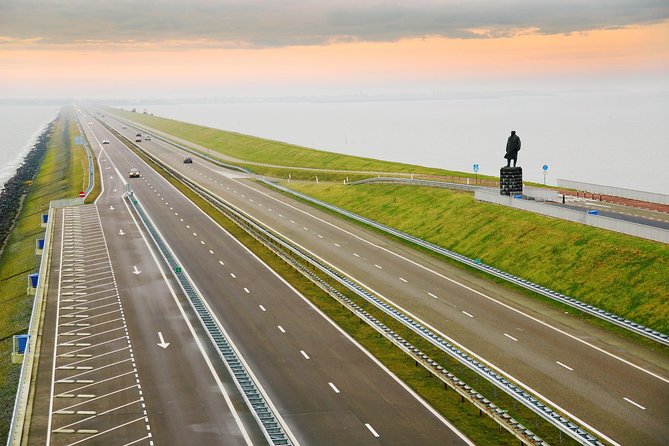
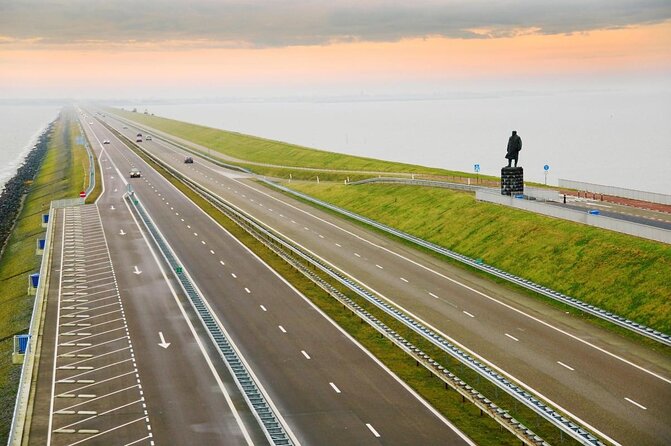
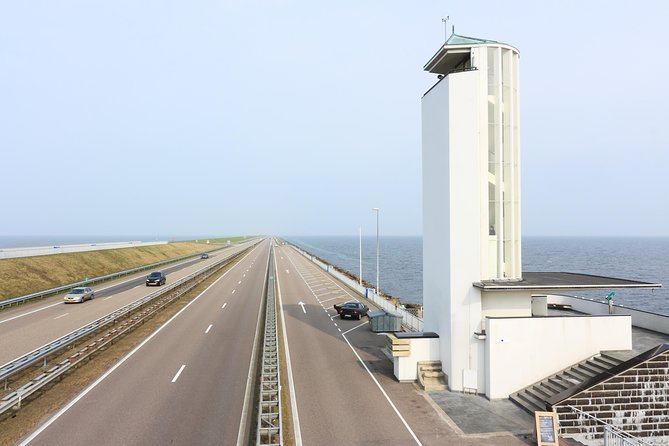
For the final stop, you get back to a bigger national story. Afsluitdijk is presented as an impressive example of Dutch water management, and it’s a 32 kilometer long dyke connecting Noord Holland and Friesland.
You’ll stop at a watchtower with a view designed for understanding. From one side you can see the Wadden Sea, and from the other you can see the IJsselmeer lake. That split view is where the Netherlands’ water logic becomes concrete. It’s not just a lecture about engineering. It is a way of seeing the outcome.
Time here is 30 minutes, which is enough to arrive, get your bearings, and take in the views. If the weather is good, this is where the day often feels cinematic. If it’s windy or rainy, I’d still go for it, but come prepared because outdoor views are still the point.
Price and value: where the $155 really goes
At $155 per person, this tour sits above some basic city-to-outskirts day trips, but the value is in the included access and the way the day is built.
Here’s what is included that you would otherwise pay separately:
- Mill admission in Schermerhorn
- Planetarium admission in Franeker
- Mummie-crypt admission in Wieuwerd
- Snacks
- Air-conditioned vehicle
When a tour includes multiple paid entrances, it changes the math. You are paying once for a full day of access rather than thinking about ticket lines and add-on costs at each stop.
The small-group size also matters for the feel of the day. A maximum of 7 people means less waiting, easier conversation, and a better chance of getting the guide’s attention when you have questions.
The main cost you should plan for is lunch. Lunch, food, and beverages beyond the snack pack are not included, so budget for a meal on your own at some point during the day.
What the 9:00 schedule feels like on the ground
You start at 9:00 am at Italian Chamber, De Ruijterkade 5, 1013 AA Amsterdam, and the tour ends back at the meeting point.
With an 8 hours 30 minutes duration, this is a full day, not a quick taste. You’ll spend the middle portion moving between towns and sights, then finish with the Afsluitdijk view.
If you want this to feel smooth, do two simple things:
- Eat breakfast early since lunch is not included.
- Wear shoes you can walk in for the town strolls and the windmill area.
If you’re expecting a relaxed, no-pressure wander day, this may feel a bit structured. But if you like a plan that still leaves time for walking and looking, it lands in the sweet spot.
Who should book this, and who should skip it
This tour is a strong match for you if:
- You like Dutch history that connects to engineering, not just dates and buildings.
- You enjoy unusual stops, especially the working planetarium and the mummy crypt.
- You want countryside views without committing to driving yourself.
It’s less of a fit if you have limited physical movement. The itinerary includes walking in multiple places, and the tour is not marketed for that situation.
Also, go with the right expectations for travel style. This is not a long museum day in Amsterdam. It’s a moving day trip with several short, meaningful encounters.
Should you book this 5-stop Amsterdam day trip?
I’d book it if you want a day that feels like it has a theme, water and engineering, but still includes surprises. The planetarium is a standout because it is historic and still working, and Afsluitdijk is the kind of Dutch infrastructure stop that gives you a real visual takeaway.
I would not book it if you want only Amsterdam city sights or if you need a low-walking, low-mobility itinerary. The day is built around getting to several specific locations and spending time inside and outside at each one.
If you’re on the fence, here’s the deciding question I’d use: Do you enjoy the story behind how a country works? If yes, this itinerary delivers a lot for the money, especially with admissions and snacks already covered.
FAQ
How long is the tour?
The tour duration is about 8 hours 30 minutes.
What time does it start?
It starts at 9:00 am.
Where does the tour meet, and where does it end?
It starts at Italian Chamber, De Ruijterkade 5, 1013 AA Amsterdam, Netherlands, and it ends back at the same meeting point.
Is the tour in English?
Yes, the tour is offered in English.
How many people are in the group?
The tour has a maximum of 7 travelers.
Are admission tickets included?
Yes. Admission fees are included for the Schermerhorn mill, the planetarium in Franeker, and the mummie crypt in Wieuwerd.
What about food and lunch?
Snacks are included, but lunch and additional food or beverages are not included.
Is there air conditioning on the vehicle?
Yes, the tour includes an air-conditioned vehicle.
Is it suitable for limited physical movement?
It is not recommended for travelers with limited physical movement.
Is the tour dependent on weather?
Yes. This experience requires good weather. If it is canceled due to poor weather, you’ll be offered a different date or a full refund.
What is the cancellation policy?
You can cancel for a full refund up to 24 hours in advance of the experience start time. If you cancel less than 24 hours before, the amount paid is not refunded.
Latest to arrive along the quays of Amsterdam



Tours, compared.
Zaanse Schans, Edam, Volendam & Marken Bus Tour
Read our review →
Amsterdam Anne Frank: Small-Group Walking Tour & Local Guide
Read our review →
Anne Frank’s Story – Guided Walking Tour through Amsterdam
Read our review →
Big Bike tour Amsterdam – See all in 3 unforgettable hours
Read our review →
Guided Zaanse Schans, Windmills & Cheese Tour
Read our review →