Reviewed · AMSTERDAM TOURS & EXPERIENCES
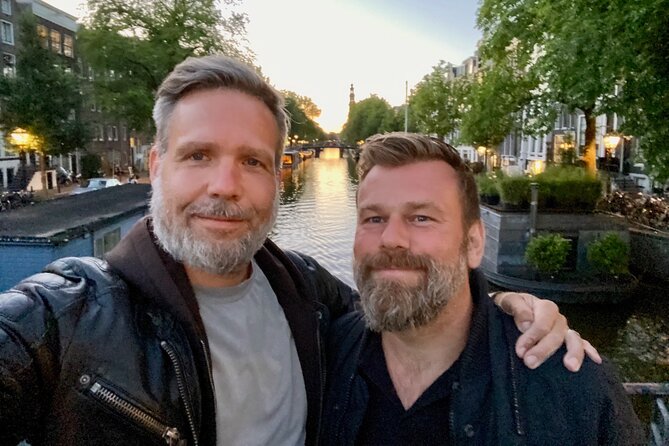
Explore hidden streets with friends
Amsterdam feels bigger once you slow down. I love how this walk turns the city into a story, from the world’s first stock market to the quiet courtyards of the Jordaan, and I also love the small-group vibe that keeps it conversational. One possible drawback: it’s still a solid 2.5 hours on your feet, so go in with comfy shoes and a steady walking pace.
The guide makes the difference. On my walk, I’d expect to hear lively, human storytelling from people like Michael and Christian, with lots of room for questions and little detours when the group wants to linger.
You’ll start at Beursplein and end near Elandsgracht, so plan for a simple “finish and wander” moment after the tour. You get a mobile ticket, and the route is designed for a classic Amsterdam feel without getting stuck in the loudest crowds.
In This Review
- Key Highlights You’ll Feel (Not Just See)
- Why This Hidden Streets Walk Works in Amsterdam
- Price and Value: What $52.81 Buys You
- Where the Tour Starts and How the Route Flows
- Beursplein to Dam Square: Markets, Power, and a City That Traded
- Crossing the Canal Ring: Understanding Medieval Expansion
- The Nine Streets Shopping Area: Cozy Without the Stampede
- Jordaan Hidden Streets: Where Amsterdam Feels Like It Still Breathes
- The Church for the Poor: A Building With a Purpose
- Karthuizerhof Courtyard: Social Housing in 1650
- Anne Frank House Pass-By: Present-Day History Without a Detour
- Westerkerk: Merchants, Brick-and-Mortar Power, and Rembrandt’s Burial
- Guide Style: Why Michael and Christian Make the Walk Feel Personal
- Fitness, Pace, and When to Bring an Umbrella
- Who Should Book This Tour (And Who Might Not)
- Should You Book This Hidden Streets Tour?
Key Highlights You’ll Feel (Not Just See)
- World’s first stock market taught as part of Amsterdam’s origins
- Canal Ring crossing to understand how the medieval city grew
- Nine Streets and Jordaan side alleys for shopping and quiet squares away from mass tourism
- Karthuizerhof courtyard built in 1650 for widows, one of the early social housing efforts
- Westerkerk and Rembrandt’s burial tied to the city’s wealthy merchant past
- Courts, churches, and tiny squares packed into a 2.5-mile walk
Why This Hidden Streets Walk Works in Amsterdam
Amsterdam is easy to photograph and hard to actually understand. The main streets can feel like a stage set. This tour helps you connect the dots, literally, by walking through areas where the city’s layers are still visible in the layout, the courtyards, and the way neighborhoods evolved.
I like that you don’t just get a list of landmarks. You get context for why places exist where they do. That is what makes a city start to click. One guide-led story can turn a random-looking square into something you can picture in time, from medieval expansion to 17th-century social housing.
The experience also earns its “hidden streets with friends” promise. With a maximum of 10 travelers, the guide can steer the pace, answer questions, and keep the walk from feeling like a conveyor belt.
Also flying a pennant in Amsterdam


Price and Value: What $52.81 Buys You
At $52.81 per person, this isn’t a bargain bus tour. You are paying for three things that matter in Amsterdam:
First, you’re paying for a guide who connects history to street-level details. That’s the part you cannot easily replicate with a map app.
Second, you’re paying for time efficiency. In about 2 hours 30 minutes, you cover roughly 2.5 miles (4 km) while hitting major anchors like Dam Square and the canal ring, then shifting into quieter pocket streets in the Jordaan.
Third, you’re paying for a small-group experience. Group discounts are included, and the cap of 10 travelers keeps the tour more personal, especially if you like asking “why” questions.
Also, a bunch of the stops are marked as free, so you are not stuck planning around surprise admissions. That keeps the money feel straightforward.
Where the Tour Starts and How the Route Flows
You’ll meet at Beursplein 1-3, 1012 JW Amsterdam, Netherlands. The walk ends on Elandsgracht, Amsterdam.
That start point matters. Beursplein ties directly into Amsterdam’s origins story, and it sets up the theme of trade and civic power early. The ending point on Elandsgracht is also smart because it drops you back in the neighborhood rhythm, so you can keep exploring without hauling yourself across town again.
Timing wise, expect about 2.5 hours. This is not an all-day marathon. It’s long enough to feel like you actually learned something, but short enough that your feet stay human.
Beursplein to Dam Square: Markets, Power, and a City That Traded
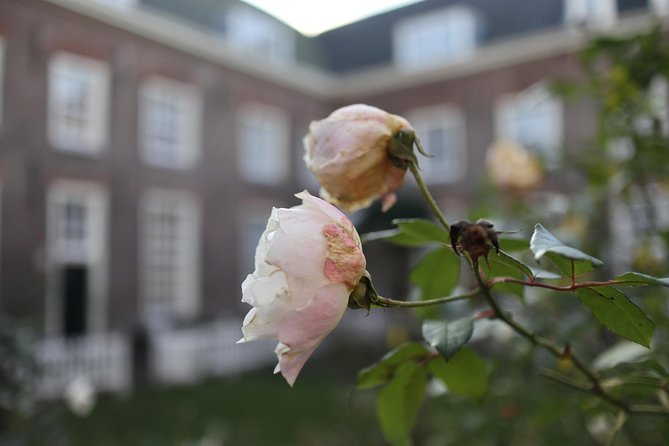
The walk begins with an introduction to Amsterdam’s origins, with a focus on the world’s first stock market. That sounds abstract until you hear it tied to the street where the city’s commercial life takes shape. Standing near Beursplein, the idea becomes real: Amsterdam wasn’t just trading by chance. It built systems, and those systems shaped where buildings and public spaces appeared.
Then you move toward a central square where the guide explains why that place became so important, historically and socially. You also hear about a major building originally serving as Amsterdam’s town hall. Even if you’ve seen a photo of the square, learning the civic purpose changes how you read it. The architecture stops being scenery and starts being a clue.
One small thing I appreciate: you’re not thrown into heavy detail without a human pace. The guide keeps it casual and conversational, so the story stays clear even if you are not the type who loves reading timelines.
Crossing the Canal Ring: Understanding Medieval Expansion
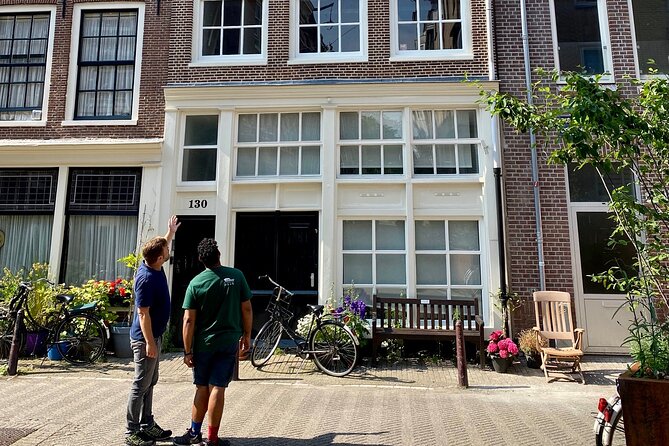
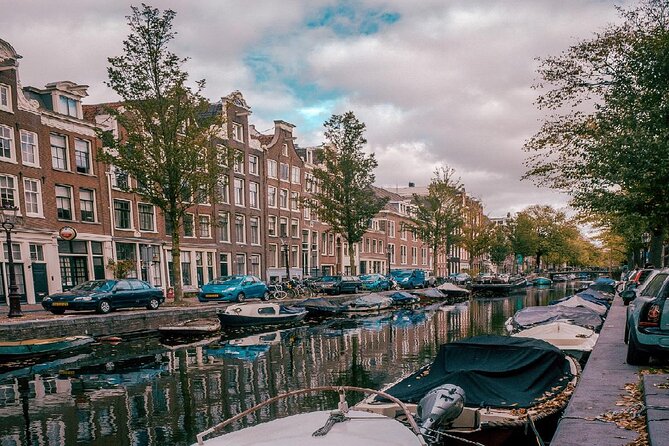
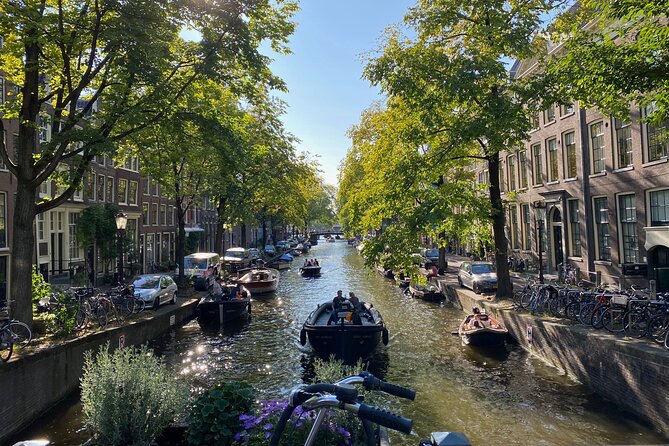
After the civic and market foundation, you cross the Canal Ring of Amsterdam. The guide uses this stretch to explain the city’s extension during medieval times.
This part can be the difference between “I saw a canal” and “I get why the city is shaped like this.” When you understand that canals were part of how the city grew, you stop thinking of them as decoration. You start thinking of them as infrastructure, a tool for water management, trade, and urban expansion.
The route stays walkable here, and it helps you transition from the loudest center energy into a more neighborhood feel.
Under the next bridge out of Amsterdam:
- Amsterdam Luxury Canal Cruise + Unlimited Drinks & Bites option
★ 5.0 · 30,518 reviews - Amsterdam: Rijksmuseum Entry Ticket
★ 4.7 · 29,512 reviews - Amsterdam: Classic Saloon Boat Cruise with Cheese & Wine
★ 4.6 · 27,035 reviews - Amsterdam: Evening Cruise with Optional Wine and Snacks
★ 4.4 · 22,178 reviews
The Nine Streets Shopping Area: Cozy Without the Stampede
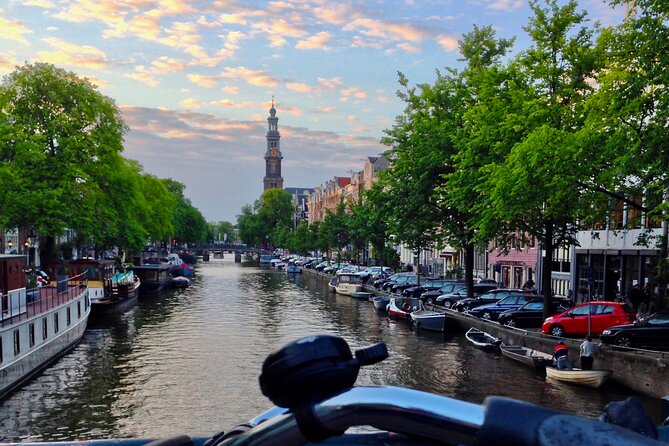
Then comes a shift that you’ll likely love if you hate fighting crowds. The nine streets have turned into a cozy shopping area away from the masses of tourism.
This is not about shopping for the sake of shopping. It’s about spacing. Smaller streets, smaller storefronts, more corners to look at. The city feels more local because the street scale is human.
If you want to buy a small snack or wander into a shop briefly, this is the moment. But even without spending a cent, you’ll enjoy the texture of streets that don’t feel like they were built for one type of visitor.
Jordaan Hidden Streets: Where Amsterdam Feels Like It Still Breathes
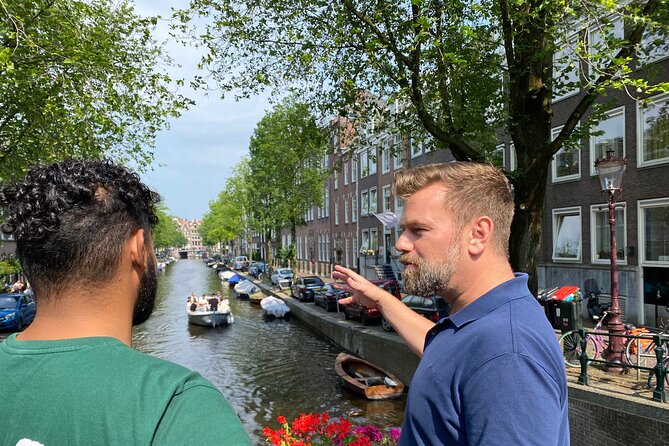
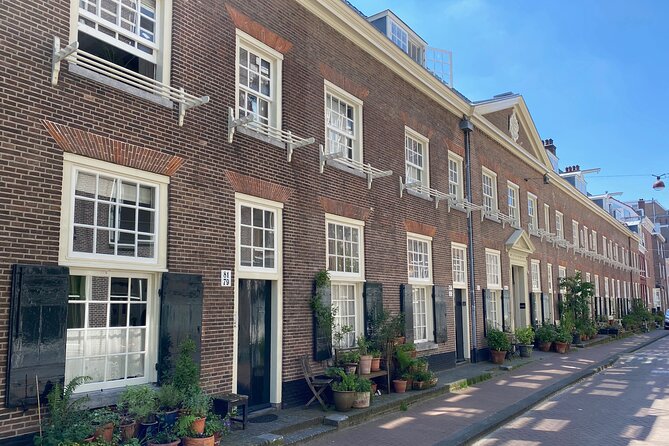
The tour’s signature neighborhood stop is the Jordaan. You’ll walk for about 1 hour 20 minutes through hidden streets and squares, with a focus on why this neighborhood still feels authentic.
This is where I expect your biggest “aha” moment. The Jordaan is one of those areas where the charm is partly the layout. Narrower lanes, small courtyards, and squares that aren’t trying to be a theme park. It’s the kind of place where you can look up and still feel like you’ve stumbled onto something.
You also get architectural attention. The guide points out what you might otherwise miss: how buildings sit against the street, how courtyards create private pockets, and how the neighborhood’s history shows up in details.
And yes, the guides are known for being flexible. If your group wants to slow down or ask an extra question about a building you just noticed, the tour style tends to allow it. That flexibility matters more than people expect.
The Church for the Poor: A Building With a Purpose
In the Jordaan area, you’ll learn about a church built for the poor, including why it was constructed exactly here.
This is the kind of detail that makes a tour feel real. Amsterdam’s “nice buildings” are not only about wealth. Social welfare shows up in architecture too. When you understand the reason for placement, the church stops feeling like a random stop and starts feeling like part of a larger social system.
If you like stories where economics and everyday life collide, this will land well.
Karthuizerhof Courtyard: Social Housing in 1650
One of the most compelling stops is Karthuizerhof, a beautiful courtyard constructed in 1650 for widows. It’s described as one of the first social housing projects in the world.
Courtyards like this change your sense of time. You walk into a space designed for a specific group, not a mass audience. You can feel the idea of care written into the layout.
It also gives you a clear counterpoint to the grand merchant stories. Amsterdam’s power and prosperity came with social responsibilities, and this courtyard is a physical reminder of that.
The stop is short, about 10 minutes, but it’s long enough to look, listen, and let the place do its quiet work.
Anne Frank House Pass-By: Present-Day History Without a Detour
During the stroll through the Jordaan, you’ll pass by the Anne Frank House.
This is a pass-by, not a long detour. The point is to keep the walk flowing while still acknowledging a site that many people associate with Amsterdam. How the guide frames it can help you connect it to the neighborhood context instead of treating it as a single famous address.
If you want to visit in detail on your own later, this tour gives you a location anchor and a sense of where you are in the city’s fabric.
Westerkerk: Merchants, Brick-and-Mortar Power, and Rembrandt’s Burial
Another big highlight is the Westerkerk. You’ll hear why it was built by rich merchants of Amsterdam, plus the detail that Rembrandt was buried here.
That combination matters. Westerkerk isn’t just a pretty church stop. It’s a monument to who paid for the city’s public prestige, and it shows how money shaped the skyline.
It also ties the tour together, because earlier you learned about trade and markets. Now you’re seeing how wealth expressed itself in civic and religious architecture.
Even if you don’t care about every historical name, the idea lands: Amsterdam’s streets are full of invisible funding stories.
Guide Style: Why Michael and Christian Make the Walk Feel Personal
Two guide names stand out from the tone of this experience: Michael and Christian. And the patterns in their approach are what you’ll feel on the street.
They tend to be conversational rather than lecture-y. They share broad Dutch and Amsterdam context, but they also slow down for small details that make places click.
They also handle questions well. If you stray onto a related topic, the conversation usually stays friendly and relevant, instead of shutting down. You’ll also notice the guide doesn’t rush. That lets you actually look at what you’re standing next to.
If you enjoy asking questions while you walk, this kind of guide style is a big reason to book.
Fitness, Pace, and When to Bring an Umbrella
The practical side is clear: you’ll be walking about 2.5 hours over 2.5 miles (4 km). Most people can participate, but it does require steady walking.
Here’s my honest advice. If you have knee issues or you know you struggle with continuous walking, consider whether this route is the right match for your stamina. The tour is not described as strenuous, but it is long enough that you can feel it if you’re not used to city walking.
Weather matters in Amsterdam. If rain shows up, the streets and courtyards still work, but your comfort will depend on what you bring. Think layers and shoes with grip.
Who Should Book This Tour (And Who Might Not)
This is a great fit if you want:
- Hidden streets and courtyards without wasting time getting lost
- A small group experience that feels like you can talk back to the guide
- Neighborhood context for the Jordaan, plus major anchors like Dam Square and the canal ring
- A mix of markets, social history, and architecture
It might not be your best choice if:
- You only want a fast hit of the most famous landmarks with minimal walking
- You dislike guided storytelling and prefer purely self-guided exploration
- You need a very short tour for mobility reasons
Should You Book This Hidden Streets Tour?
Yes, if you want Amsterdam to feel local instead of just famous. The strongest reason to book is the combination of small-group size with street-level stories that connect markets, civic power, social housing, and church wealth. You walk through the city’s layers instead of only looking at its highlights.
If you’re going with friends, it’s also a nice group setup. Everyone hears the same stories, but the guide can still respond to questions without turning the experience into a rigid script.
I’d book it early in your planning if you can. On average, this is booked about 65 days in advance, and that’s a hint that the small-group slots fill up.
If you want Amsterdam with context, not just photos, this walk is a smart use of time.
Latest to arrive along the quays of Amsterdam




Amsterdam Tours & Experiences, compared.

Amsterdam Classic Saloon Boat Cruise with Drinks and Cheese
Read our review →
Amsterdam Luxury Canal Cruise + Unlimited Drinks & Bites option
Read our review →

Classic Saloon Boat Cruise with Cheese & Wine
Read our review →
Evening Cruise with Optional Wine and Snacks
Read our review →
Heated Canal Cruise with Unlimited Drinks & Bite
Read our review →