
Reviewed · MUSEUM TOURS IN AMSTERDAM
Entry ticket to Museum of Illusions Amsterdam
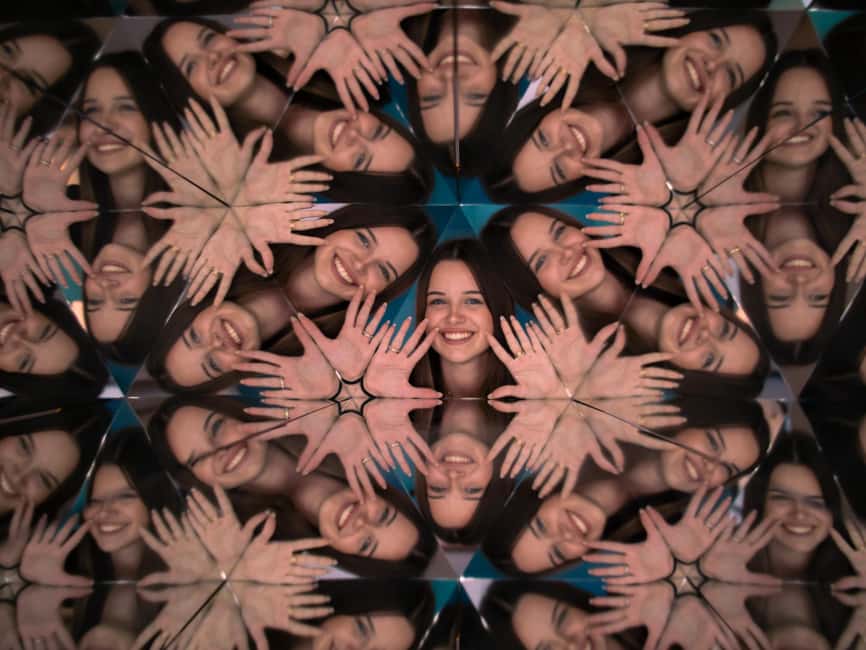
You think your eyes are honest. Then this museum disagrees. Museum of Illusions Amsterdam turns a former church on Keizersgracht into a playground where perception and reality trade places.
I love that it is genuinely hands-on, not just something to watch. I also like the mix of fun photo rooms and clear explanations at each exhibit, so you leave laughing and understanding why your brain got tricked. One thing to consider: it is only about 1.5 hours, so if you want to linger for tons of repeats and extra photos, plan a bit of time cushion.
In This Review
- Key Highlights You Should Know First
- Entering the Former Nieuwe Waalse Kerk on Keizersgracht
- What the $23 Ticket Really Buys You (1.5 Hours Worth)
- How the Museum Experience Flows Without Feeling Rushed
- The Illusion Rooms That Mess With Space, Depth, and Balance
- The Science Part: Contrast, Motion, and Perspective Explained Simply
- Photo Moments That Turn Your Camera Into a Co-Conspirator
- Staff Assistance and Small-Group Energy (Max 5 People)
- Making Time for the Museum Shop After Your Last Illusion
- Who This Works Best For in Real Life
- The Only Real Drawback I’d Plan Around
- Should You Book Museum of Illusions Amsterdam?
- FAQ
- How long is the Museum of Illusions Amsterdam visit?
- What is included with the entry ticket?
- Where is the museum located?
- Is food or drinks allowed inside?
- Do children need a ticket?
- What languages are used by the host or greeter?
- Can I cancel if my plans change?
Key Highlights You Should Know First

- A canal-side location in the former Nieuwe Waalse Kerk on Keizersgracht, easy to spot and fun to arrive at.
- All interactive exhibits included with educational explanations, so you are not paying extra for the good stuff.
- Photo-focused installations designed to make your camera as gullible as your eyes.
- Brain science, explained simply, covering things like contrast, motion, and perspective.
- Small group size (max 5) with staff assistance and guidance throughout.
- Shop time built in, so you can grab a keepsake after the last illusion.
Entering the Former Nieuwe Waalse Kerk on Keizersgracht

This museum sits in the former Nieuwe Waalse Kerk on Keizersgracht, one of Amsterdam’s signature canals. That matters, because you are not starting in a generic box. You start in a real historic space, with a strong façade and clear signage, so you can find it without playing guessing games.
Expect the entry to feel like stepping into an “okay, this is going to be weird” atmosphere. The museum is built around challenging your sense of space, depth, and balance. Translation: you do not just look. You walk, react, and compare what you feel with what your brain insists is happening.
If you are choosing a time slot, I suggest going when you have enough energy to play. This is an experience where you get the most out of it when you lean in, not when you are rushing to tick off a checklist.
More Museum Tours in Amsterdam



What the $23 Ticket Really Buys You (1.5 Hours Worth)
At about $23 per person for a 1.5-hour visit, the value is mostly in what you get for the ticket. You are not paying for a single exhibit or a quick viewing route. The entry ticket includes access to all interactive installations, educational information at each exhibit, staff guidance, and the chance to use the museum’s photo setups in the rooms.
It also includes the practical stuff that adds up for visitors: taxes and fees are included in the ticket price, and you can also visit the museum shop after the main experience. That is a real convenience when you are trying to plan one clean, predictable activity during a busy day.
Two planning notes that help: you can cancel up to 24 hours in advance for a full refund, and you can often reserve and pay later to keep your schedule flexible. Since time slots depend on availability, booking ahead is smart if you are visiting during a peak period.
How the Museum Experience Flows Without Feeling Rushed
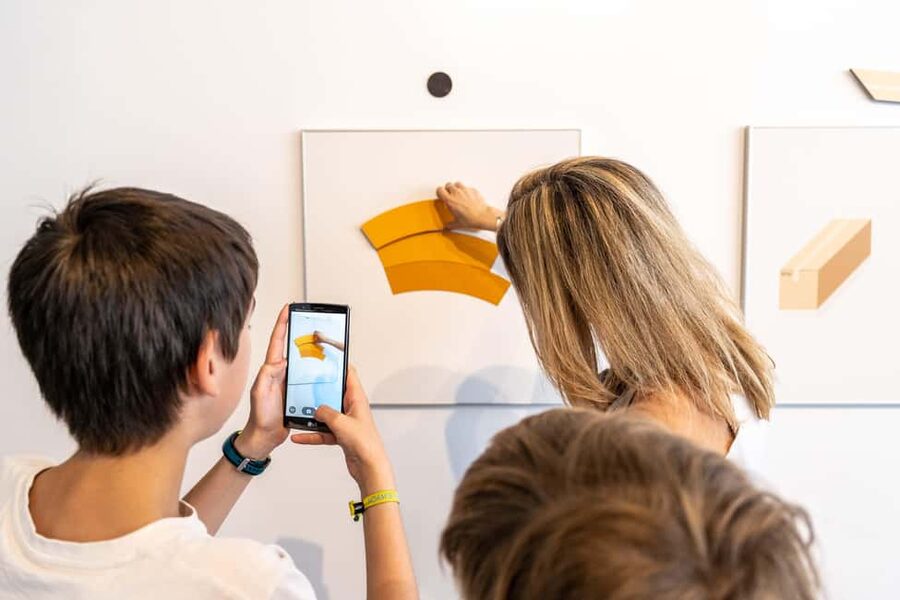
There is no long lecture marathon here. The museum is designed to move at your pace, with staff assistance and explanations that pop up as you go. You enter and quickly get pulled into installations that mess with perception. Then the rooms keep building on that theme, turning ordinary visual habits into something you can test in real time.
A good way to think about the flow is this: the museum starts with quick “wait, what?” moments, then shifts into rooms that make you notice how your brain handles visual information. The interactive nature is the main reason the visit feels engaging. You are not just reading about perception. You are experiencing how easily it can be misled.
Because the total duration is 1.5 hours, you should pace yourself for multiple rounds of the most photo-worthy areas. If you chase every single moment with full attention, you can still do it without feeling like you are behind. But if you want slow-motion, repeat-every-illusion energy, you may find the time limit a bit tight.
The Illusion Rooms That Mess With Space, Depth, and Balance
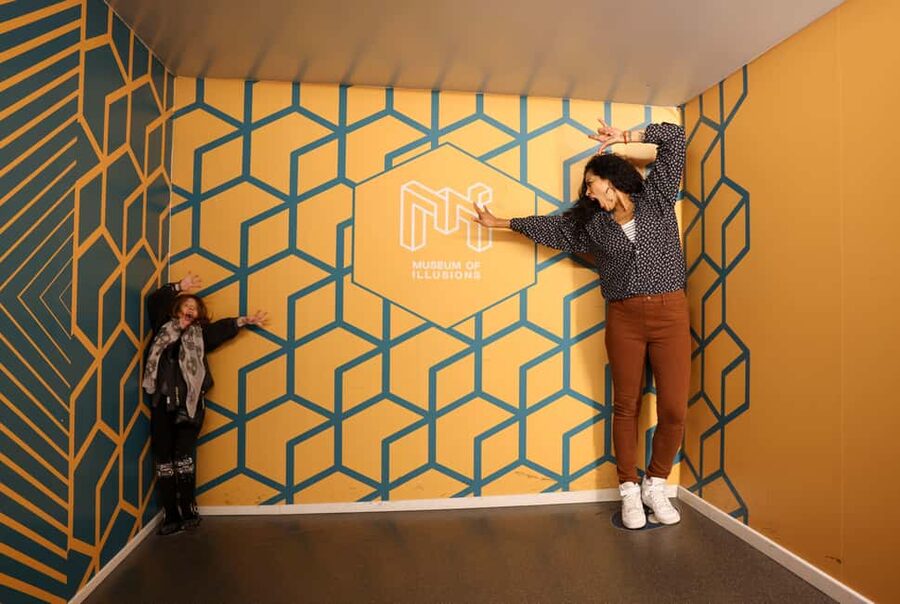
The museum’s core promise is simple: nothing is as it seems. As you move through the space, you will encounter mind-bending installations that disrupt your sense of space, depth, and balance. These are the kinds of setups that make you react instantly, then question your own instincts once you see the result.
What I like about this category of exhibits is how physical they are. Your body participates even when your brain tries to rationalize what you are seeing. That is why these rooms are so fun for groups and families. Everyone has a different reaction, and the interaction with the space becomes part of the show.
It also helps that the museum includes staff guidance throughout. That matters when you are trying to take a photo, test an illusion from the right angle, or understand what is happening. You are not left alone to guess the rules.
The Science Part: Contrast, Motion, and Perspective Explained Simply
This is where the experience goes beyond “cool photos.” The museum helps you understand how your brain processes visual information, including things like contrast, motion, and perspective. The explanations at each exhibit connect the trick to the psychology of how perception works.
Here’s the useful idea you can carry with you: your brain does not record reality like a camera. It constructs what you think you are seeing based on incomplete information. That is why your eyes can look confident while your understanding is actually being filled in by shortcuts.
The museum also plays with the idea of missing information. When part of the picture is ambiguous, your brain fills gaps to make a complete scene. In daily life, that makes you fast and efficient. Here, that same speed becomes the source of the prank.
If you enjoy science in a human way, this museum hits the sweet spot. It feels playful, but it still gives you enough explanation to make the illusions feel meaningful, not random.
More museum halls off the squares:
- Amsterdam: Van Gogh Museum Ticket and City Canal Cruise
★ 4.6 · 3,899 reviews - Amsterdam: Van Gogh Museum Ticket & Canal Cruise
★ 4.5 · 3,304 reviews - Amsterdam: NEMO Science Museum Ticket
★ 4.4 · 2,979 reviews - Van Gogh Museum Amsterdam Exclusive Tour w/ Reserved Entry
★ 5.0 · 1,760 reviews
Photo Moments That Turn Your Camera Into a Co-Conspirator
Let’s be honest. A big reason people come here is for photos, and this museum is designed for it. The installations create rooms that are built specifically for mind-bending pictures, where your camera captures something your brain struggles to interpret.
From what you’ll experience inside, the key to good shots is angle and positioning. Some illusions are strongest when you line up from the right viewpoint, and staff assistance can help you get the setup right. That is also why the experience tends to work well for small groups, because you are not waiting for a crowd to clear out before you can reset your pose.
I particularly like the combination of fun and instruction. You are not only told where to stand, you are also given a reason. That makes the photo feel like a result of understanding, not just luck.
Plan to take a few shots early, then repeat later if you catch a new angle after the explanations sink in. You will often notice how the illusion changes as you move, which is part of the point.
Staff Assistance and Small-Group Energy (Max 5 People)
This visit runs as a small-group experience, limited to 5 participants. That size changes the vibe. You get more personal attention, and you can move between exhibits without the constant bottleneck of waiting for other people to finish.
Staff members are available for guidance throughout, and the host or greeter speaks Dutch and English. That bilingual detail is handy because it gives you a clear expectation for communication. You can ask questions, get reassurance about what you are seeing, and get help timing your photos so you do not miss the best moment.
In a place like this, “help” is not just practical. It also keeps you from getting stuck in confusion. The museum wants you to understand the trick behind the magic, so staff support pushes you toward that aha moment faster.
Making Time for the Museum Shop After Your Last Illusion

Your ticket includes access to the museum shop. That is worth planning for, because once you finish the final rooms, you might want a quick souvenir that matches what you felt inside.
Think of the shop as the practical landing spot after the visual chaos. You can take a breath, look around, and bring home something related to perception, illusions, or the playful science theme. It also gives your brain a moment to return to normal before you head back into Amsterdam streets.
Who This Works Best For in Real Life
This museum is a great fit if you like interactive, low-pressure fun with real explanations. It also works well if you are traveling with mixed ages, because the illusions do not require technical knowledge. Children and adults can both have that same “Wait, how is that possible?” reaction.
It is especially good for:
- Families who want something more engaging than a standard gallery
- Couples who want a shared activity with plenty of laughs and photos
- Friends who like science, psychology, or simply testing their own assumptions
One practical detail: children up to 4 years old enter free. If you are traveling with younger kids, that can make the booking easier to manage.
If you are the type who dislikes anything that involves walking into strange optical situations, you might feel a bit overwhelmed. The museum is designed for participation, so a curious mindset helps a lot.
The Only Real Drawback I’d Plan Around
The main limitation is time. With an overall 1.5-hour duration, you are on a guided pace through a set of interactive spaces. That is usually enough to enjoy the illusions and learn the basics of why your brain is fooled, but it may feel tight if you want to linger in every photo spot or replay favorites for a long time.
There is also at least one low rating that simply indicates the venue was closed at the time someone attempted to visit. Since that can happen at any venue for reasons beyond your control, I recommend you confirm your time slot close to arrival and keep your expectations realistic if plans change.
Should You Book Museum of Illusions Amsterdam?
I’d book it if you want a fun, compact activity that mixes hands-on illusion rooms with simple psychology explanations. At around $23 for all interactive exhibits and a full set of photo-focused installations, you get a lot of value for one block of time. The small group size (max 5) and staff guidance are especially important here, because they help you get the most from the illusions instead of getting stuck guessing.
Skip it only if you prefer passive sightseeing, or if you are looking for a deep historical museum. This is a “play and learn why it tricks you” experience. If that sounds like your kind of Amsterdam, it is an easy win.
FAQ
How long is the Museum of Illusions Amsterdam visit?
The experience lasts about 1.5 hours.
What is included with the entry ticket?
Your ticket includes access to all interactive exhibits and installations, educational explanations at each exhibit, staff assistance and guidance, opportunities to take unique photos, access to the museum shop, and local taxes and fees.
Where is the museum located?
The Museum of Illusions Amsterdam is in the former Nieuwe Waalse Kerk on Keizersgracht.
Is food or drinks allowed inside?
Food and drinks are not allowed.
Do children need a ticket?
Children up to 4 years old do not require a ticket and can enter for free.
What languages are used by the host or greeter?
The host or greeter speaks Dutch and English.
Can I cancel if my plans change?
Yes. You can cancel up to 24 hours in advance for a full refund.
Latest to arrive along the quays of Amsterdam





Museum Tours in Amsterdam, compared.

Amsterdam’s Weirdest Museum: Ripley’s Believe It or Not!
Read our review →


Van Gogh Museum Amsterdam Exclusive Tour w/ Reserved Entry
Read our review →
Moco Museum Amsterdam Admission Ticket with Banksy and more
Read our review →Browse the lists this tour appears in