

Reviewed · KEUKENHOF & TULIP SEASON TRIPS
Discover Holland’s Beautiful Tulip Fields with an Expert Guide
Tulips look better when no one crowds you. This half-day-from-Amsterdam style tour sends you into working tulip country, with Mike and Roel guiding you to farms, a UNESCO reclaimed-land polder drive, and a real windmill stop.
I love the small group setup (max 30), because it actually leaves space to walk, pause, and take photos without feeling rushed. I also love that lunch comes with juice and water, plus bottled water is included.
The main drawback to keep in mind is timing. If you go too late in the season, some fields may already be cut down, so the visual payoff can be a bit less dramatic than peak bloom.
In This Review
- Key things to know before you go
- Beemster Polder, the UNESCO polder drive that sets the tone
- Twisk and Venhuizen tulip stops, where you get real photo time
- Onderdijk lunch in a Dutch village, plus the Geradus Majella church
- Museummolen Schermer, going inside a working windmill
- Transfers, group size, and price: is $163.27 a good deal?
- When to go for full color, and what late season does
- What to pack for muddy fields and photo-friendly walking
- Should you book Tulip Tours Holland?
- FAQ
- What is the duration of the tour?
- Where does the tour start and end?
- What’s included in lunch?
- Do I need to buy tickets for the windmill?
- Is the tour in English?
- How big is the group?
- What is the cancellation policy?
Key things to know before you go
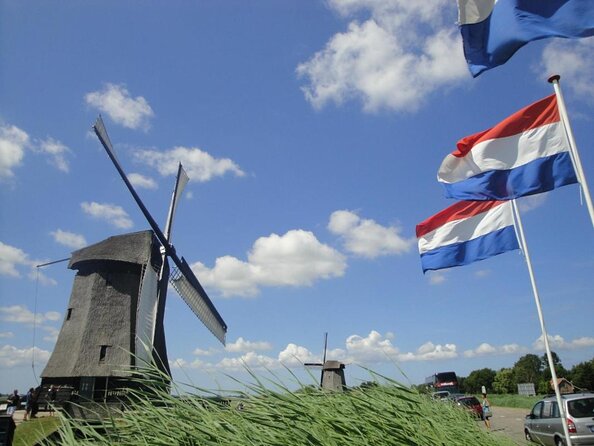
- UNESCO Beemster Polder drive in reclaimed land above Amsterdam, tied to the Stelling van Amsterdam defense works
- Two tulip farm stops (Twisk and Venhuizen) with dedicated time to photograph rows up close
- Onderdijk village lunch with juice and water included, plus the historic Geradus Majella church (1929)
- Museummolen Schermer windmill visit where you can go inside, with admission included
- Round-trip transfers from Amsterdam plus an English-speaking guide, in a small group
Beemster Polder, the UNESCO polder drive that sets the tone
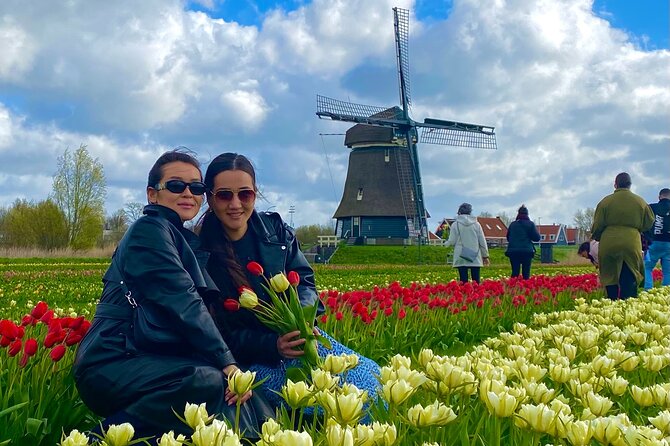
Before you even reach the tulip fields, you get a practical Dutch history lesson from the bus window. The tour starts with a drive through the Beemster Polder, reclaimed from water in the early 1600s. This area is part of the UNESCO site Stelling van Amsterdam, also known as the Defense Line of Amsterdam, which explains why so much of this region is shaped by water control.
It matters because tulips are not just “pretty fields.” They are grown in a landscape people built, drained, and managed. When you understand the polder idea, the flat horizons and the straight drainage lines make more sense. You can look out and think, okay, this is what Dutch ingenuity does at scale.
Also, this opening drive is a nice buffer. Instead of jumping straight into crowds and gift-shop energy, you ease into the region. You have time to get oriented, see how the countryside is laid out, and mentally switch from Amsterdam city mode to “walk the rows and take photos” mode.
More tulip rows in season:


Twisk and Venhuizen tulip stops, where you get real photo time
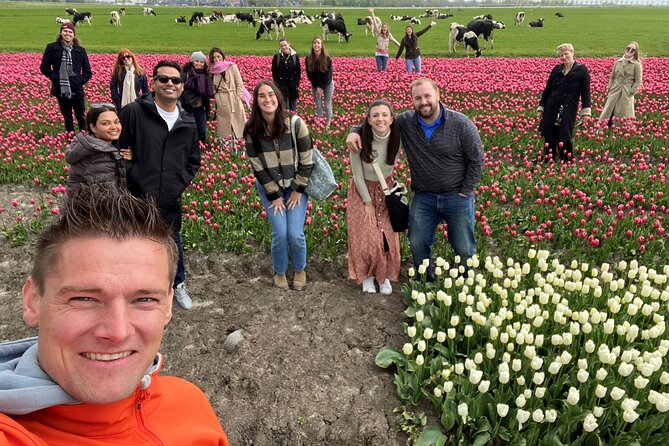
The heart of the day is simple: you visit tulip farms that are not famous theme parks. You get two separate field stops, Twisk and Venhuizen, each with time to wander and take pictures.
Each field stop is short enough that you don’t feel like you’re stuck on a bus forever, but long enough to work your angles. That “walk the rows, then backtrack for a different perspective” rhythm is where great photos usually come from. If you’re the type who likes the first frame and then the second frame after you’ve found the best line of sight, this format suits you.
One more plus: this tour is designed to feel crowd-light compared to the big, globally marketed tulip spots. You still get wide views and long rows, but the vibe stays calm. That makes it easier to stop, adjust your camera, and not feel like you’re photographing through elbows.
The trade-off is seasonal. Tulips have a short window. If blooms are past their peak, you can still see fields in transition, but you might notice more green and less color than you hoped for. So if your goal is maximum color in every frame, aim for the earlier part of the season.
Onderdijk lunch in a Dutch village, plus the Geradus Majella church
After the first farm stop, you’ll head to Onderdijk, an old Dutch village where the tour includes a lunch break. This is not just “food, then back on the bus.” It’s a chance to reset, sit down, and eat while you’re surrounded by the slower pace of rural Noord-Holland.
Lunch includes juice and water with your meal, and the day also includes bottled water. Alcohol is not included, so if that’s part of your travel ritual, you’ll need to plan for it.
What I like here is that the day doesn’t pretend tulips exist in a bubble. Onderdijk adds human scale. You also see the Geradus Majella church, built in 1929. Even if you’re not an architecture fanatic, it helps you understand how these communities formed around the polder landscape and farming economy.
Practical note: lunch time is also your best moment to swap shoes or prep for mud if the weather turns. That matters because tulip fields can be damp, and you’ll want stable footing once you’re back outside.
Museummolen Schermer, going inside a working windmill
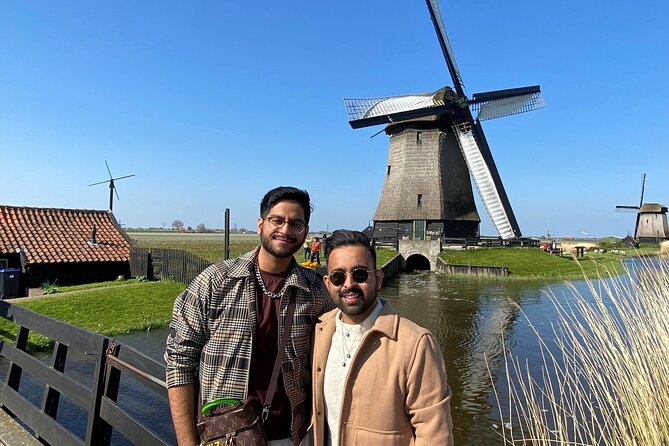
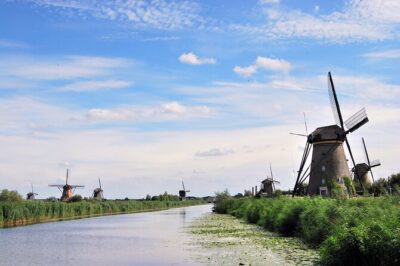
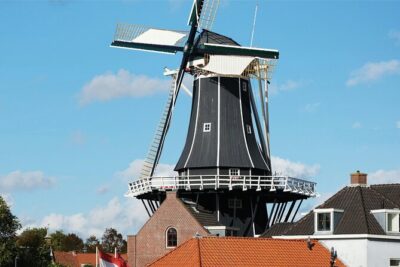
Windmills are everywhere in tulip marketing, but not all windmill visits teach you anything new. Here, you visit Museummolen Schermer, one of the oldest windmills in the Netherlands, and admission is included.
The key detail is that you can go inside and see how it works. That changes the visit from “photos of a structure” to “understanding the machine.” You get a better sense of why these designs were so effective at managing water and power before modern pumps took over.
In the field of windmill tours, this one feels more hands-on because the focus is on function. You’re not just looking at sails for the pretty postcard effect. You’re learning how it operates and what parts do what.
You may also have the option to climb higher for views, depending on the windmill’s rules and conditions on the day. I like having an optional challenge like that because you can choose comfort level on the spot.
If you’re visiting during cool or rainy weather, the windmill stop is extra valuable. It gives you a break from open fields and keeps the tour from becoming a “just wait out the weather” experience.
Transfers, group size, and price: is $163.27 a good deal?
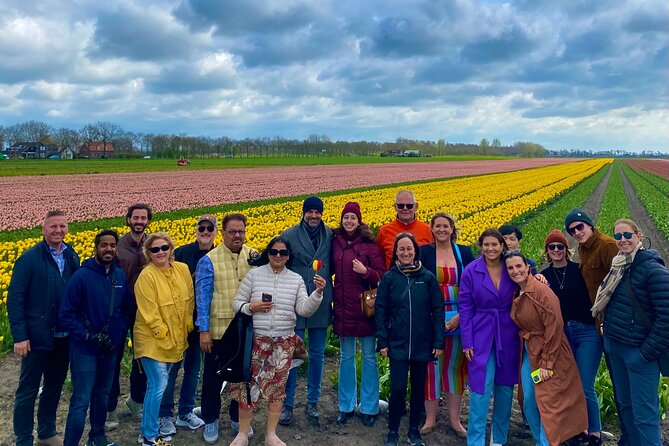
This tour is priced at $163.27 per person and runs about 6 hours. For that money, you’re not just buying tulip photos. You’re buying transportation, a guide, multiple stops, and included activities.
Here’s where the value comes from:
- Round-trip transfers from Amsterdam are included, so you’re not stuck trying to coordinate buses or rental cars on a tight schedule.
- Windmill admission is included, so you’re not dealing with extra tickets mid-day.
- Lunch includes juice and water, plus bottled water is provided for the day.
The most important value point is time and friction. Tulip season planning can be chaotic. If you want a calm day with planned stops and someone who knows where to go when conditions change, this setup helps a lot.
Group size is also part of the math. With a maximum of 30 people, you’re not in a cattle-car crowd. That tends to improve the feel of the day, especially at small farm entrances and in tight windmill areas.
The tour is offered in English, uses a mobile ticket, and you’ll start and end at the same meeting point: Market 27, Termini 27, 1025 XM Amsterdam. The company is family owned, and that often shows up in how smoothly the day runs.
Also flying a pennant in Amsterdam
- Amsterdam: Van Gogh Museum Ticket
★ 4.7 · 52,054 reviews - Amsterdam: Heineken Experience Ticket including 2 Drinks
★ 4.6 · 36,014 reviews - Amsterdam Classic Saloon Boat Cruise with Drinks and Cheese
★ 5.0 · 31,825 reviews - Amsterdam Luxury Canal Cruise + Unlimited Drinks & Bites option
★ 5.0 · 30,518 reviews
When to go for full color, and what late season does
Tulips are seasonal, and the tour reflects reality. One big piece of advice emerges from the experience pattern: if you go in early May, you may see fields that have already started being cut down. That doesn’t make the tour pointless, but it can reduce that peak “carpet of color” feeling.
For the best bloom, think mid to late April. That’s when you’re most likely to see taller, fuller flower heads across the fields you visit.
That said, a strong guide makes a difference when the season is slipping. If blooms are finishing in one area, you still want a plan for finding the last good patches and choosing the best-looking sections for photos. This tour is built around that kind of flexibility, so even late in the window you may still find fields with enough color to create memorable pictures.
My practical approach:
- If you want maximum visual impact, target mid to late April.
- If your dates are later, go in with a mindset that the tour is about tulip life and Dutch farming, not just the brightest possible postcard.
What to pack for muddy fields and photo-friendly walking
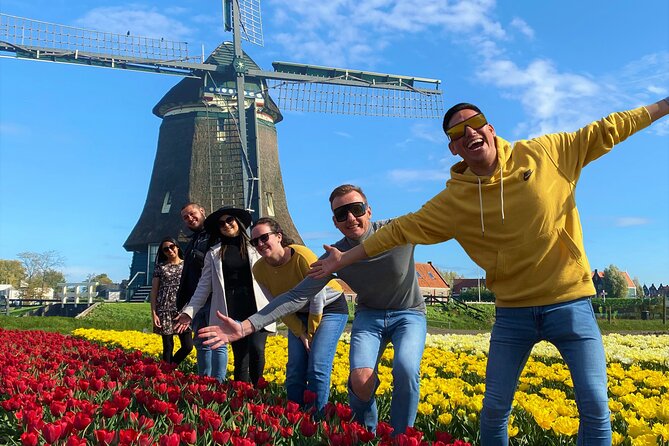
Tulip days can be surprisingly physical. You’ll be walking in farm areas, often across uneven ground. Even if the weather looks fine at departure, Dutch spring weather has a habit of changing.
Bring:
- Comfortable shoes with good grip
- A light rain layer or umbrella you can manage in windmill areas
- A small bag that keeps your camera gear easy to grab and protect
One helpful detail from past experiences: guides may supply shoe covers if conditions are muddy. That’s a nice safety net. Still, it’s smart to plan like you might need your own solution, since field conditions vary.
Water is another practical point. The tour includes bottled water and also provides water with lunch. Even so, I prefer having a small personal bottle too, just in case the bus ride feels longer than expected or you want extra sips outside lunch.
If you care about photos, wear something you don’t mind getting dusty or damp. You’ll move through real farmland, not a polished walkway.
Should you book Tulip Tours Holland?
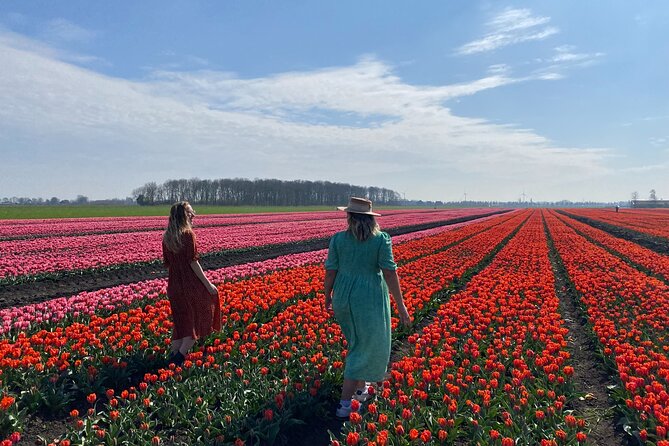
If your goal is tulip fields with breathing room, this tour makes sense. You get real farm stops in Twisk and Venhuizen, plus a windmill visit inside Museummolen Schermer, and a proper village lunch in Onderdijk. The day is built around the parts of tulip season that actually matter: where the flowers grow, how people manage the land, and what it looks like when you slow down.
Book it if:
- You want fewer crowds than the big tulip attraction circuit
- You like photography time that feels unhurried
- You want more than fields, meaning a windmill stop and a village lunch
Skip it or adjust expectations if:
- You’re hoping for a guaranteed peak bloom explosion in every direction in late season
- You want a botanical garden style route instead of working farmland
FAQ
What is the duration of the tour?
The tour lasts about 6 hours.
Where does the tour start and end?
It starts at Market 27, Termini 27, 1025 XM Amsterdam, Netherlands. The activity ends back at the meeting point.
What’s included in lunch?
Lunch includes juice and water, and bottled water is included. Alcoholic beverages are not included.
Do I need to buy tickets for the windmill?
Windmill admission is included for the Museummolen Schermer stop.
Is the tour in English?
Yes, the tour is offered in English.
How big is the group?
The tour has a maximum of 30 travelers.
What is the cancellation policy?
You can cancel for a full refund up to 24 hours in advance. The experience may also be offered a different date or a full refund if canceled due to poor weather, and changes within 24 hours of the start time are not accepted.
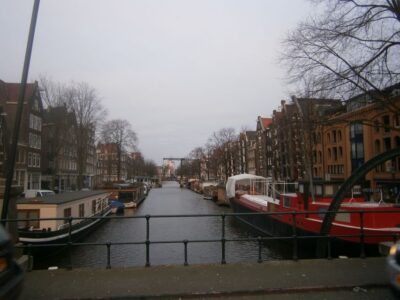
Latest to arrive along the quays of Amsterdam


Keukenhof & Tulip Season Trips, compared.
Keukenhof Entry & Shuttlebus with Flexible Return
Read our review →
Tour to Keukenhof Gardens with Windmill Cruise
Read our review →
Day Tour Keukenhof and Zaanse Schans Windmills
Read our review →
Keukenhof and Zaanse Schans Live Guided Day Tour
Read our review →
Keukenhof and Zaanse Schans Windmills Guided Day Trip
Read our review →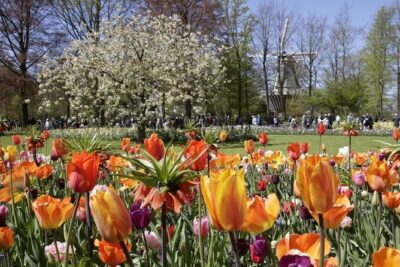
Keukenhof Entry & Shuttle Bus with Flexible Return
Read our review →Browse the lists this tour appears in