
Reviewed · ANNE FRANK & JEWISH HERITAGE TOURS
Anne Frank’s Amsterdam Jewish History WWII Semi-Private 12ppl Max
WWII stories in Amsterdam hit fast. This semi-private walk strings together Jewish landmarks, resistance memorials, and major WWII remembrance sites in about 2.5 hours. I love the expert local guide approach and the way it goes well beyond the Anne Frank area to connect the dots across persecution, resistance, and remembrance, with an English-speaking guide leading the discussion.
One key consideration: it starts with the Anne Frank House exterior only, and you will not get included entry to the Anne Frank House or the Portuguese Synagogue. You’ll still see a lot, but you should plan for a few nearby stops that require your own tickets if you want to go inside. Guides like Anita and Klaus are specifically called out for being strong with questions, including when the weather turns wet and you still want to keep going.
In This Review
- Key things to know before you go
- A WWII memorial walk that makes the city make sense
- Semi-private with max 12: why the group size is a real benefit
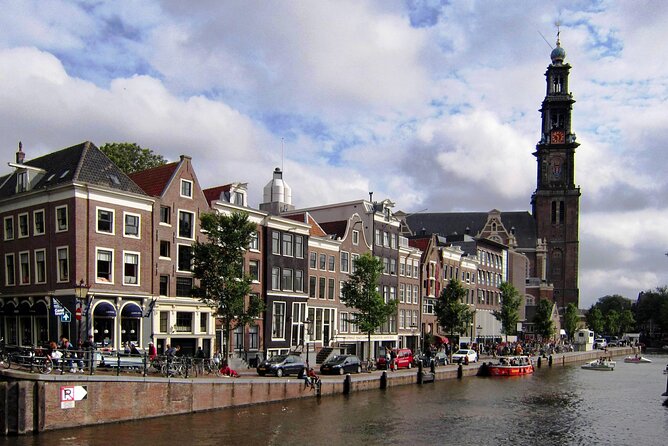
- Starting at Westermarkt and the Anne Frank House exterior
- Statue of Anne Frank and the Westerkerk backdrop
- Homomonument: a WWII memorial that expands the lens
- Dam Square, the National Monument, and the Nazi recruitment backdrop
- Spinoza Monument: using philosophy to explain the longer timeline
- Joods Verzetsmonument: Jewish resistance you can stand in front of
- Megadlé Jethomiem: an outline you can trace with your eyes
- Portuguese Synagogue area: a landmark even without entry
- The Dokwerker and the February Strike of 1941
- Deaf Memorial: remembering victims labeled as less than human
- Auschwitz Monument in Wertheimpark: a shattered mirror feeling
- National Holocaust Names Monument and Stumbling Stones: a map of names
- Price, value, and what is included versus not
- Practical logistics: how to make the walk feel easy
- Who this tour is best for
- Should you book this Amsterdam WWII Jewish history tour?
- FAQ
- Is entry to the Anne Frank House included?
- Does the tour include entry to the Portuguese Synagogue?
- How many people are in the group?
- Where does the tour start and where does it end?
- How long is the tour?
- Can I get a full refund if my plans change?
Key things to know before you go

- Exterior-only Anne Frank House start so you can orient yourself before any optional entry elsewhere
- Semi-private group capped at 12 for a quieter, more question-friendly pace
- English guide with expert local context for what you’re looking at
- Memorial route includes LGBTQ+ and multiple Jewish WWII remembrance sites beyond the most famous names
- Ends at the National Holocaust Names Monument, so it is easy to keep exploring nearby after the tour
A WWII memorial walk that makes the city make sense
Amsterdam can feel like a postcard until you zoom out and read what happened here. This tour is designed to help you do that, by walking through the places tied to Amsterdam’s Jewish community, Nazi occupation, and the people who were targeted and persecuted. You get a structured route with short stops, so you are not stuck staring at a plaque for an hour straight.
What I like most is the mix of perspectives. You start in the Anne Frank area, then shift to other memorials that widen the frame: the Homomonument for persecuted LGBTQ+ people, Jewish resistance markers, and remembrance sites that point to deportation and loss. It is one continuous story, told place by place.
The group size also matters. With a max of 12, you can actually hear what your guide is saying, and you are more likely to get your questions answered instead of being swept along.
More Private Tours in Amsterdam


Semi-private with max 12: why the group size is a real benefit
This is not a huge bus tour. It is a semi-private walking tour with a 12 guest maximum, which usually means less waiting around at corners and more back-and-forth. That matters on a subject like WWII history, where people often want clarification, dates, or context.
The tour runs for about 2 hours 30 minutes (approx.), so you get enough time to move between sites without feeling rushed every single second. Each stop is typically around 5 to 10 minutes, which keeps the walk from dragging. It also means the guide can cover the “why it matters” behind each location instead of just listing facts.
In the real world, weather happens in Amsterdam. One of the reviews highlighted how the guide handled pouring rain while keeping the group engaged. Even if you are hoping for clear skies, plan to wear something you can move in and be ready for damp pavement.
Starting at Westermarkt and the Anne Frank House exterior
You start at Westermarkt 60, 1016 DL Amsterdam, and the tour begins right at the Anne Frank House area. You do not go inside here. Instead, you start with the Anne Frank House exterior only, where Anne, her family, and four others hid from the Nazis for about two years.
This exterior start is actually useful. It helps you set the stage before you think about tickets, lines, and what you want to do next. Even if you plan to visit the interior separately, this timing gives you the context so the later parts of the route land harder.
A quick practical note: since admission to the Anne Frank House is not included, you either accept the exterior-only visit as your Anne Frank moment or you plan an extra visit day and buy tickets yourself. If you want the full experience of entering, that is on you.
Statue of Anne Frank and the Westerkerk backdrop
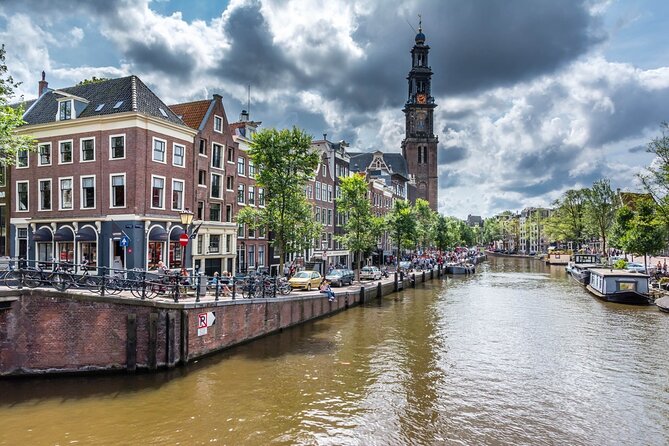
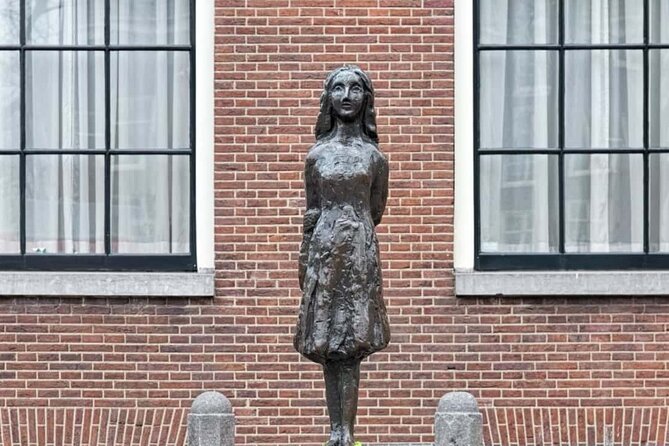
After the Anne Frank House exterior, you see a statue of Anne Frank. The statue is set with the Westerkerk church behind it, a 17th-century landmark whose bells Anne found comfort in, while also sensing the world beyond the attic.
This kind of stop is short, but it works. You get a visual marker that ties the story to the city around it. Instead of keeping everything trapped in the past, the route reminds you that this was happening while daily life continued all around the hiding place.
If you like photo opportunities, this is the kind of stop where you can pause, capture the view, and then move on. It is also a good checkpoint for anyone who wants a moment to regroup before the route shifts to other memorials.
Homomonument: a WWII memorial that expands the lens
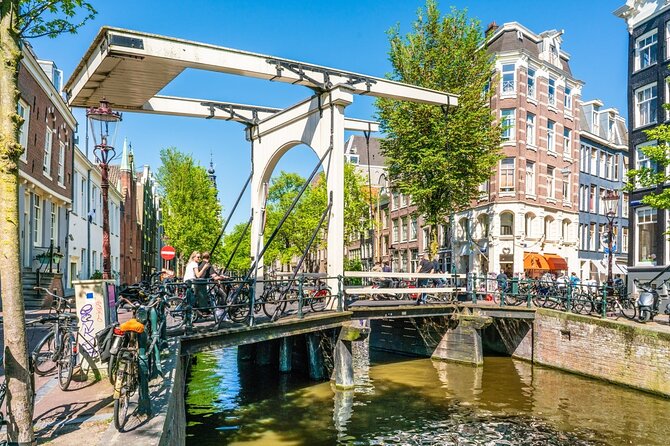
Next is the Homomonument, described as the first memorial in the world dedicated to persecuted LGBTQ+ individuals. It commemorates people who lost their lives under the Nazi regime.
This stop is powerful because it breaks the common habit of thinking WWII remembrance only equals one group of victims. Here, you see that persecution was broader, enforced through Nazi ideology and policies, and suffered by many communities. The tour gives you a clear reason for why this memorial belongs on a route through Amsterdam’s occupation-era story.
The timing is brief, around 10 minutes, but the point is not “spend an hour reading everything.” The point is to recognize it and let it broaden your understanding before the route moves into Jewish memorials and resistance sites.
Other Anne Frank House and Jewish heritage visits:
- Amsterdam Anne Frank: Small-Group Walking Tour & Local Guide
★ 4.8 · 12,789 reviews - Anne Frank’s Story – Guided Walking Tour through Amsterdam
★ 5.0 · 11,619 reviews - Amsterdam: Anne Frank Guided Walking Tour in DE/EN/IT/ES
★ 4.9 · 3,107 reviews - Amsterdam: Anne Frank Guided Small Group Walking Tour
★ 4.8 · 2,722 reviews
Dam Square, the National Monument, and the Nazi recruitment backdrop
You then walk through Dam Square, Amsterdam’s historic main square. The route notes that a Nazi recruitment office once stood here, turning a classic central-city landmark into a reminder of how occupation took over public space.
From there, you pay respects at the National Monument, a cenotaph honoring victims of World War II and later conflicts. This is one of those stops where you might feel your brain switch gears from “city sightseeing” to “this place was used for power and coercion.”
If you are traveling with someone who prefers bigger, iconic places, Dam Square gives that kind of anchor while still holding WWII gravity.
Spinoza Monument: using philosophy to explain the longer timeline
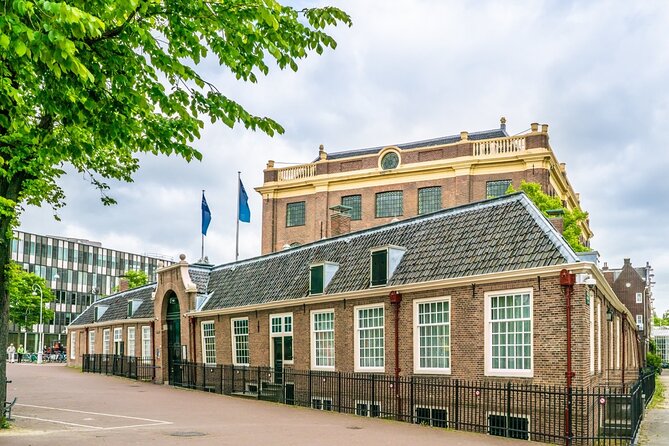
The Spinoza Monument is shorter, about 5 minutes. But it gives you something useful: context about Dutch Jewish life beyond the WWII era.
The tour focuses on the philosopher Baruch (Benedict) Spinoza and his rationalist ideas on religion and politics, which were seen as radical for his time and later influenced the Enlightenment. That shift matters because it prevents a single-note view of Jewish life in Amsterdam as only a story of persecution.
This is a quick stop, but I like it when WWII routes remember the before and after, not just the worst chapters.
Joods Verzetsmonument: Jewish resistance you can stand in front of
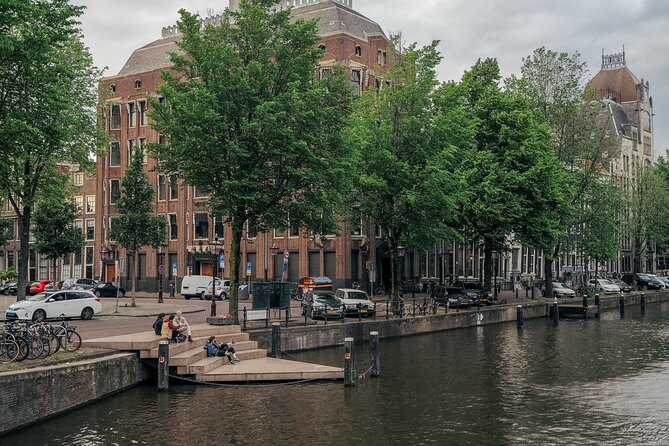
Then you reach the Monument vor Joods verzet, the Jewish Resistance Monument (Joods Verzetsmonument). It was erected in 1988 to commemorate Jewish resistance fighters who lost their lives during WWII. The stop also marks what the route describes as the first mass protest against Nazi occupation.
This is where a memorial becomes more than a name list. Resistance is often the hardest part to imagine unless you are given clear context. Here, the guide helps you connect the physical location to the idea of organized refusal and risk.
Again, the stop is around 10 minutes, so it is not a long lecture. It is a concentrated moment, followed by the next reminder.
Megadlé Jethomiem: an outline you can trace with your eyes
The Monument Megadlé Jethomiem is subtle, and that is part of why it hits. It uses stones to trace the outline of the orphanage from which Jewish children and their caretakers were deported to Sobibor in 1943.
This kind of memorial can feel almost too quiet at first glance. But when you understand what you are looking at, it becomes an image you cannot unsee: children, care, and then deportation.
If you tend to skim details, slow down here. This is a stop that asks you to visually connect the material marker to the human story underneath it.
Portuguese Synagogue area: a landmark even without entry
Next comes the Portuguese Synagogue, once described as the world’s largest synagogue. In the tour framing, it is a symbol of Amsterdam’s once thriving Jewish community.
Important: admission to the Portuguese Synagogue is not included. The stop also notes that the Jewish Museum across the street provides deeper insight into Jewish life, history, and culture in the Netherlands.
So you have a choice. You can appreciate the exterior and symbolism as part of this WWII and occupation route, or you can use this as a pivot point. If you want more depth after the walk, consider adding the museum visit on a separate time slot.
The Dokwerker and the February Strike of 1941
The route then moves to The Dokwerker (Memories of the February strike), a statue tied to the February Strike of 1941. The guide frames it as thousands of workers staging the first public protest in occupied Europe against Nazi persecution.
This is another stop that expands beyond purely Jewish memorials into broader acts of resistance and public defiance. It also helps explain that opposition did not only happen privately or at the edges. People protested, even under extreme risk.
The stop is about 10 minutes, which is enough time to absorb the meaning while still staying on the route.
Deaf Memorial: remembering victims labeled as less than human
Another short but crucial stop is the Deaf Memorial, honoring Jewish deaf and hard-of-hearing victims of the Nazi regime from 1940 to 1945. The tour notes they were labeled as Untermenschen by the Nazis and systematically murdered.
This is one of the memorial stops where your reaction might surprise you. The point is not just tragedy. It is also the machinery of cruelty, enforced through Nazi ideology that targeted people who did not fit their warped definitions of human worth.
If you want your tour to feel emotionally complete and not just historically broad, this stop matters.
Auschwitz Monument in Wertheimpark: a shattered mirror feeling
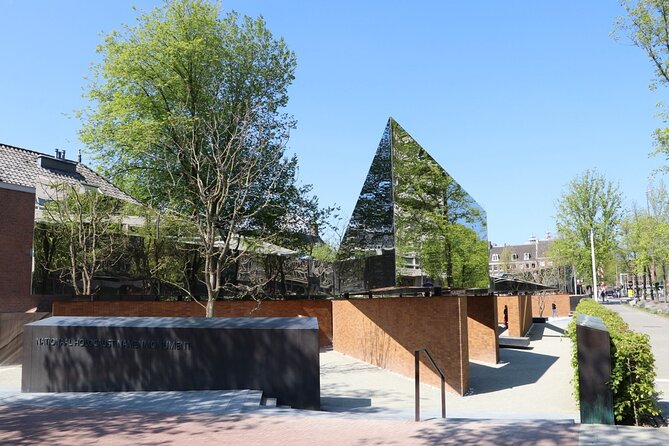
Next is the Auschwitz Monument in a quiet corner of Wertheimpark. The tour describes a shattered mirror memorial that reflects the sky, symbolizing how the heavens themselves were broken by the horrors of Auschwitz and other concentration camps.
Even if you do not know the specific design details, the idea is direct. It turns the memorial into a visual metaphor using reflection, not only text. That often makes it stick longer than a plaque.
This is another about 10 minutes stop, which helps you pause in silence before the final, more structured remembrance site.
National Holocaust Names Monument and Stumbling Stones: a map of names
The tour ends at the National Holocaust Names Monument. It focuses on the names of 102,000 Jewish victims and 220 Roma and Sinti murdered by the Nazis. The route also includes the Stumbling Stones, described as small brass plaques embedded in the pavement, each marking the last known residence of a deported Holocaust victim.
This is where the tour becomes extremely concrete. Names and last-known residences pull the suffering out of abstraction and into specific human geography. It is also a reminder that deportation was not a single event, but a process with homes and neighborhoods involved.
If you arrive early and take a careful look at the pavement markers, you can make this ending feel like a personal moment rather than a quick photo stop.
Because the tour ends here, it is smart to plan your next step. You might want time to linger rather than rushing to your dinner reservation immediately.
Price, value, and what is included versus not
At about $62.54 per person for roughly 2.5 hours, the value comes from two things: the guide and the structure. You get a semi-private walking tour with an expert local guide, a mobile ticket, and satisfaction guaranteed or your money back.
You do not get everything, though. Entry to the Anne Frank House is not included, and Portuguese Synagogue admission is not included. You also do not get food, hotel pickup or drop-off, gratuities, or luggage and coat storage.
So the real value question is this: do you want a guided route that saves you from guessing what to look for and gives context as you walk? If yes, the price is easier to justify. If your main goal is entering major sites, you will likely need to add tickets on your own time.
Practical logistics: how to make the walk feel easy
You will want moderate physical fitness for a walking route with multiple short stops. The tour is near public transportation, which helps if you are timing it around other Amsterdam sights.
Start and end points matter. You start at Westermarkt 60 and finish at the National Holocaust Names Monument at 1018 DP Amsterdam. Because the end point is not back where you started, bring an exit plan. A short taxi or tram connection can save you time, especially if you finish with heavy feelings and want the simplest possible ride afterward.
For clothing, plan for walking and possible rain. One of the reviews called out how the guide stayed informative and kept the group together even during pouring rain. If you dress for damp conditions, you will enjoy the route more.
Who this tour is best for
This is a strong choice if you want more than a quick Anne Frank stop. It suits you if you like seeing how one neighborhood tells multiple WWII stories, including Jewish resistance, deportation memory, and remembrance for other persecuted groups.
It also fits well if you prefer a guided walk where you can ask questions. Semi-private max 12 makes that more realistic than on large tours.
If you want lots of museum time or long interior visits, this may not be the right format, since key admissions like the Anne Frank House and Portuguese Synagogue are not included.
Should you book this Amsterdam WWII Jewish history tour?
Book it if you want a guided, focused walking route through major WWII remembrance points in Amsterdam, with context delivered in English and paced for about 2.5 hours. The semi-private max of 12 and the strong guide reputation for answering questions make it especially appealing if you care about getting the meaning, not just taking photos.
Skip it or add-ons if your top priority is inside access at the Anne Frank House or Portuguese Synagogue. Since entry is not included, you will need separate planning and tickets for those interiors.
If you are choosing a single guided option that helps you understand the city’s WWII-era Jewish story while also honoring other victim communities, this one is a smart pick.
FAQ
Is entry to the Anne Frank House included?
No. The tour starts at the Anne Frank House area with exterior only, and it does not include admission.
Does the tour include entry to the Portuguese Synagogue?
No. Portuguese Synagogue admission is not included.
How many people are in the group?
This is a semi-private tour with a maximum of 12 travelers.
Where does the tour start and where does it end?
The tour starts at Westermarkt 60, 1016 DL Amsterdam and ends at the National Holocaust Names Monument, 1018 DP Amsterdam.
How long is the tour?
It runs for about 2 hours 30 minutes (approx.).
Can I get a full refund if my plans change?
Yes. There is free cancellation, and you can cancel up to 24 hours in advance for a full refund. If you cancel less than 24 hours before the experience starts, you will not get a refund.
Golden Age Corners
- Amsterdam Food and Cultural Tour with Tastings★ 5.0 · 4,315 reviews
- Amsterdam: Historic City Centre Canal Cruise★ 4.3 · 659 reviews
- Amsterdam: Haunted History and Ghost Walking Tour★ 4.5 · 488 reviews
- Amsterdam High-End Dutch Food & History Tour – Up to 8 guests★ 5.0 · 482 reviews
WWII & Remembrance History
- Amsterdam: Dutch WWII Resistance Museum Entry Ticket★ 4.7 · 951 reviews
- Small Group Tour to Nazi WWII concentration camp from Amsterdam★ 5.0 · 112 reviews
- Amsterdam: Anne Frank and World War II Walking Tour (TOP RATED)★ 4.5 · 72 reviews
- The Anne Frank Tour (Jewish Neighborhood & Amsterdam during WWII)★ 4.5 · 56 reviews
Latest to arrive along the quays of Amsterdam




Anne Frank & Jewish Heritage Tours, compared.
Amsterdam Anne Frank: Small-Group Walking Tour & Local Guide
Read our review →
Anne Frank’s Story – Guided Walking Tour through Amsterdam
Read our review →
Anne Frank Guided Walking Tour in DE/EN/IT/ES
Read our review →
Anne Frank Walking Tour Amsterdam Including Jewish Cultural Quarter
Read our review →
Anne Frank’s Last Walk & See Anne Frank House in Virtual Reality
Read our review →
Anne Frank and Jewish Quarter Amsterdam Private Walking Tour
Read our review →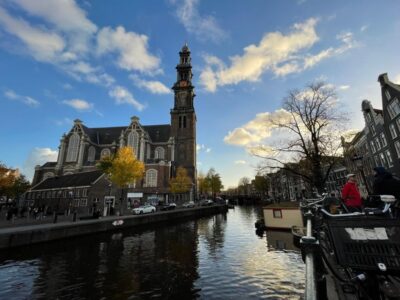
Anne Frank’s Last Walk & Visit Anne’s House in VR
Read our review →Browse the lists this tour appears in