
Reviewed · ANNE FRANK & JEWISH HERITAGE TOURS
Anne Frank story, Jewish District Amsterdam, WW2
Memory lives in Amsterdam’s streets. This Jewish District tour uses real-world landmarks, like the Portuguese Synagogue, to put the Anne Frank story and the Holocaust into everyday context. You walk through the neighborhoods where life, fear, and remembrance overlap.
I especially liked two things. The small group size (max 15) keeps things personal, and you can ask questions without feeling rushed. I also liked the way the guide handles your curiosity, connecting street corners and monuments to what actually happened in World War II Amsterdam.
One thing to think about: time is tight. At about 2 hours 10 minutes, this is focused on key outdoor sites, and Anne Frank museum tickets are not included, so you may want a separate visit if you want more indoor time.
In This Review
- Key Things I’d Book This For
- Why the Jewish District Matters for the Anne Frank Story
- Meeting at De Sluyswacht and Walking the Right Pace
- Portuguese Synagogue (1675) and Sephardic Roots from Spain and Portugal
- The 102,000 Names Monument and the Power of Specific Numbers
- Where People Were Brought for Transport After Arrest
- Best Place to Hide in WW2, and What Hiding Really Means
- Canal-Side Monuments: Taken from Homes and Marked Boundaries
- Small Group, English Guide, and Q&A That Actually Helps
- Price and Value: What $90.70 Actually Buys You
- Who This Tour Suits Best (And Who Might Want More Time)
- Should You Book This Anne Frank Jewish District Tour?
- FAQ
- How long is the tour?
- What language is the tour offered in?
- How much does it cost?
- How many people are in the group?
- Is an in-person guide included?
- Are Anne Frank museum tickets included?
- Where do I meet and where does the tour end?
- Do you use a mobile ticket?
- Is food and beverages included?
- What is the cancellation policy?
Key Things I’d Book This For
- Portuguese Synagogue stop, built in 1675, tracing Sephardic roots from Spain and Portugal
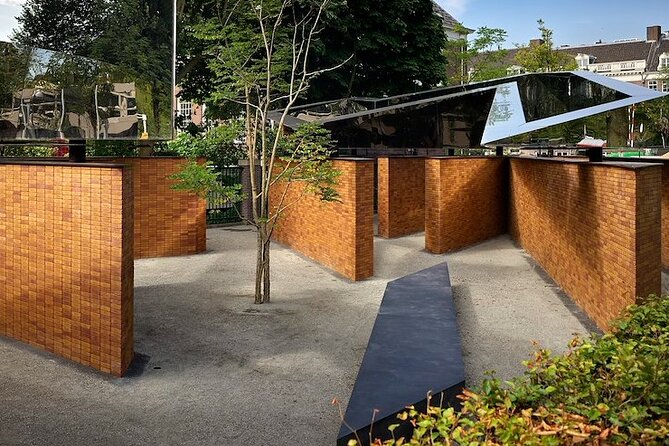
- 102,000 Names monument, a stark reminder of Dutch Jews, Roma, and Sinti lost in the Holocaust
- Deportation and transport context, including where people were taken after arrest
- WW2 hiding-themed stop, designed to help you understand what survival meant on these streets
- Canal-side monuments, marking those taken from homes and people killed at a Polish concentration camp
Why the Jewish District Matters for the Anne Frank Story
If you want the Anne Frank story to feel real, you need the setting. Amsterdam’s Jewish District is not just scenery. It is a map of neighborhoods, routines, and hard choices, all packed into walking distance. On this tour, the city streets become a timeline, moving from community life toward persecution, arrest, and deportation.
The approach here is practical. You do not spend hours reading. You stand where events left their mark, then you get help making sense of how people lived and how the Nazis and collaborators changed everything.
And yes, this area is emotional. That is exactly why it is worth doing with a guide who can explain what you are seeing in plain terms.
Other Anne Frank House and Jewish heritage visits:


Meeting at De Sluyswacht and Walking the Right Pace

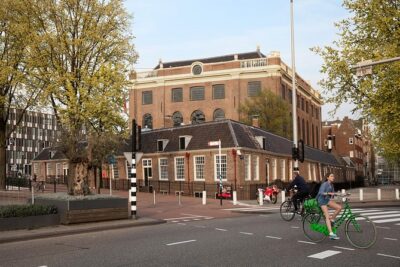
You start at De Sluyswacht, Jodenbreestraat 1 (1011 NG), in the heart of the Jewish quarter area. It’s a straightforward beginning point, and the tour ends at the Portuguese Synagogue area, Mr. Visserplein 3 (1011 RD). The Docksworker monument is nearby at the end, so you have a clear finish.
The tour runs about 2 hours 10 minutes, which is a sweet spot for an outdoor concentration of memorials and key landmarks. This is also a good reminder: Holocaust history is heavy, and your brain needs breaks, not cram sessions.
One small advantage for you: the tour is built for a small group and a pace that fits questions. If you pause at a monument and want more context, you are not stuck powering through a scripted sprint.
Portuguese Synagogue (1675) and Sephardic Roots from Spain and Portugal
One stop that anchors the whole experience is the Portuguese Synagogue of Amsterdam. The synagogue was built in 1675, and the background matters: it was built by Sephardic Jews who originally came from Spain and Portugal.
Why I think this is valuable, even if you are only here for the Anne Frank story: it restores what persecution tried to erase. Before the arrests and terror, there was community, faith, language, and a sense of belonging. Knowing where the synagogue’s story begins helps you understand what was lost, not just what happened after.
A practical note: you will learn this in the outdoor walking rhythm of the tour, so you will likely finish this stop with clearer mental pictures of how Jewish life was organized in the area.
The 102,000 Names Monument and the Power of Specific Numbers
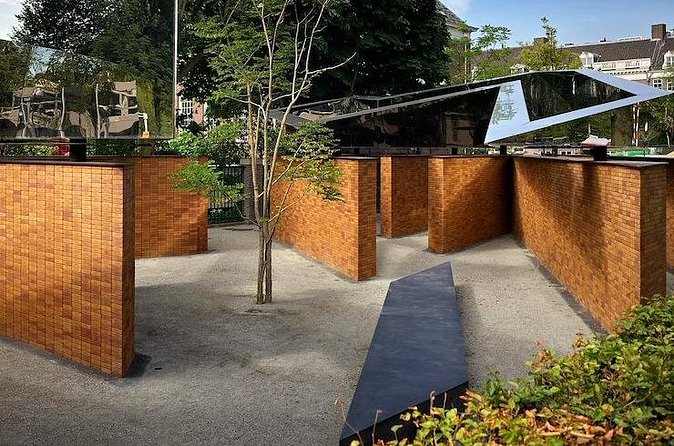
Later you reach a monument that names the scale of loss: 102,000 Names of Dutch Jews, Roma, and Sinti who were victims of the Holocaust. This is not a vague memorial. It is built around specificity, which forces your attention back to real people, not just abstract tragedy.
This stop works because it gives you a mental anchor while you walk. Once you understand that the memorial is about these specific groups, the next sites about arrests, transport, and removal hit harder and make more sense.
If you are the type who gets emotionally overwhelmed, here is a tip that helps: let yourself look, then move. Your legs and your eyes can reset your focus. You do not have to stare for long to understand what the monument is doing.
Where People Were Brought for Transport After Arrest

Another crucial moment is learning about a location associated with how victims were collected after arrest or taken from their homes for transport. This is one of those “the street corner suddenly feels different” stops.
You are not just hearing that deportations happened. You are seeing the logic of how a city can be used, step by step, to control who gets removed. In other words, you get the how, not just the outcome.
This part matters because it helps you connect personal stories like Anne Frank’s wider story. It also helps you notice how fear and control can be embedded into normal urban movement.
A small drawback to flag: this stop can feel intense and heavy. If you are sensitive, consider bringing a moment of breathing space into your plan. Water and a pause afterward can help you keep your footing for the next sections.
Other WWII and remembrance history tours:
- Amsterdam: Dutch WWII Resistance Museum Entry Ticket
★ 4.7 · 951 reviews - Small Group Tour to Nazi WWII concentration camp from Amsterdam
★ 5.0 · 112 reviews - Amsterdam: Anne Frank and World War II Walking Tour (TOP RATED)
★ 4.5 · 72 reviews - The Anne Frank Tour (Jewish Neighborhood & Amsterdam during WWII)
★ 4.5 · 56 reviews
Best Place to Hide in WW2, and What Hiding Really Means
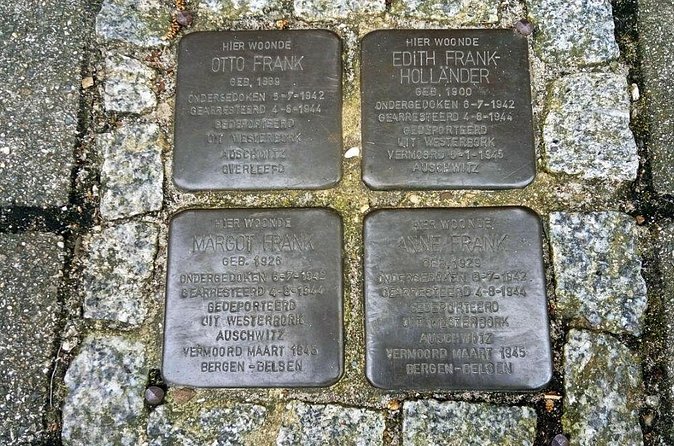
One stop is described as the best place to hide in World War II. That theme matters because it shifts the focus from monuments to human choices under pressure.
On this kind of tour, you are not hunting for dramatic backdrops. You are learning how survival worked in real buildings and narrow spaces, where timing, sound, and secrecy could decide everything. Even when you already know the Anne Frank story, hearing it tied to what hiding involved in this neighborhood gives the story sharper edges.
If you want maximum clarity, ask the guide a question right there. Do not wait until later. It is easier to connect your question to what you are seeing when the street-level details are still fresh in your mind.
Canal-Side Monuments: Taken from Homes and Marked Boundaries
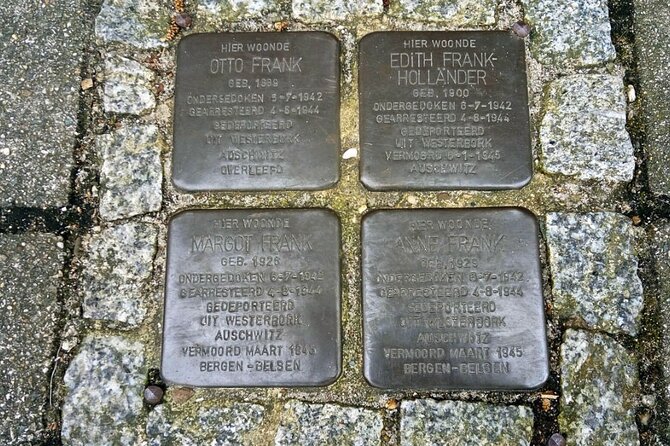
The tour includes monuments that point to what happened to people removed from their homes. One stop focuses on a monument for those taken from their homes on the other side of the canal. Another references a monument tied to people killed at a Polish concentration camp.
These canal-side markers do more than “decorate” the route. They help you understand that Amsterdam’s layout mattered. Boundaries created by water, streets, and distance were not neutral. They became part of how people were moved, separated, and erased.
Why this is useful for you: you start to picture the neighborhood as a set of constraints. That makes the story feel less like history text and more like human geometry, where routes and barriers shape outcomes.
Also, these monuments are spaced so you keep walking. That reduces the chance you will feel stuck in one emotional moment for too long.
Small Group, English Guide, and Q&A That Actually Helps
This is offered in English and runs with an in-person guide. The group size is capped at 15 travelers, which is big enough for energy but small enough for real questions.
I appreciate tours like this because the guide can tailor explanations to what you care about. If you’re more focused on community life, you get context for that. If you’re focused on deportation routes and arrest, you get the logic behind the sites.
And because this is in a walk-and-stop format, your attention stays active. You are not just listening while sitting. You are learning while orienting yourself to the city.
If you hate awkward crowd pacing, this is a plus. The guide is meant to accommodate your needs and curiosities, so you are not forced into a rigid rhythm.
Price and Value: What $90.70 Actually Buys You
At $90.70 per person, this tour sits in the “serious experience” range. The value is not just the walking. You are paying for an in-person guide and a guided sequence through key memorial and history stops.
Here is what you should keep in mind when judging value:
- You do get a guided human layer, which is hard to replicate on your own once you hit the more specific memorials and transport context.
- A mobile ticket is used, so you can keep your plan clean and low-friction.
- Anne Frank museum tickets are not included, so your total budget might be higher if you want an indoor follow-up.
Also, the listing notes group discounts. If you are traveling with a few people already, it’s worth checking whether you can reduce your per-person cost by booking together.
My honest take: if you want a guided route through these emotionally heavy, information-dense sites, the price feels fair. If you only want the most famous Anne Frank stop and nothing else, you might feel this is too focused and not enough time.
Who This Tour Suits Best (And Who Might Want More Time)
This tour is a strong fit if you want:
- A guided walk through key Jewish District sites tied to the Anne Frank era
- Clear explanations in English, with time for questions
- A short, high-impact format that does not take over your whole day
It’s less ideal if you want to linger. You only have about 2 hours 10 minutes, and you are not getting Anne Frank museum entry in this price. If you need slow museum time, plan for a separate museum visit afterward.
Your physical needs should be moderate. This is marked as suitable for travelers with a moderate physical fitness level, which usually means walking through the area is part of the deal.
Should You Book This Anne Frank Jewish District Tour?
I think it is worth booking if you want the Anne Frank story to connect to the neighborhood in front of you. The Portuguese Synagogue detail, the 102,000 Names monument, and the stops tied to transport and hiding create a clear thread from community to catastrophe.
If you are sensitive to heavy topics, go in with realistic expectations: this is not entertainment. It is structured remembrance with context. The good news is the small group size and guide Q&A help you process as you go.
If what you really want is a long, deep museum day, book this for the street-level orientation, then add Anne Frank museum time separately.
FAQ
How long is the tour?
The tour lasts about 2 hours 10 minutes.
What language is the tour offered in?
The tour is offered in English.
How much does it cost?
It costs $90.70 per person.
How many people are in the group?
The tour has a maximum of 15 travelers.
Is an in-person guide included?
Yes. An in-person guide is included.
Are Anne Frank museum tickets included?
No. Anne Frank museum tickets are not included.
Where do I meet and where does the tour end?
You meet at De Sluyswacht, Jodenbreestraat 1, 1011 NG Amsterdam. The tour ends at the Portuguese Synagogue of Amsterdam, Mr. Visserplein 3, 1011 RD Amsterdam.
Do you use a mobile ticket?
Yes. A mobile ticket is included.
Is food and beverages included?
No. Food and beverages are not included.
What is the cancellation policy?
You can cancel for a full refund up to 24 hours in advance. If you cancel less than 24 hours before the start time, the amount paid is not refunded.
Latest to arrive along the quays of Amsterdam



Anne Frank & Jewish Heritage Tours, compared.
Amsterdam Anne Frank: Small-Group Walking Tour & Local Guide
Read our review →
Anne Frank’s Story – Guided Walking Tour through Amsterdam
Read our review →
Anne Frank Guided Walking Tour in DE/EN/IT/ES
Read our review →
Anne Frank Walking Tour Amsterdam Including Jewish Cultural Quarter
Read our review →
Anne Frank’s Last Walk & See Anne Frank House in Virtual Reality
Read our review →
Anne Frank and Jewish Quarter Amsterdam Private Walking Tour
Read our review →
Anne Frank’s Last Walk & Visit Anne’s House in VR
Read our review →Browse the lists this tour appears in