
Reviewed · WALKING TOURS
Amsterdam’s Colonial Past – The Untold Story – Walking Tour
Colonial Amsterdam has a paper trail. This 2-hour walk pulls you from Nieuwmarkt toward Dam Square and keeps the story grounded in what you can see: trade routes, companies, and the public reminders of slavery. I love the clear through line on East-India Trade and the way the route turns to slavery resistance instead of glossing over it. I also like that the guide can make hard topics feel readable, including using visuals like images carried by Giovanni on one recent run. One possible drawback: it is a compact schedule, so you will want comfortable shoes and a steady pace for about two hours.
You meet at Nieuwmarkt 4, and the guide will be holding an orange umbrella for quick recognition. The group is capped at 15 people, and you will get a live guide in English, which helps if you want to ask direct questions. The end point is Dam Square near the National Monument, so you can easily fold the walk into the rest of your day.
Each stop is designed as a quick, focused moment, with admission noted as free at the main photo and story locations. That means your money mostly supports the guide and interpretation, not entry fees. Just keep in mind this is a walking tour, so plan for a moderate physical effort.
In This Review
- Key Things You’ll Notice on This Colonial Past Walk
- Meeting at Nieuwmarkt 4 and Finding Your Guide Fast
- Nieuwmarkt to Oostindisch Huis: The East-India Trade Made Visible
- Binnengasthuisstraat and the West-India Company Foundation
- Stadsarchief Amsterdam and the NHM Financial Power Snapshot
- Herengracht and De Gouden Bocht: Prestige, Power, and a Canal Photo Stop
- Singel and the Fight Against Slavery
- Multatuli Statue: Abolition of Slavery in Indonesia
- Royal Palace Amsterdam and Dam Square’s National War Memorial
- Price and Value: Is $39.32 Worth a 2-Hour Walk?
- What I’d Do Differently Before You Go
- Who This Tour Is Best For (and Who Might Skip It)
- Should You Book Amsterdam’s Colonial Past Walking Tour?
- FAQ
- How long is the Amsterdam Colonial Past walking tour?
- Where does the tour start and where does it end?
- Is the tour in English?
- How much does it cost?
- Are admission tickets included for the stops?
- What is the group size?
- What is the cancellation policy?
Key Things You’ll Notice on This Colonial Past Walk
- Orange umbrella meet-up: easy start at Nieuwmarkt in front of Restaurant-Café In de Waag
- A trade-to-slavery route: East-India, West-India, then resistance and abolition markers
- Short stops, steady pacing: about 2 hours total, with multiple 10 to 15 minute segments
- Canal prestige has a backstory: Herengracht and De Gouden Bocht are more than pretty views
- Guides that use visuals: examples include images used by guide Giovanni for context
- Small group feel: max 15 travelers, so your questions do not get lost
Meeting at Nieuwmarkt 4 and Finding Your Guide Fast
The tour starts at Nieuwmarkt 4, 1012 CR Amsterdam, in front of Restaurant-Café In de Waag. Look for the guide holding an orange umbrella. It is a small detail, but it saves you the usual Amsterdam game of guessing which person with a backpack is the guide.
Expect the first stretch to be practical and story-led, not just speeches from the curb. You are covering multiple sites in about two hours, so the guide uses each location as a cue, then moves on before everyone gets restless. The group size matters here. With a maximum of 15 people, you are more likely to hear every word and keep up if you are asking follow-ups.
This also sets expectations for your pacing. If you like slow wandering, you may feel a little “on the move” during parts of the tour. On the flip side, if you want a structured route that makes sense as you walk, the tight timing is a benefit.
More Guided Walking Tours in Amsterdam



Nieuwmarkt to Oostindisch Huis: The East-India Trade Made Visible
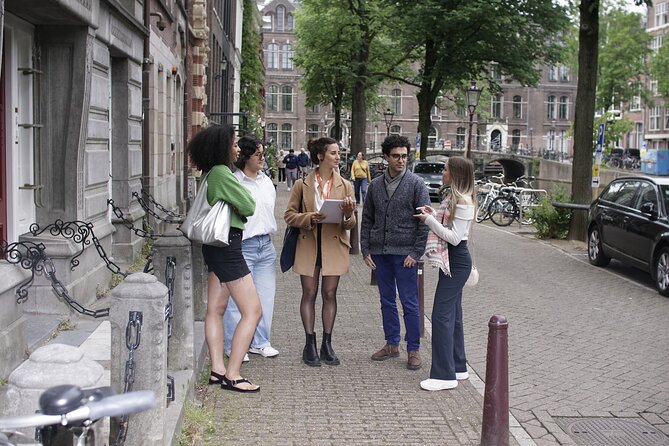
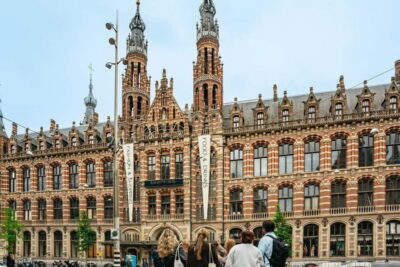
Stop 1 is Nieuwmarkt, just outside Restaurant-Café In de Waag, and it is where the story tone gets set. The tour then moves to Oostindisch Huis, a site tied to the rise of the East-India Trade. That phrase matters, because it frames the Dutch colonial era as a system. It is not only about ships and far-off places, it is also about money, business interests, and decisions made in Amsterdam.
At Oostindisch Huis, you spend about 15 minutes. That is long enough for the guide to connect what you are seeing in the street to what it represented in trade networks. You will likely leave with a better grasp of how Amsterdam’s economy linked directly to overseas commerce.
If you are the kind of traveler who likes “show me where this happened,” this is your sweet spot. The tour uses the city as your textbook. You are not staring at a museum wall and hoping the captions do the work.
Binnengasthuisstraat and the West-India Company Foundation
Next is Binnengasthuisstraat, focused on the foundation of the West-India Company. Again, the goal is to keep the story anchored to place. You are not just hearing a name. You are getting a sense that different parts of Amsterdam’s business world were organized to support colonial expansion.
This stop is also about 15 minutes, which keeps the rhythm moving. For me, that pacing helps with attention. When history is taught in short, distinct “blocks,” it is easier to remember what belongs to which chapter.
One thing to consider: this tour is direct about colonial connections, including trade and slavery themes later on. If you prefer only celebratory heritage, you may find the topic intensity a bit jarring. If you want honesty and context, you will probably appreciate how the route keeps turning the corner from commerce to consequences.
Stadsarchief Amsterdam and the NHM Financial Power Snapshot
Then you hit Stadsarchief Amsterdam, where the tour points to the NHM, a Dutch trading and financial company established in 1824 in The Hague by King William I. The guide uses this stop to connect colonial-era trade with finance and planning, not just shipping.
You get around 15 minutes here, and the information is specific: trade, shipping, and agriculture were part of what the NHM was meant to promote and develop. That level of detail is useful because it explains how colonial systems were supported by institutions. It is not only merchants and captains. It is also policy, capital, and organized long-term development.
This is the stop where you might start noticing a pattern across the whole walk. The city is full of buildings that look like civic or commercial landmarks. Here, the tour nudges you to ask: who benefited, and what structures made it possible?
Herengracht and De Gouden Bocht: Prestige, Power, and a Canal Photo Stop
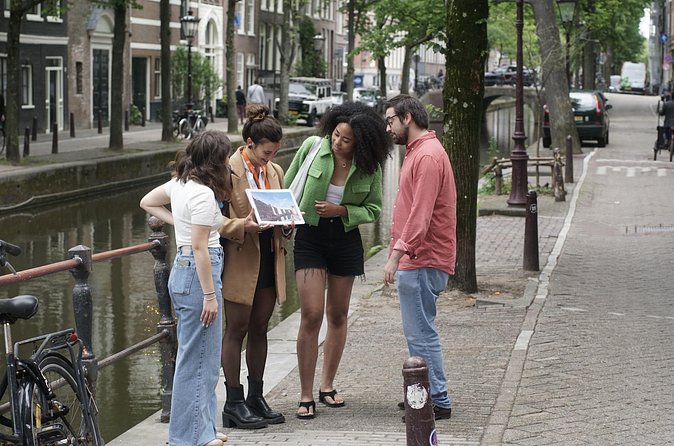
Now the route shifts toward Herengracht, where a commemorative plaque stands in front of the mayor’s residence. You spend about 10 minutes, and this part of the walk is good for people who want to connect political authority with colonial memory.
A canal is often a postcard. Here, it becomes an evidence trail. The tour then briefly touches De Gouden Bocht, often called The Golden Bend, with a stop of about 5 minutes. Yes, you will get the iconic canal vibe. But the point is what sits behind the aesthetics: prestige that grew alongside the systems the tour has been describing.
If you only want skyline photos, this section can feel too short to justify the stop. If you enjoy thinking while you look, even a 5 minute moment can be enough to change how you see that bend in the water.
More gables counted on foot:
- Amsterdam: Anne Frank Guided Walking Tour in DE/EN/IT/ES
★ 4.9 · 3,107 reviews - Amsterdam: Anne Frank Guided Small Group Walking Tour
★ 4.8 · 2,722 reviews - Amsterdam: Cultural Highlights Walking Tour
★ 4.9 · 2,629 reviews - Amsterdam: Ganja Walking Tour
★ 4.2 · 2,127 reviews
Singel and the Fight Against Slavery
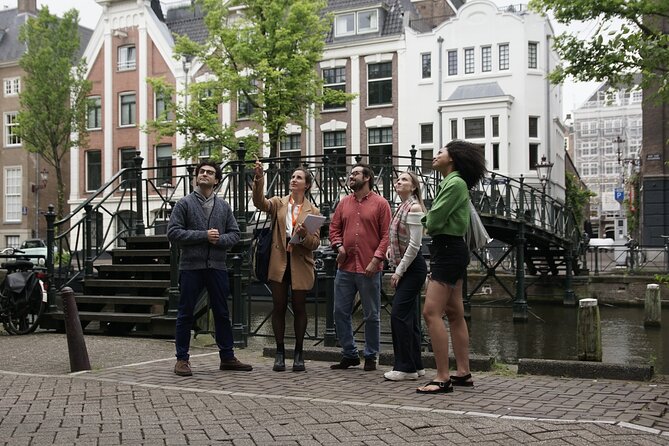
Then the tour turns to Singel, with a focus on resistance against slavery. This is one of the most emotionally serious parts of the route, given the theme. You are here for about 15 minutes, long enough for the guide to slow down and let the topic land.
I like this design choice. The walk does not treat slavery as a side note. It treats it as a central reality and highlights resistance as part of the story, not only as something that happened elsewhere.
A practical note: if you are visiting on a busy day, the streets around Singel can have plenty of foot traffic. Give yourself time to stay in the group and keep your ears open. The guide’s explanations matter more than the background noise.
Multatuli Statue: Abolition of Slavery in Indonesia
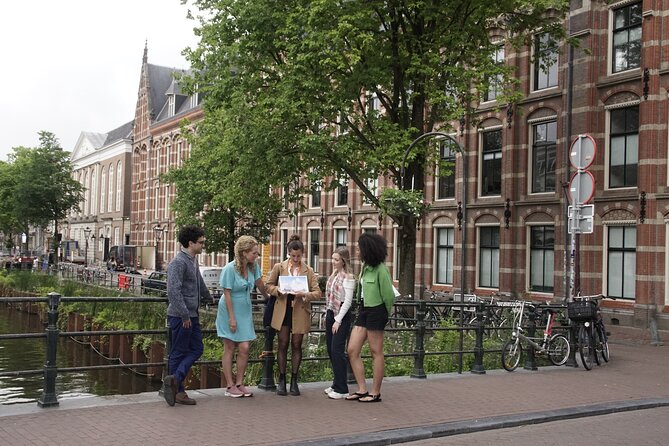
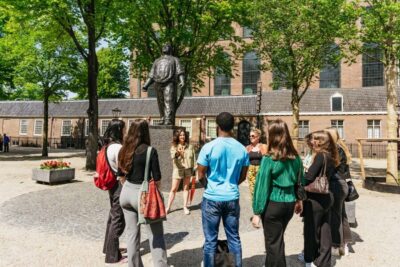
Next is the Statue of Multatuli, tied in the tour narrative to the abolition of slavery in Indonesia. It is a 10 minute stop, and it is designed to show how cultural or intellectual figures can shape public conversations about colonial harm and moral change.
This is also where I think the tour’s tone becomes especially clear. It is not just listing events. It is showing how Amsterdam’s cultural memory reflects what people pushed for, debated, or protested.
If you like a tour that connects history to how people remember it in public spaces, you will likely enjoy this part. A statue is never only a statue here. The guide turns it into a marker of ideas and outcomes.
Royal Palace Amsterdam and Dam Square’s National War Memorial
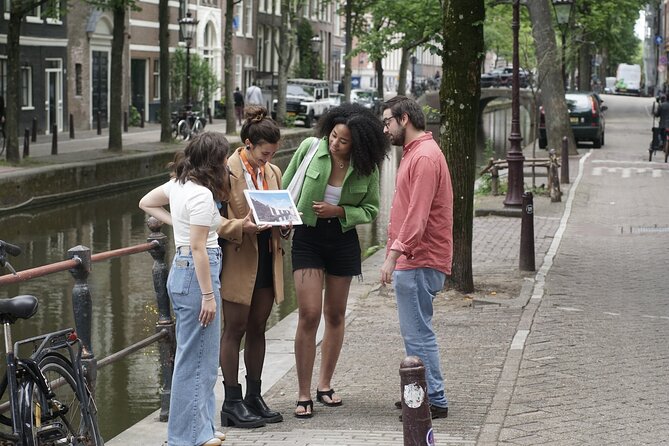
The route then heads to Royal Palace Amsterdam, framed around the role of the Royals during colonialism. This stop is about 5 minutes. Short, yes, but the intention is to keep the tour from getting stuck in one place. It also underlines a theme: colonial systems were not only business projects. They were supported by institutions, including monarchy.
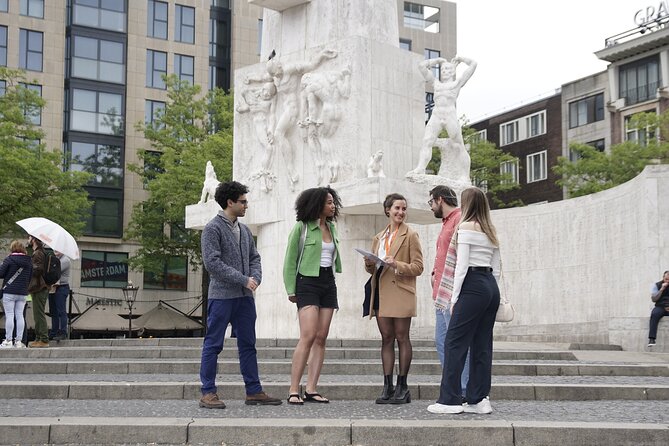
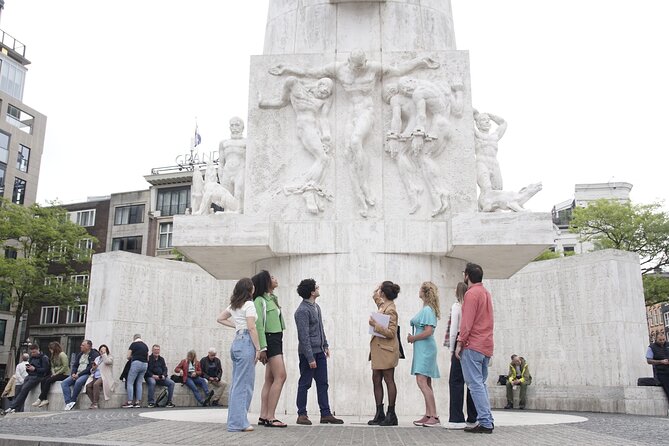
Finally, you reach Dam Square, with a focus on the National War Memorial. You spend about 15 minutes here, and it functions as a closing waypoint. The themes of colonialism, resistance, and national memory can feel heavier by this stage, so ending at a memorial makes sense. It is a place where reflection is built into the setting.
I also like the practical payoff. Ending at Dam Square is convenient. You can keep sightseeing after the tour without having to backtrack.
Price and Value: Is $39.32 Worth a 2-Hour Walk?
At $39.32 per person for about 2 hours, this is not a budget grab, but it also is not an all-day commitment. For me, the value depends on how you like history to be taught.
You are paying for a live guide and a tight route that hits multiple major ideas: East-India Trade, West-India Company foundation, the NHM financial angle, then resistance and abolition markers, plus the royal connection and a memorial finale. That is a lot of conceptual ground for a 2-hour walk, especially when you can spend the rest of your day exploring independently.
Admission is noted as free at the main stops, so you are not also paying for entry tickets along the way. And with a max group size of 15, you avoid the “big bus tour” feeling.
One more planning detail you might appreciate: it is often booked well ahead, with an average booking window around 78 days. If you are traveling in peak season or on a weekend, book early so you get a time that fits your schedule.
What I’d Do Differently Before You Go
Here are the small, practical things that can make this tour smoother.
Wear comfortable shoes. The schedule is compact, and it is easy to feel rushed if you are doing flip-flops plus sprinting through canal-side crowds.
If you are sensitive to heavy topics, mentally prepare for that shift. The route explicitly includes resistance against slavery and abolition in Indonesia. This is not a gentle “colonial trivia” walk.
Bring your curiosity. Ask questions when you have them. The guide is live and the group stays small, so you can get straight answers instead of waiting for a general lecture.
If you are a visual learner, you will probably like what the guide brings to the table. One guide, Giovanni, has been noted to carry images to help with historical context. Even if the visuals differ from day to day, the teaching style tends to be more explanatory than purely factual.
Who This Tour Is Best For (and Who Might Skip It)
This is a strong pick if you want a structured way to understand Amsterdam’s colonial-era connections through real city landmarks. It suits people who enjoy walking, thinking, and then checking their memory later with a mental map of the route.
It also works well for first-time visitors who know Amsterdam is more than canals and bikes, but do not want to figure out the narrative alone.
It may be less ideal if you hate walking schedules or you need a very slow, unstructured day. Also, if you want only upbeat stories, this one is going to stay focused on trade power and slavery-related themes.
Should You Book Amsterdam’s Colonial Past Walking Tour?
Book it if you want history that is anchored to the city you are standing in, with a guide who explains clearly and can use helpful visuals like images. The format is efficient: a live English tour, small group size, and a tight route that moves from trade institutions to slavery resistance, then ends in a reflective public square setting.
Skip it if you want a purely sightseeing-focused canal day or you prefer your tours to avoid difficult moral and historical topics. For the right mindset, this is a smart use of two hours in Amsterdam, especially if you like leaving with a story you can remember because you walked it street by street.
FAQ
How long is the Amsterdam Colonial Past walking tour?
It runs for about 2 hours.
Where does the tour start and where does it end?
The tour starts at Nieuwmarkt 4, 1012 CR Amsterdam, and ends at Dam Square (National Monument).
Is the tour in English?
Yes, it is offered in English.
How much does it cost?
The price is $39.32 per person.
Are admission tickets included for the stops?
The itinerary lists admission ticket free at the stops.
What is the group size?
The tour has a maximum of 15 travelers.
What is the cancellation policy?
You can cancel for a full refund up to 24 hours before the experience starts.
Latest to arrive along the quays of Amsterdam





Walking Tours, compared.
Amsterdam Anne Frank: Small-Group Walking Tour & Local Guide
Read our review →
Anne Frank’s Story – Guided Walking Tour through Amsterdam
Read our review →
Absolutely Amsterdam – the Essential Introductory Walking Tour
Read our review →
Anne Frank Guided Walking Tour in DE/EN/IT/ES
Read our review →

Anne Frank Walking Tour Amsterdam Including Jewish Cultural Quarter
Read our review →Browse the lists this tour appears in