
Reviewed · WALKING TOURS
Amsterdam: Small-group Guided Walking Tour (French/English)
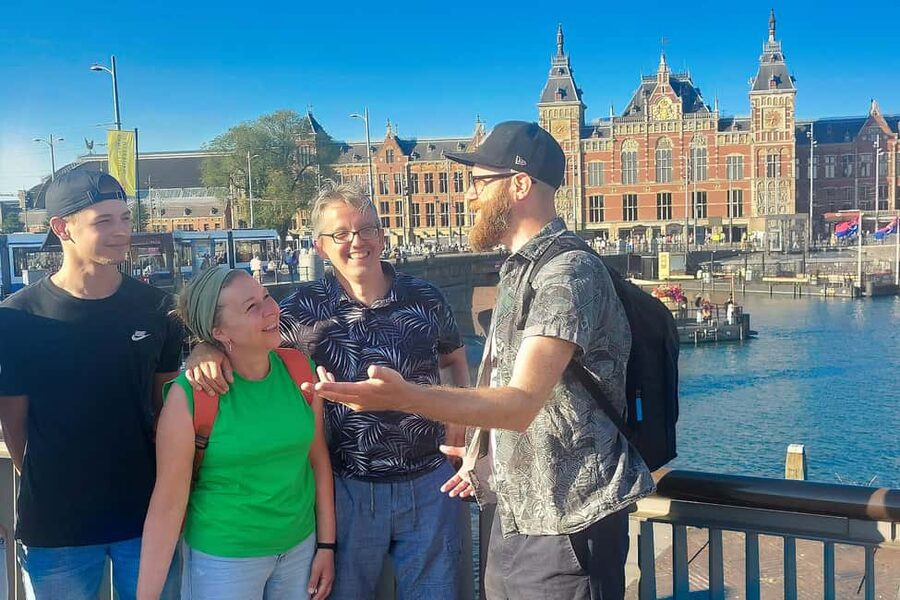
Amsterdam clicks faster when someone points things out. This small-group walk puts you in the center of the action while a local guide, Chris, shares how the city grew, traded, and reinvented itself. You start by the water at Pancakes Amsterdam at the IJ, then move through postcard streets without wasting a day wandering aimlessly.
I like the way the tour balances big landmarks with everyday details, so you get more than photos. You’ll see major sights such as Dam Square, the Royal Palace area, and the 400-year canal belt UNESCO World Heritage site, but you also get stories that make Amsterdam feel like a lived-in place, not a theme park. The best part is the practical wrap-up too, where Chris gives you links and ideas for dining, shopping, boats, and sightseeing.
One thing to consider: many top stops are photo stops, including the Anne Frank House area and other famous exteriors. If you want to go inside specific places, you’ll need to plan those add-ons yourself.
In This Review
- Key Things That Make This Walk Worth It
- Getting Your Bearings at Pancakes Amsterdam by the IJ
- Amsterdam Centraal to Dancing Houses: Fast Orientation, Real Architecture
- Zeedijk and the Stories Behind Everyday Streets
- Onze Lieve Heer op Solder and Oude Kerk: Faith, Secrets, and Old City Layers
- From Burgwallen Oude Zijde to Amsterdam Chinatown, then De Waag
- VOC, the Narrowest House, and the Golden Age Trade Story
- Dam Square and the Royal Palace Area: Amsterdam’s Big Stage
- Magna Plaza, Torensluis Bridge, and the UNESCO Canal Belt
- Anne Frank House Area and Westerkerk: Quiet Weight, Clear Context
- Jordaan: Where the City Feels Like a Neighborhood
- Price and Value: Why $33 Feels Fair for This Much City
- Who This Tour Fits Best
- Should You Book This Amsterdam Walking Tour?
- FAQ
- What languages are available for the guide?
- How long is the walking tour?
- Where does the tour meet?
- Is food or drinks included in the tour price?
- What should I bring?
- Is the tour wheelchair accessible?
- Can the route change during the walk?
- What can I expect at major attractions?
- Is it refundable if I cancel?
Key Things That Make This Walk Worth It
- Guided in English or French, with Chris’s storytelling style that keeps questions coming
- A tight, efficient route through the historical center, so you cover a lot without rushing
- UNESCO canal belt time with context on the Golden Age and Amsterdam’s trading power
- Jordaan neighborhood focus, plus pointers to local-feeling corners like courtyards and secret gardens (when timing allows)
- Post-tour help in the form of recommendations and helpful links, including food favorites like bitterballen
- Comfort and pacing that reviewers consistently call out as easy to follow
Getting Your Bearings at Pancakes Amsterdam by the IJ
Most first-time Amsterdam plans start with guesswork. This one starts with an easy win. You meet behind Amsterdam Centraal, near the white and blue ferries heading to Amsterdam North, next to Pancakes Amsterdam at the IJ. Look for the big blue “D” ferry halte sign by the bike lane. Your guide wears glasses, has a beard, and a baseball hat, which makes it simple to spot them quickly.
Why I like this start: it gives you a sense of Amsterdam’s layout right away. The IJ water, the ferry crossing energy, and the proximity to Central Station all scream one theme, Amsterdam is a city of movement. Even if you’re not taking the ferry that day, you’ll understand where the city’s “center of gravity” sits and why.
Bring the basics and you’ll enjoy it more. Comfortable shoes matter, because you’re walking for a couple hours. Add water, and bring an umbrella because Amsterdam weather loves surprises.
More Guided Walking Tours in Amsterdam

Amsterdam Centraal to Dancing Houses: Fast Orientation, Real Architecture
From the meeting area, you head to Amsterdam Centraal Station for a photo stop and a quick orientation moment. You’re not just looking at the station, you’re learning what it represents, the point where the city’s old routes and modern travel meet.
Then comes one of Amsterdam’s instantly recognizable quirks, the Dancing Houses (you’ll stop for a short look). These leaning, gravity-defying buildings are eye candy, but your guide ties them back to how Amsterdam builds and repairs over time. It’s the kind of architectural detail that you’d miss if you walked past without help.
Next up is the Basilica of Saint Nicholas area, another photo stop. This is where you start picking up a pattern: the tour threads religion, trade, and daily life together instead of treating each stop like an isolated postcard.
Zeedijk and the Stories Behind Everyday Streets
Zeedijk Street is a strong “glue stop” because it shows you Amsterdam as a working city, not just a museum corridor. You get a quick photo stop and guided commentary that connects streets to the city’s history and neighborhood evolution.
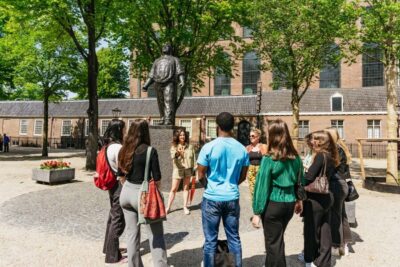
Along the way, you also pass the Major Alida Bosshardt statue. Even when a moment is brief, this kind of stop helps you see Amsterdam beyond canals and squares. It nudges your brain toward the city as a community that created its own heroes, not just a backdrop for tourism.
Onze Lieve Heer op Solder and Oude Kerk: Faith, Secrets, and Old City Layers
The tour includes a stop at Ons’ Lieve Heer op Solder (Our Lord in the Attic Museum). You’ll pause for a photo stop, which means you see the exterior and hear the story behind why this place exists at all. The value here is understanding Amsterdam’s layers. The attic church concept is a great example of how people found solutions when times were complicated, and you’ll likely connect it later when you see other tucked-away details around town.
After that, you reach Oude Kerk for another quick look. The Oude Kerk is one of the city’s older anchors, and your guide uses it to explain how Amsterdam’s identity took shape over centuries. Even if you only see the outside, you’ll start to recognize how old the city really is and how much has changed around it.
A practical note: these “brief photo stop” moments are short by design. That’s part of the trade-off for covering more ground in a 2 to 3 hour walk. You’re getting context fast, not lingering for entry tickets.
From Burgwallen Oude Zijde to Amsterdam Chinatown, then De Waag
The walk takes you through areas like Burgwallen Oude Zijde, which helps you understand the shape of old Amsterdam street life. This is where the route starts to feel like it’s moving through neighborhoods instead of only famous monuments.
Then you’ll see Amsterdam Chinatown. A photo stop here can be more meaningful than it sounds if your guide explains how migration and commerce shaped the neighborhood. It’s a reminder that Amsterdam’s story is not just Dutch history, it’s European trade routes, arriving communities, and cultural mixing over time.
De Waag Restaurant is another stop where you get a quick photo and guided explanation. De Waag’s name links to weighing and trading history, and this is the kind of “small detail” tour guides should be good at. It turns a restaurant front into a history clue.
More gables counted on foot:
- Amsterdam: Anne Frank Guided Walking Tour in DE/EN/IT/ES
★ 4.9 · 3,107 reviews - Amsterdam: Anne Frank Guided Small Group Walking Tour
★ 4.8 · 2,722 reviews - Amsterdam: Cultural Highlights Walking Tour
★ 4.9 · 2,629 reviews - Amsterdam: Ganja Walking Tour
★ 4.2 · 2,127 reviews
VOC, the Narrowest House, and the Golden Age Trade Story
This is where the tour’s historical spine really shows. You get to the VOC / Dutch East India Company area, and your guide connects Amsterdam’s power to global commerce. The Dutch East India Company is central to understanding why the city built grand canals and impressive canal houses, and why Amsterdam’s wealth took off during the Golden Age.
After that, the tour highlights the Narrowest House in Europe. You might think, that’s just a quirky building, but it’s also a practical way to talk about city rules, property pressure, and how Amsterdam’s canal belt and urban growth affected street-level life. It’s the kind of stop that makes your photos fun later because you’ll remember why the building ended up so narrow.
Dam Square and the Royal Palace Area: Amsterdam’s Big Stage
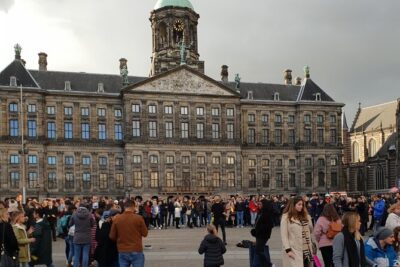
Dam Square is a must for most visitors, and here you’ll do a photo stop with guided context. Dam Square can feel like a photo magnet, but with the right explanation it becomes a timeline. Your guide connects it to how Amsterdam gathered power, governance, and public life in one central place.
Right after that, you’ll see the Royal Palace area (again, a photo stop). This is where the city’s “official face” comes in. Even without going inside, you can understand why the palace belongs on this route: it anchors the political story that sits beneath the canal beauty.
If you’re the type who thinks architecture is more than decoration, this stretch is a highlight.
Magna Plaza, Torensluis Bridge, and the UNESCO Canal Belt
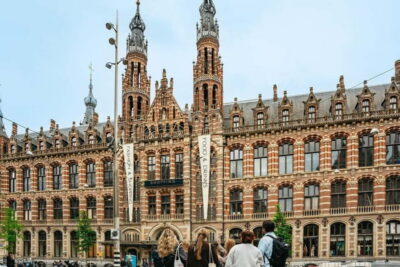
Magna Plaza is a modern contrast stop. You get a short look and learn how Amsterdam layers today’s shopping and lifestyle over older urban routes. It’s useful if you want to understand what changed, not only what stayed.
Then the walk crosses to Torensluis Bridge for a photo stop. Bridges are great “thinking points” on a canal city because they force you to notice connections. You’ll start to see how the canal belt functions like an internal road system.
Next comes Grachtengordel, the canal belt area recognized as UNESCO World Heritage. This is the part of the tour where you slow down mentally, even if you don’t slow down physically. You’re learning why these canals matter: planning, wealth from trade, and a city built with water as a defining feature. Your guide’s job is to help you see beyond the obvious. If you pay attention here, you’ll realize that Amsterdam’s canals are a system, not just scenery.
Anne Frank House Area and Westerkerk: Quiet Weight, Clear Context
The tour includes a photo stop at the Anne Frank House area. This is one of those moments where your guide’s framing matters. Even from the outside, you’ll get the historical context that connects Anne Frank’s story to the broader history of Amsterdam during the period people often reference when discussing the Holocaust.
Right after that, you reach Westerkerk for another photo stop. Westerkerk helps restore perspective. It brings the religious and civic look of older Amsterdam back into focus, and you’ll probably notice how the skyline and canal edges guide what you see from street level.
Because these are outside viewing stops, you should plan separately if you want museum time inside the Anne Frank House or any other site. The walk is designed for context and orientation, not for ticketed museum pacing.
Jordaan: Where the City Feels Like a Neighborhood
The tour ends in The Jordaan neighborhood with a photo stop. This is a smart way to finish, because Jordaan feels less like “top attractions” and more like daily life. Even if you don’t linger long at each corner, you leave with a sense of where you might return later for coffee, a meal, or just an unplanned wander.
Your guide’s commentary here ties together what you learned earlier: Amsterdam’s trading wealth, its social layers, and the way culture shows up in streets and courtyards. The tour also mentions hidden courtyards and secret gardens as part of the experience. You won’t necessarily get a cinematic Hollywood-style reveal at every turn, but the guide will point out the kinds of spots locals notice.
Price and Value: Why $33 Feels Fair for This Much City
At around $33 per person for a 2 to 3 hour guided walking experience, this is priced like a practical first day activity. You’re paying for three things: an organized route through major areas, a guide who answers questions on the spot, and recommendations you can use immediately after you finish walking.
If you tried to DIY this on your own, you’d cover fewer stops or you’d spend longer bouncing between neighborhoods without learning the connections between them. What makes this feel like value is the guide’s follow-through. Chris provides helpful links and contacts after the tour, plus personal suggestions for dining, shopping, boats, and sightseeing. One review even highlights that he recommended bitterballen, which tells me he’s not only telling stories, he’s sending you toward local food.
Who This Tour Fits Best
You’ll probably love this tour if:
- You’re visiting for the first time and want to get your bearings fast
- You care about why buildings and neighborhoods look the way they do
- You want a guide who will answer questions without making it stiff
- You like walking tours that end with practical next steps, not just sightseeing photos
It might be less ideal if:
- You’re hoping for lots of interior museum time, since many sites are photo stops
- You want a slow, linger-and-stare style pace for every attraction
Should You Book This Amsterdam Walking Tour?
Yes, if your goal is to understand Amsterdam quickly and walk away with a plan. The strongest reasons to book are the small-group feel, the route that connects Dam Square, the UNESCO canal belt, and Jordaan into one coherent story, and Chris’s ability to turn landmarks into real context. You also get useful recommendations after the tour, so your remaining time in Amsterdam feels smarter instead of scattered.
If you’re the type who builds your itinerary around timed museum tickets, book this first to set the stage, then add the specific interiors you care about. Done that way, you’ll feel like you spent your first day wisely, not just busy.
FAQ
What languages are available for the guide?
The tour is offered with a local guide in English or French.
How long is the walking tour?
It runs about 2 to 3 hours.
Where does the tour meet?
Meet behind Amsterdam Centraal Station, near the restaurant Pancakes Amsterdam at the IJ, by the water and next to a big “D” ferry halte sign near the bike lane.
Is food or drinks included in the tour price?
No. Drinks and food are not included.
What should I bring?
Bring comfortable shoes, an umbrella, and water, plus weather-appropriate clothing.
Is the tour wheelchair accessible?
Yes, the tour is listed as wheelchair accessible.
Can the route change during the walk?
The itinerary might be adjusted for your interests, construction work, or other unforeseen circumstances.
What can I expect at major attractions?
Many stops are photo stops at landmark exteriors, including areas like Dam Square, the Royal Palace, and the Anne Frank House area.
Is it refundable if I cancel?
Yes, you can cancel up to 24 hours in advance for a full refund, and there is also a reserve now, pay later option.
Latest to arrive along the quays of Amsterdam




Walking Tours, compared.
Amsterdam Anne Frank: Small-Group Walking Tour & Local Guide
Read our review →
Anne Frank’s Story – Guided Walking Tour through Amsterdam
Read our review →
Absolutely Amsterdam – the Essential Introductory Walking Tour
Read our review →
Anne Frank Guided Walking Tour in DE/EN/IT/ES
Read our review →

Anne Frank Walking Tour Amsterdam Including Jewish Cultural Quarter
Read our review →Browse the lists this tour appears in