
Reviewed · CITY TOURS
Amsterdam: Queer City Walking Tour With Local Guide
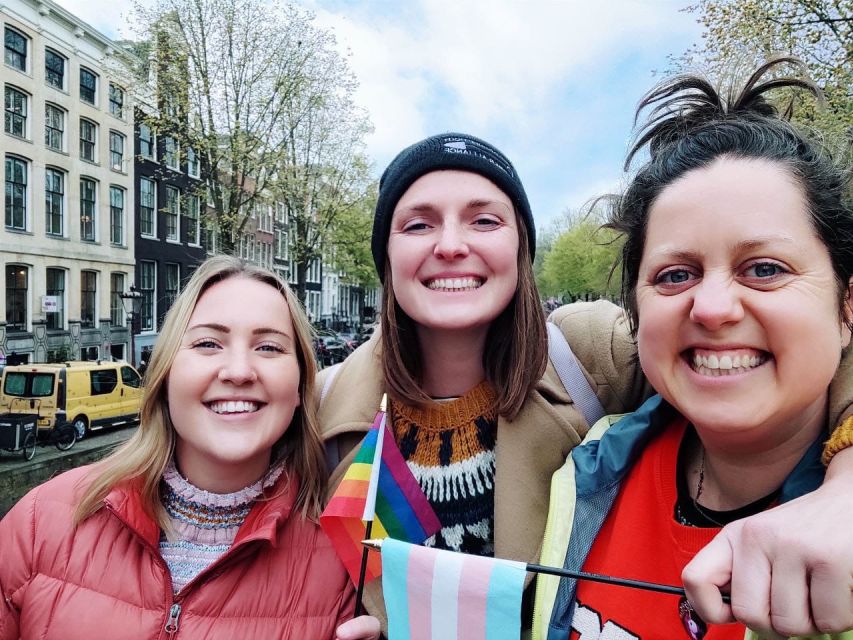
One of Amsterdam’s most personal walks. This 2-hour queer city tour trades generic sightseeing for LGBTQI+ stories you actually feel, guided by Sanne. I especially liked the up-close, personal perspective and the way you connect landmarks to protests, love stories, and risk. One thing to consider, the route includes Amsterdam’s Red Light District area, so if you prefer to avoid adult-oriented surroundings, plan your comfort level.
You’ll start at Dam Square and move through the oldest parts of town at an easy walking pace. The tour is built for real conversation too, so if you’re the type who likes sharing your own life experiences or listening to others, you’ll get more out of it.
Sanne keeps it moving and grounded, and the ending at Café ’t Mandje feels like a natural landing point rather than a random stop. It’s a small-group rainbow tour that tries hard to make Pride, history, and present-day Amsterdam connect in one clear storyline.
In This Review
- Key highlights you will care about
- Dam Square to the queer heart: what makes this walk different
- Why Sanne’s guide style matters on an LGBTQI+ tour
- Nationaal Monument: controversial context at the start
- Homomonument: memory, protest, and why it lasts
- Belle, Condomerie, and the Aids-crisis story you might not expect
- Red Light District and Zeedijk Street: old gay town, no sugarcoating
- Eagle Amsterdam, Pride Clothing, and Kokopelli: quick passes that add up
- Dancing Houses photo stop: a breather with a payoff
- Café ’t Mandje finish: ending in queer space, not back on the street
- What you get for $59, and why the value is more than the price tag
- Practical tips so the tour feels easy, not stressful
- Who this tour suits best, and who should think twice
- Should you book this Amsterdam Queer City Walking Tour?
- FAQ
- Where is the meeting point for the tour?
- How long is the Amsterdam Queer City Walking Tour?
- How much does the tour cost?
- What languages is the guide speaking?
- Does the tour run in bad weather?
- What should I bring?
- Is the tour wheelchair accessible?
- What are some of the main stops on the route?
- Where does the tour end?
- What is the cancellation and payment option?
Key highlights you will care about
- Start at the Nationaal Monument at Dam Square, then hear controversial context tied to why it exists
- Homomonument stop with a guided 20-minute focus, built around memory, protest, and LGBTQI+ life
- Condomerie and AIDS-crisis context, including how necessity shaped one of the earliest concepts of queer retail
- Old gay town walk through Zeedijk Street, with a mix of walking time and short guided moments
- Kokopelli and Belle as narrative stops, where you learn what these spaces mean beyond the names
- Finish in front of Café ’t Mandje, one of the oldest queer bars in Amsterdam
Dam Square to the queer heart: what makes this walk different
This is not the usual Amsterdam tour where you check boxes and move on. You’re walking through a slice of the city where LGBTQI+ life is treated as part of the core story, not an add-on. Sanne frames each stop so you see connections you would likely miss on your own, like how Pride energy, legal change, and everyday love can sit on the same street corners.
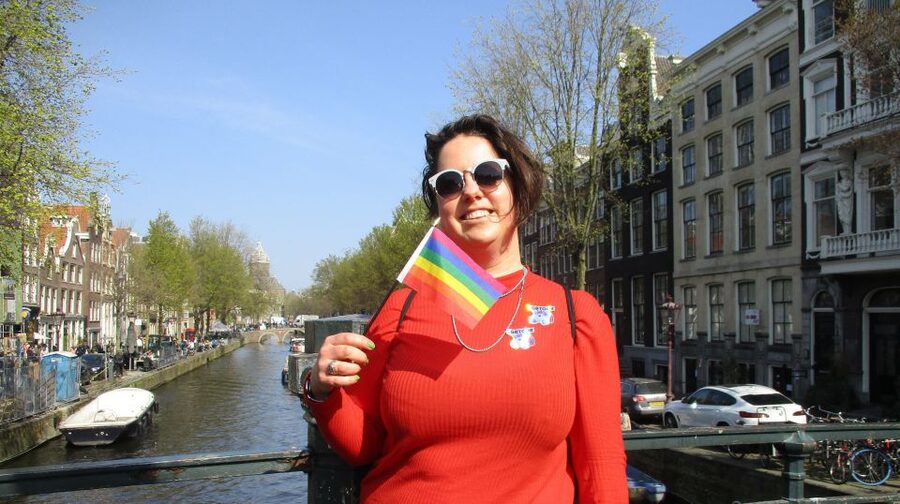
The tour is also direct about community. The rainbow theme is not just decoration, it is an invitation. You’ll get chances to share your own story if you want, and you’ll meet queers and allies from around the world who came for the same reason: to understand Amsterdam’s queer life with a human lens.
At 2 hours, you get a focused route without getting stuck in a long slog. And because the tour runs rain or shine, it stays practical. Wear shoes you can actually walk in, and you’ll be fine.
More Guided Walking Tours in Amsterdam

Why Sanne’s guide style matters on an LGBTQI+ tour
Sanne is the kind of guide who turns a landmark into a personal narrative. That is the main reason this tour consistently gets such strong feedback: people show up for history, but they leave talking about how stories were shared with care.
The tour description is clear that she mixes “historically and personally.” That matters because queer history in a city can be told in facts, dates, and buildings. But what you remember later is often the emotional details, the why behind decisions, and how someone’s love or fear shaped what happened next.
In the reviews, you can feel that same thread: guests highlight the personal connections and Sanne’s warmth. They also mention how much they learned, which is a good sign for you. A personal guide can still deliver substance, and this one does.
Nationaal Monument: controversial context at the start
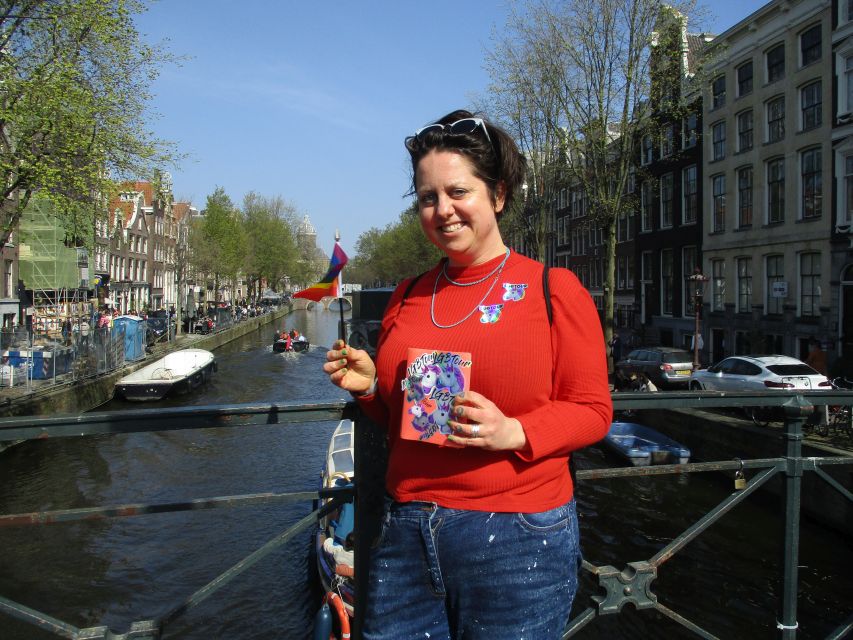
You meet at the Nationaal Monument at Dam Square, and the first minutes set expectations fast. The highlights specifically call out controversial stories about how the monument came to be. That is a smart way to start, because it primes you to read Amsterdam’s public spaces as contested, political, and alive.
Dam Square is busy, tourist-heavy, and easy to treat as a backdrop. But starting here means you learn how a major landmark sits inside larger arguments about identity and power. Even if you have visited Dam Square before, you’ll likely notice different things after hearing the queer perspective.
The tour also includes a playful look at royal iconography, the kind you might ignore. The included notes mention unicorns on the Royal Palace and the question of what they are doing there. If you like the small visual clues that reveal how symbolism works, this is exactly that kind of stop.
Practical note: this area can be crowded. Give yourself a little extra time before the meeting so you can find your way and settle in.
Homomonument: memory, protest, and why it lasts
Next you visit the Homomonument, with a guided stop of about 20 minutes. This is one of the anchors of the entire tour. Homomonument is designed to be more than a photo spot, and the tour uses that strength on purpose.
On this walk, the Homomonument stop is where you get the “how did we get here” energy. You hear stories about Amsterdam’s queer history, including Pride and protests. The point is to show that rights and visibility were never automatic. People pushed, people argued, and some people risked a lot just to live openly.
If you want an Amsterdam queer history tour that feels emotionally grounded, this is where it clicks.
Possible drawback: if you are short on time or you dislike reflective, memorial-style sites, you might want to mentally prepare for a more serious moment early in the tour.
Belle, Condomerie, and the Aids-crisis story you might not expect
The itinerary then moves to a sequence of stops that feel like they belong to different eras, but Sanne connects them through the LGBTQI+ timeline.
You’ll visit Belle for around 10 minutes with a guided stop. Details are not spelled out in the listing, but the structure matters: this is one of the shorter guided segments, so you get a focused story without feeling rushed.
Then comes Condomerie, again a guided stop of about 10 minutes, and this one is explicitly described as tied to the Aids crisis. The included info says it relates to the first condom shop in the world and that it was born out of necessity. That is a powerful theme for you to carry through the rest of the walk, because it reframes “queer nightlife” and “queer history” as also including public health, safety, and survival.
This is also the kind of topic that makes a queer tour valuable even if you already know a bit. Facts alone can feel dry. The way this tour frames necessity and response makes it feel immediate.
If you’re the type who appreciates “everyday impact” history, this part will likely be a highlight.
More gables counted on foot:
- Amsterdam: Anne Frank Guided Walking Tour in DE/EN/IT/ES
★ 4.9 · 3,107 reviews - Amsterdam: Anne Frank Guided Small Group Walking Tour
★ 4.8 · 2,722 reviews - Amsterdam: Cultural Highlights Walking Tour
★ 4.9 · 2,629 reviews - Amsterdam: Ganja Walking Tour
★ 4.2 · 2,127 reviews
Red Light District and Zeedijk Street: old gay town, no sugarcoating
After those guided moments, you head into the heart of what the tour calls old gay town, including a visit of about 15 minutes in the Red Light District area. Then you walk along Zeedijk Street for around 15 minutes.
This is one of the most practical, and slightly tricky, parts of the route. Amsterdam’s Red Light District is one of the city’s most unmistakable neighborhoods. But on this tour, it is treated as a historical and queer geography space, not just a spectacle.
What you gain from this stop is perspective. You’ll hear stories that explain how queer life developed in and around this area, and you’ll likely understand why certain neighborhoods became places where community could gather, even in tense times.
What to consider: adult-oriented surroundings can be uncomfortable for some people. The tour keeps it respectful, and the framing is historical, but you should still choose this tour with your personal comfort level in mind.
Zeedijk Street then gives you a walking stretch where you can absorb the atmosphere while still learning. The guided time is balanced, so you’re not just pushed through the streets with no context.
Eagle Amsterdam, Pride Clothing, and Kokopelli: quick passes that add up
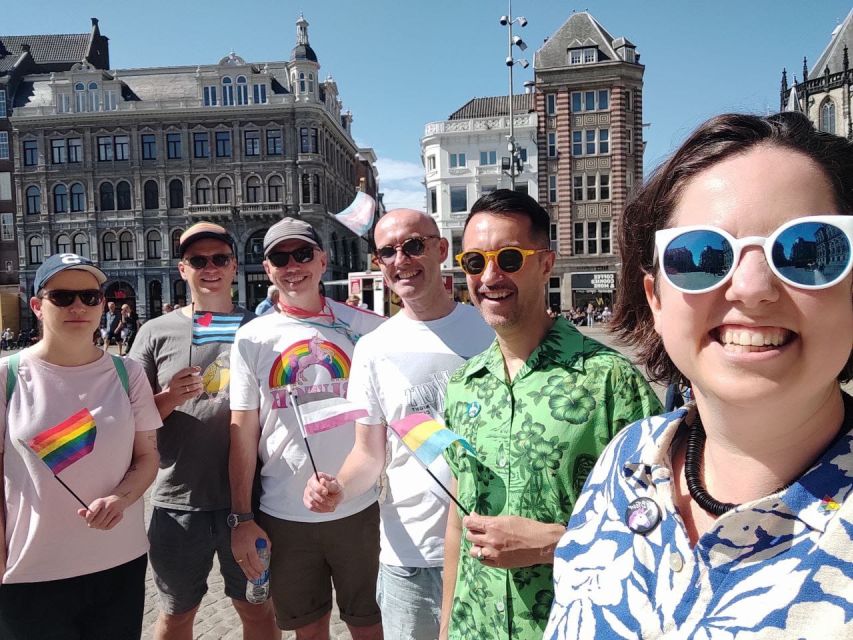
Not every stop is long. The itinerary includes a few short passes of about 5 minutes each, including Eagle Amsterdam and a Pride Clothing spot.
Those quick visits can sound minor, but they work because they connect the story thread. Think of them as punctuation marks. You learn what these places represent in the wider queer ecosystem, then you keep moving.
Then you get another guided moment at Kokopelli for about 10 minutes. Again, the listing doesn’t spell out details beyond the guided time, but the structure tells you the goal: you will learn what the space means within the queer story of Amsterdam, not just what it looks like from the sidewalk.
If you like tours where you are constantly building a map in your head, this pattern helps. Short stops, followed by walks, gives you time to process and take pictures without losing the narrative.
Dancing Houses photo stop: a breather with a payoff
The next stop is Dancing Houses in Amsterdam, with a 10-minute photo stop.
This is the tour giving you a breather. After the intensity of monument and activism stories, you shift back into the visual side of Amsterdam. Dancing Houses is a recognizable architectural moment, and a photo stop is exactly the right length so you can enjoy it without turning the tour into “architecture lecture time.”
If you want a practical tip, bring your camera battery. You’ll likely take more photos than you expect because you’ll be pausing in locations tied to identity, not just buildings that happen to look pretty.
Café ’t Mandje finish: ending in queer space, not back on the street
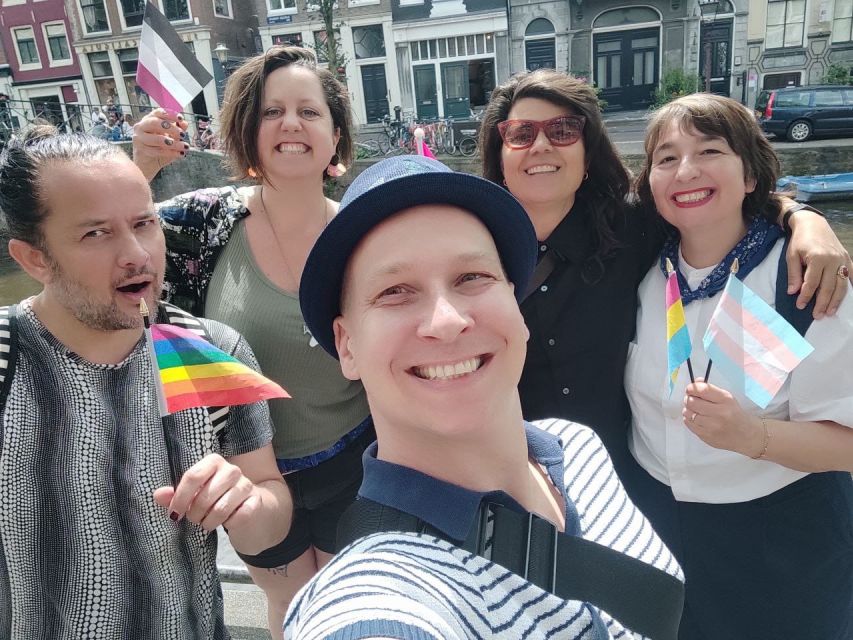
The tour finishes at Café ’t Mandje, described as an ending in front of one of the oldest queer bars. That matters for your experience because it gives closure. You aren’t sent out into a random intersection where you have to process everything alone.
It is also a good moment to decide what you want next. If you’re in the mood to keep the evening going, you’re already near a venue that fits the tour theme. If you are tired, you can simply reset with a drink and reflect on what you just learned.
Even if you do not go inside, arriving at the ending point after a story-heavy walk makes the whole experience feel complete.
What you get for $59, and why the value is more than the price tag
At $59 per person for a 2-hour walking tour, you are paying for a guide who can connect queer history, Pride and protest, and personal life stories into one route. The value comes from the human element plus the fact that several stops are explicitly guided, including Homomonument, Condomerie, and Kokopelli.
You also get a tight itinerary that covers major queer landmarks and major themes. The included highlights call out:
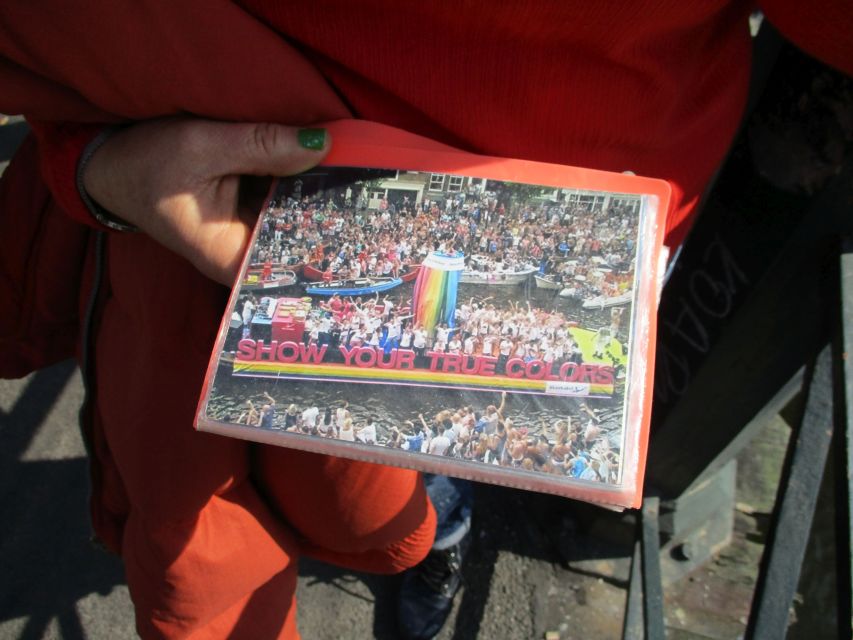
- Pride and protest tied to Amsterdam’s biggest Pride event
- The queer perspective on the city’s history
- A story about gender identity change on a passport, framed as a first and a hero moment
- A lesson about how the Aids crisis shaped practical response, tied to condoms and safety
In other words, you’re not just sightseeing. You’re getting specific topics you can remember, and they are tied to real places you can later revisit.
Practical tips so the tour feels easy, not stressful
Here’s what will help you enjoy it fully:
- Wear comfortable shoes. You are walking through central Amsterdam.
- Bring rain gear and expect it to run in wet weather. Amsterdam can change fast.
- If it is warm, pack sunscreen and a sun hat.
- If you need accessibility support, the tour is listed as wheelchair accessible, which is a major plus.
One more small planning tip: Dam Square is a high-traffic zone. Show up a little early so you can find your guide without rushing. Sanne says you will recognize her by a tiny rainbow flag.
Who this tour suits best, and who should think twice
This is a great fit if you want:
- An Amsterdam queer walking tour with real stories tied to recognizable places
- A guide who uses personal perspective in addition to facts
- A route that includes Pride and protest themes, not only nightlife
It may be less ideal if:
- You strongly dislike the Red Light District area and would rather avoid adult-oriented surroundings
- You prefer a purely historic, date-and-place style tour with minimal personal story
If you’re somewhere in the middle, you can still choose it. Just go in knowing the tour’s setting is part of the story.
Should you book this Amsterdam Queer City Walking Tour?
I think you should book if you want Amsterdam to feel like a living place, not a museum. The combination of Sanne’s personal storytelling, guided stops at key locations like Homomonument and Condomerie, and an ending at Café ’t Mandje makes the whole 2 hours feel intentionally designed.
At $59, you’re not paying for flash. You’re paying for a human guide, a focused route, and themes you can carry with you after you leave. If you’re curious about LGBTQI+ life in Amsterdam through Pride, protest, love stories, and activism, this tour is an easy yes.
If you tell me your dates and what you’re most curious about, I can suggest the best pre- or post-tour plan around Dam Square and the old city area.
FAQ
Where is the meeting point for the tour?
The tour meets at the National Monument at Dam Square.
How long is the Amsterdam Queer City Walking Tour?
The duration is 2 hours.
How much does the tour cost?
The price is $59 per person.
What languages is the guide speaking?
The live tour guide is available in English and Dutch.
Does the tour run in bad weather?
Yes. The tour will take place rain or shine.
What should I bring?
Bring comfortable shoes, a sun hat, sunscreen, rain gear, and comfortable clothes.
Is the tour wheelchair accessible?
Yes, the tour is listed as wheelchair accessible.
What are some of the main stops on the route?
The tour includes stops at the Homomonument, Condomerie, the Red Light District area, Kokopelli, and ends at Café ’t Mandje.
Where does the tour end?
The tour finishes at Café ’t Mandje.
What is the cancellation and payment option?
Free cancellation is available up to 24 hours in advance for a full refund, and there is a reserve now and pay later option.
Latest to arrive along the quays of Amsterdam




City Tours, compared.
75 Minute City Canal Cruise with Audio Guide
Read our review →
City Centre Canal Cruise including Audioguide
Read our review →
City Canal Cruise and Heineken Experience Ticket
Read our review →
City Card with Free Entrance & Public Transport
Read our review →
Browse the lists this tour appears in