
Reviewed · CITY TOURS
Amsterdam private city walking experience with a local
Amsterdam clicks when you walk it. This private, 2 to 2.5-hour experience strings together major squares, quiet courtyards, and canal oddities into one logical route, guided in English. I like that it is built for real street time, not a bus tour feel, and you finish back at the start.
Two things I really appreciate: the guide-led pacing. You get context you can see at each stop, and the tour is flexible enough that the walk can lean toward what you care about, like history or architecture. I also love the small extra touches, like maps, pictures, and local edible treats that make the stories stick.
One thing to consider: you will move briskly. Most stops are quick looks, so if you want long indoor time at big sites, plan to come back later on your own.
In This Review
- Key highlights worth planning around
- Entering Amsterdam on foot: why this route works
- Price and time: what $180.62 per group really buys
- Starting at Beursplein: how a fishing village becomes global finance
- Dam Square: the civic heart, from monarchy to wartime weight
- Begijnhof: a quiet courtyard that reveals Amsterdam’s tolerance
- House on the Three Canals: canal logic and the bicycle bridge idea
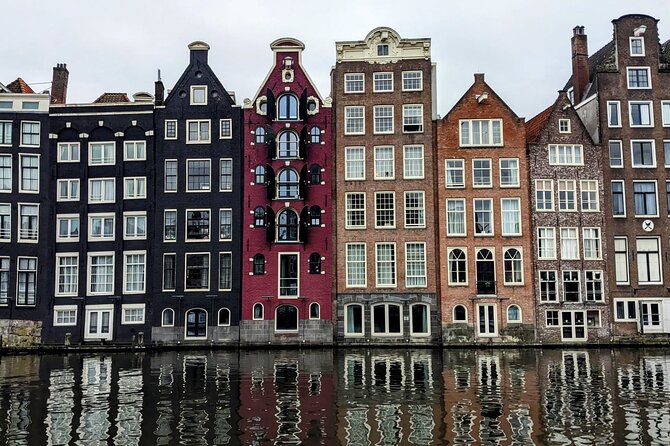
- Nieuwmarkt: Waag, guild power, and the dancing houses
- Zeedijk: from Chinatown’s 1970s tensions to today’s favorite street
- Centraal Station: a grand finish and a transit symbol
- What you gain from a guide like Manouk (and why it matters)
- Pacing and what you should do with the rest of your day
- Who this Amsterdam private walk suits best
- Should you book this Amsterdam private city walk?
- FAQ
- How long is the Amsterdam private city walking experience?
- Is this a private tour, and how many people are in a group?
- Where do we meet for the tour?
- What language is the tour offered in?
- Are there admission fees at the stops?
- Are service animals allowed?
Key highlights worth planning around
- Private walking route for up to 12 with only your group, so questions do not get lost.
- English guide with a personable, responsive style, including maps and pictures during the walk.
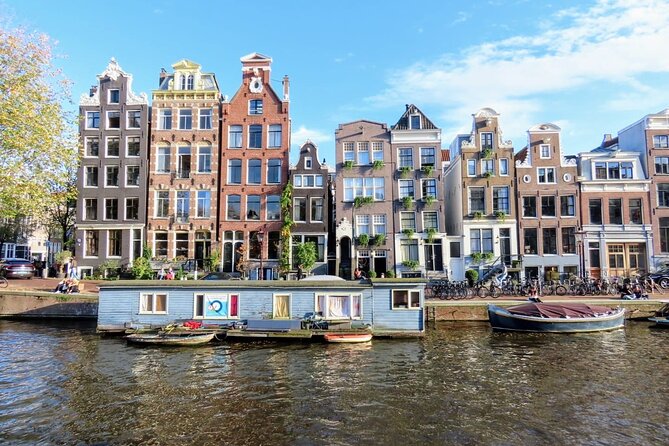
- Canal-house details you might miss solo, including a house on three canals and the bicycle bridge idea.
- A calm detour into Begijnhof, with a courtyard and historic homes tied to Amsterdam’s tolerance.
- Neighborhood contrast on Zeedijk, from Chinatown’s rougher past to today’s everyday hangout energy.
- A strong finish at Centraal Station, where architecture meets Amsterdam’s transit role.
Entering Amsterdam on foot: why this route works
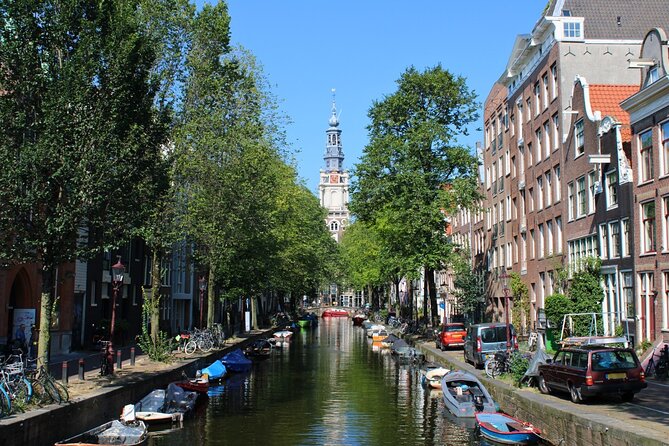
Amsterdam is famous for canals and pretty façades, but it can feel like a blur if you only hop between photo spots. This walk is designed to give you a map in your head. As you move from Beursplein through the center, the city’s layout starts to make sense fast.
Because it is private (up to 12 people), you are not squeezed into a giant crowd. That matters in Amsterdam, where streets are narrow and attention shifts quickly. The guide can also adapt the emphasis as you go, which is a big deal if your interests lean toward architecture, religious history, or city planning.
More Guided Walking Tours in Amsterdam


Price and time: what $180.62 per group really buys
You pay $180.62 per group for up to 12 people, and the walk lasts about 2 hours (often up to 2.5). That structure is actually smart for families, friend groups, or couples who want a guided route without paying per head.
Here is the simple math, because it helps you decide: if you book with just 2 people, the cost per person is roughly $90. If you have a group of 6, it is about $30 each. If you max out closer to 12, it drops dramatically. So this tends to be best value when you travel with at least a few people who want the same guided story.
It is also a good use of time. In two hours, you get a wide sweep of what Amsterdam is about, without burning a half day chasing tickets and long lines for individual sights.
Starting at Beursplein: how a fishing village becomes global finance
Your walk begins at Beursplein. This is not just a pretty plaza to start from. It is a reference point for how Amsterdam’s role grew so fast in the 17th century, when the city moved from smaller origins to a global economic hub.
What I like about starting here is that you set the economic and geographic logic early. Once you understand Amsterdam’s rise as a trading center, the rest of your route feels more connected, including the way streets and civic spaces evolved around commerce.
Practical tip: if you like taking photos, start with a minute of clear sightlines at Beursplein before you fall into conversation mode. Even in a short tour, you can grab one good baseline shot.
Dam Square: the civic heart, from monarchy to wartime weight
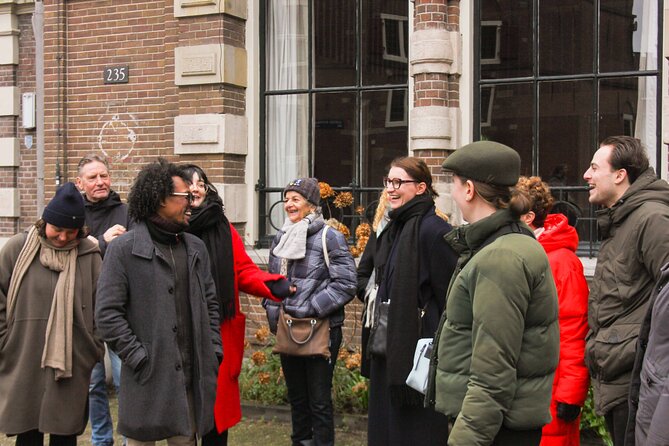
From Beursplein you move to Dam Square, the city’s most famous public space for a reason. This is where you learn how the area became central to Amsterdam’s formation, and you get to admire key architectural presence like the Royal Palace on the Dam.
You also talk about Dam Square’s role during the Second World War. That is important because it changes how you read the square. Instead of seeing only a ceremonial postcard, you start to see how civic spaces carry real pressure and memory.
Drawback to keep in mind: the stop is short. You see a lot, but you will not linger here like you would if you planned a full palace visit. If you want extra time at the Royal Palace specifically, treat this tour as orientation, then go deeper later.
Begijnhof: a quiet courtyard that reveals Amsterdam’s tolerance
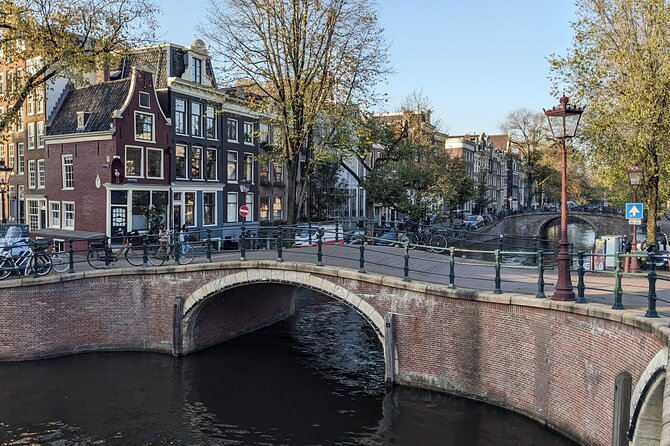
Next comes Begijnhof, one of Amsterdam’s most calming contrasts to the main streets. The courtyard setting matters. You slow down here, because the space is meant for stillness, not speed.
You learn about Begijnhof’s religious history and what it reveals about Amsterdam’s reputation for tolerance. The key idea is that Amsterdam did not only tolerate difference in theory. It created places where communities could live out daily life, quietly and for a long time.
You also get to see historic homes, including one of the oldest houses in Amsterdam and two wooden cottages. That combination of setting plus details makes Begijnhof feel real, not like a museum set.
If you are visiting in colder months, Begijnhof can feel extra comforting. If it is warm, it still works because it gives you a “breathing space” in the middle of the walk.
More Private Tours in Amsterdam
- Rijksmuseum Amsterdam Small-Group Tour with Private Upgrade
★ 4.5 · 1,547 reviews - Van Gogh Museum Tour Reserved Entry Semi Private
★ 5.0 · 1,437 reviews - Private Amsterdam Red Light District and Coffee Shop Tour
★ 5.0 · 763 reviews - Anne Frank and Jewish Quarter Amsterdam Private Walking Tour
★ 5.0 · 684 reviews
House on the Three Canals: canal logic and the bicycle bridge idea
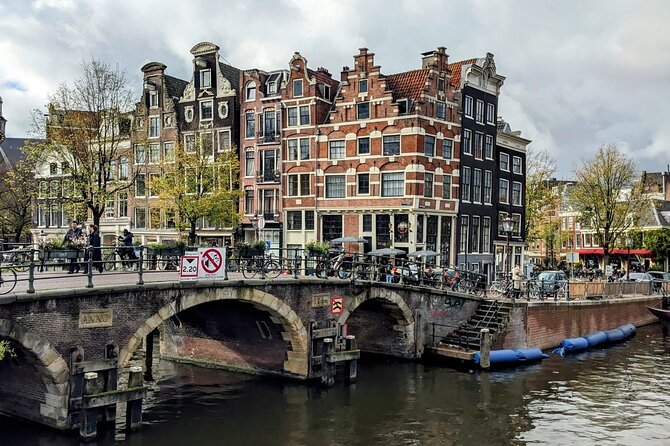
Then you hit an Amsterdam “how is that possible?” moment: the House on the Three Canals. The point is not just the uniqueness. It is how the city’s canals shaped space, addresses, and building choices.
You also hear about the bicycle bridge concept. Even if you do not go off-route to find more bridges on your own, understanding the bicycle and pedestrian mix changes how you navigate Amsterdam afterward. Suddenly the city feels less chaotic and more designed for everyday movement.
This stop is short, so you are not supposed to stare for ages. But it is a great spot to learn something conceptual you can carry through the rest of your day, especially if you plan to rent a bike later.
Nieuwmarkt: Waag, guild power, and the dancing houses
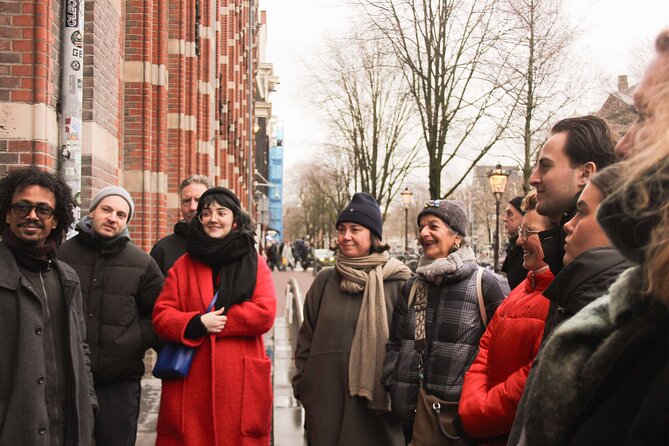
Moving on, you reach Nieuwmarkt, where the story shifts to how Amsterdam organized power at street level. You visit the Waag, an old city gate that later became a guild hall. That single fact connects the city’s defense and trade beginnings with its craft culture.
You learn why guilds mattered. In Amsterdam, they shaped who could do what work, how quality was controlled, and how trades built identity over generations. Even if you do not care about medieval guild structures on paper, it helps explain why the city felt organized even during rapid growth.
You also see the dancing houses, an architectural feature that sounds playful but is tied to real building history and design quirks. It is the kind of detail you might walk past without context.
Timing note: this is your longest stop on the route at about 30 minutes. Use that time to ask questions. If you have a particular curiosity, like how canal-era buildings were planned or why certain streets developed when they did, this is a good moment to focus the guide.
Zeedijk: from Chinatown’s 1970s tensions to today’s favorite street
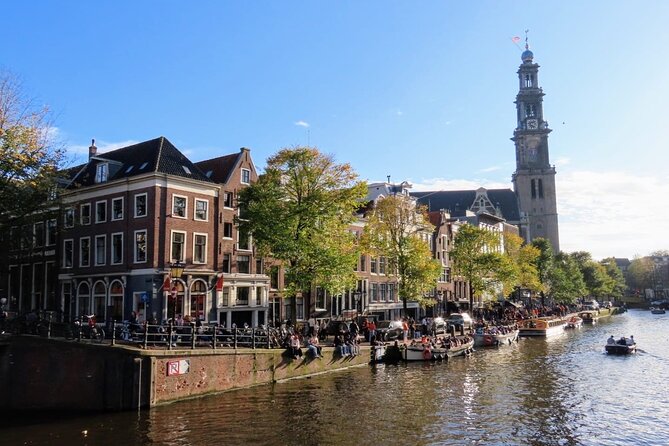
Next is Zeedijk, and the mood shifts again. This street is associated with Chinatown, and you learn that it was once considered one of the more dangerous parts of Amsterdam during the 1970s.
What makes this stop valuable is the change over time. You do not only hear the dramatic past. You also hear how the street declined from that earlier reputation and how it became one of the favorite spots for many Amsterdammers.
That kind of neighborhood storytelling is useful because it teaches you how cities evolve socially, not just architecturally. Amsterdam is often described through buildings, but Zeedijk reminds you it is also about people, safety, and how areas reinvent themselves.
Practical consideration: the stop is brief at about 15 minutes, so treat it like a snapshot. If you want to shop, snack, or linger, you will want to come back after the tour ends.
Centraal Station: a grand finish and a transit symbol
Your walk concludes at Centraal Station, and it is a fitting end point. The station is known for striking architecture, and you learn why the location has mattered for centuries as a transportation hub.
Even if you have seen photos, standing in the area with context changes the experience. You start to see the station as a historical symbol of connection and prosperity, not only as a building you pass through on a train day.
This ending also helps your planning. If your next stop includes a train ride, you end right where you need to be. It reduces the “now what” stress that can happen after a walking tour.
What you gain from a guide like Manouk (and why it matters)
A big reason this tour earns such strong praise is the guide style. One guide named Manouk shows up in the experiences shared with this route, and the pattern is clear: friendly, organized explanations, and a genuine interest in the people on the walk.
You should expect more than facts. The guide tends to connect history to what you see now, and you can get practical guidance too, including food tips. There is also mention of maps and pictures used during the tour, which helps if you like visual reinforcement. Small edible local treats are part of the feel-good factor, and they do not turn the walk into a food crawl.
Another plus: the guide can adapt. If you want more on history and architecture, the route emphasis can shift to match that. If you are traveling solo, you still get a conversational flow without it feeling awkward.
If you care about learning while walking, this is a strong match.
Pacing and what you should do with the rest of your day
Because each main stop is around 15 to 30 minutes, the walk is structured for momentum. You get enough time to absorb stories, take photos, and ask a couple of questions. You do not get the long, slow museum pace.
That means the best strategy is to treat the tour as your “Amsterdam backbone.” Afterward, you can choose where to spend more time based on what clicked for you:
- If Begijnhof felt special, you will likely enjoy doing more quiet walking in that general center area.
- If the canal architecture details grabbed you, you might want to look for more canal-side perspectives on your own.
- If you felt the Zeedijk neighborhood shift in your bones, you may prefer a return evening stroll rather than chasing another landmark.
Also, given that this is near public transportation and you end where you can easily move on, you are not stuck far from your next plan.
Who this Amsterdam private walk suits best
This tour is a great fit if you want:
- A private experience with only your group
- A guided introduction to central Amsterdam without long ticket lines
- A mix of major squares, canal-related oddities, and neighborhood perspective
- A guide who can answer questions and adjust the emphasis to your interests
It also works well for first-timers. You cover a lot of “what is this city about” in one go, including how Amsterdam’s economic and civic center developed. And because most people can participate and service animals are allowed, it is broadly accessible in practical terms for different travel styles.
If you already know Amsterdam well and want only deep specialist content, this may feel more like smart orientation than exhaustive study. But as an efficient, human-scale walk, it holds up.
Should you book this Amsterdam private city walk?
I think it is worth booking if you want a guided route that explains what you are seeing as you walk. The private group format, the English language support, and the way the route moves from Beursplein to Dam Square, then into Begijnhof, canal architecture, Nieuwmarkt, Zeedijk, and finally Centraal Station make it an efficient way to understand the city in a morning or afternoon.
Book it if you travel with 2 to 6 people and want good value, or if you are the type who likes questions and context, not just photos. If you hate walking, expect short stops and then movement again, this may not be for you. But if you like street-level storytelling, this one is an easy yes.
FAQ
How long is the Amsterdam private city walking experience?
It lasts about 2 hours, with a typical range up to 2.5 hours depending on the pace and discussion time.
Is this a private tour, and how many people are in a group?
Yes, it is private. Your group only participates, and the group size is up to 12 people.
Where do we meet for the tour?
The tour starts at Beursplein, 1012 JW Amsterdam, Netherlands, and it ends back at the meeting point.
What language is the tour offered in?
The tour is offered in English.
Are there admission fees at the stops?
The stops listed for the experience show admission ticket free, so you should not expect paid entry fees for these specific stops.
Are service animals allowed?
Yes, service animals are allowed.
Gables on Foot
- Amsterdam: Anne Frank Guided Walking Tour in DE/EN/IT/ES★ 4.9 · 3,107 reviews
- Amsterdam: Anne Frank Guided Small Group Walking Tour★ 4.8 · 2,722 reviews
- Amsterdam: Cultural Highlights Walking Tour★ 4.9 · 2,629 reviews
- Amsterdam: Ganja Walking Tour★ 4.2 · 2,127 reviews
Latest to arrive along the quays of Amsterdam




City Tours, compared.

75 Minute City Canal Cruise with Audio Guide
Read our review →
City Centre Canal Cruise including Audioguide
Read our review →

City Canal Cruise and Heineken Experience Ticket
Read our review →
City Card with Free Entrance & Public Transport
Read our review →
Browse the lists this tour appears in