
Reviewed · CITY TOURS
Amsterdam Pedicab City Tour (2 hours)
Two wheels and big stories in Amsterdam. This private Amsterdam pedicab city tour uses eco-friendly pedicab power to cover a lot of central sights with a local guide’s take on what changed over time.
You’ll love how the route is built for efficient sightseeing, with short stops that still leave time for photos and questions. I also like the personal touch Bram brings, using old maps, photographs, and comparisons of then-and-now Amsterdam.
One thing to consider: most major stops are view-from-the-sidewalk moments, and only the Rembrandt House Museum is specifically noted as not included for entry. If you want lots of inside time, plan a museum visit after.
In This Review
- Key highlights that make this pedicab tour worth it
- Price and what you really get for $237.65 (up to 2)
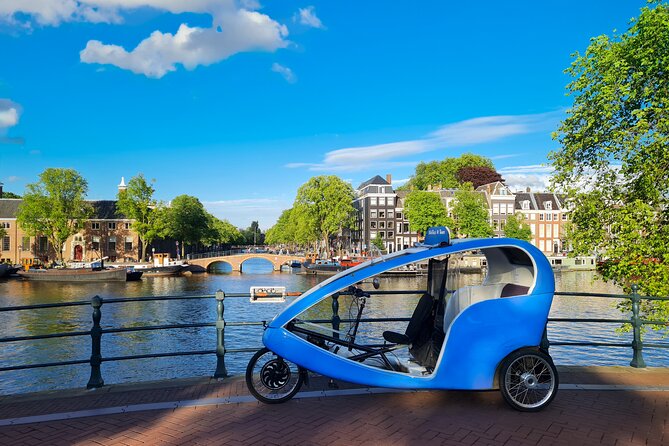
- Getting picked up in the blue pedicab, and planning for the ride
- Dam Square, Zeedijk, and Chinatown: the old center in quick, meaningful stops
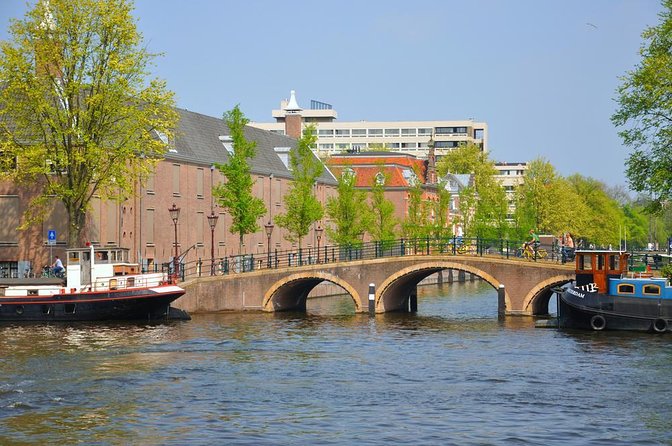
- Nieuwmarkt to Montelbaanstoren: gates, watch towers, and canal views
- Rembrandt House and the Jewish quarter stops you cannot fake on your own
- The Holocaust Names Monument and passing the Hermitage connection
- Magere Brug and the canal ring: the iconic Amsterdam postcard, plus why it matters
- Museumplein, the Rijksmuseum bicycle tunnel, and a back-of-museum photo moment
- What it feels like on the ground: pace, comfort, and private-guide perks
- Who this Amsterdam pedicab tour fits best
- The honest value check before you book
- Should you book the Amsterdam Pedicab City Tour with Bram de Haan?
- FAQ
- How long is the Amsterdam Pedicab City Tour?
- How many people can ride in one pedicab?
- Is pickup included, and where do we meet the guide?
- What language is the tour available in?
- Are museum tickets included?
- What happens if the weather is poor?
Key highlights that make this pedicab tour worth it
- Private ride for up to two people, so you can set your own pace for photos and questions
- Bram de Haan’s then-and-now storytelling, using old maps and photographs to show how Amsterdam grew
- Comfort in bad weather, with waterproof blankets for rain and extra warmth gear reported in cold conditions
- A smart mix of famous landmarks and lesser-expected stops, including the Jewish quarter and Chinatown
- Classic canal-ring views plus iconic bridge photos, without the long slog of walking
Price and what you really get for $237.65 (up to 2)
At $237.65 per group (up to 2), this is not a cheap add-on. But it’s also not priced like a seat on a crowded bus. You’re paying for a private, pedal-powered city guide plus a ride that helps you cover more of Amsterdam’s center in about 2 hours.
That matters because Amsterdam looks close on a map, but the street layout and canal detours make even short distances feel longer than you expect. A pedicab lets you focus on the sights instead of spending half your time walking between them, especially on your first day.
Also note the practical limits: there’s a 210 kg maximum passenger weight and only one pedicab per timeslot. That keeps the experience consistent, but it also means this tour can sell out for popular windows, so booking earlier is a smart move.
Also flying a pennant in Amsterdam



Getting picked up in the blue pedicab, and planning for the ride
Pickup is offered, and the meeting instruction is simple: wait in front of your hotel and look for the blue pedicab. The tour is described as near public transportation, which is helpful if your hotel is in a busy area and you need a backup plan for timing.
In terms of timing, expect an approximately 2-hour loop. Most stops are brief, so your job is easy: bring comfortable layers and treat this like a guided city orientation. One of the strongest themes from the experience is that Bram gives you time to pause for photos, and he’ll pull over when you want a closer look.
Weather matters here. The experience notes it requires good weather, and if it’s canceled due to poor weather you’ll be offered another date or a full refund. Based on what people reported, the guide also plans for typical Amsterdam conditions with waterproof and warming blankets, which can make the difference between a good tour and a miserable one.
Dam Square, Zeedijk, and Chinatown: the old center in quick, meaningful stops
The tour starts where Amsterdam’s story became visible: Dam Square. This is the main square and the heart of the old center, where you’ll find the Royal Palace, the New Church, and the National Monument. Even if you’ve seen Dam Square on photos, seeing it from a pedicab helps because you get the wider context first, instead of just arriving at a single postcard spot.
From there you roll to Zeedijk, one of the oldest dikes around the old center. This is a fun stop because it mixes “classic Amsterdam” with the idea that something dark happened here. The guide’s approach is to pair the street vibe and an old-cafe interior feel with a story you won’t get from a typical quick overview.
Then comes Chinatown, described as the oldest Chinese neighborhood on the European mainland. You’ll pass the area’s restaurants, supermarkets, and a Chinese temple. This is one of the advantages of doing a guided loop early in your trip: you learn how Amsterdam layers communities into its core neighborhoods, not just how the canals look.
What to watch for: the pedicab pace is slow enough to notice details, but the stop times are short. So if a specific photo matters to you, tell the guide quickly when you arrive at the square or street corner.
Nieuwmarkt to Montelbaanstoren: gates, watch towers, and canal views

Next up is Nieuwmarkt, one of the most important squares of old Amsterdam. In the middle is the old city gate, which served as the main entrance when the city was walled and fortified before the major 17th-century expansion. This stop works well because it turns a busy square into a history lesson you can picture.
From Nieuwmarkt you head toward Montelbaanstoren, an early 16th-century ship watch tower that was part of the city’s defense line. The best part of this stop is the outlook: you get a view over the Oude Waal, with houseboats lined up against 17th-century canal houses. It’s the kind of moment where a photo looks good, but the real value is understanding why that spot mattered.
A small drawback to keep in mind: the listed stop times are short, so you’re not meant to wander for long. If you want a deeper walk around the Oude Waal area, treat this as an orientation stop and plan a longer self-guided visit later.
Rembrandt House and the Jewish quarter stops you cannot fake on your own
You’ll then pass the Rembrandt House Museum from the outside. The tour notes that entry is possible but not included, so this is about seeing the location, not doing the museum. If Rembrandt matters to you, you can use this stop to decide whether you want to buy separate tickets later.
Then you transition into Jodenbuurt, the Jewish quarter area in central Amsterdam. A large portion was impacted after World War II, but enough surviving streets and buildings remain to make the neighborhood feel anchored in lived history. This is one of the stops where a private guide helps, because context changes how you read the streets.
You also visit the outside of the Portuguese Synagogue of Amsterdam. It’s the largest synagogue and among the first in Western Europe that Jewish people were allowed to build in the late 17th century (1675). The tour is designed so you can glance across and see other synagogues opposite it, now part of the Jewish museum area.
Under the next bridge out of Amsterdam:
- Amsterdam Luxury Canal Cruise + Unlimited Drinks & Bites option
★ 5.0 · 30,518 reviews - Amsterdam: Rijksmuseum Entry Ticket
★ 4.7 · 29,512 reviews - Amsterdam: Classic Saloon Boat Cruise with Cheese & Wine
★ 4.6 · 27,035 reviews - Amsterdam: Evening Cruise with Optional Wine and Snacks
★ 4.4 · 22,178 reviews
The Holocaust Names Monument and passing the Hermitage connection
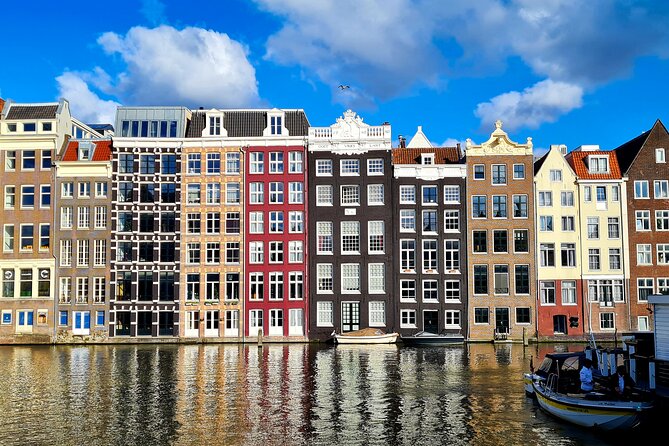
After the synagogue area, the tour passes the National Holocaust Names Monument. It’s built around 102,000 brick stones with names to remind you of Dutch Jewish victims of World War II. This is brief, but it’s the kind of stop where you’ll likely want a quiet second to take it in.
You then pass the H’ART Museum, described as connected to the former home care house built in the 17th century, and its link as part of the Russian Hermitage museum. The value here is not that you’ll memorize architecture in two minutes. It’s that a pedicab loop helps you notice how buildings keep shifting roles over centuries.
Practical note: because this is a passing stop, you should keep your attention on the guide’s explanation and be ready to grab a quick photo if you want one, without expecting time for a long memorial pause.
Magere Brug and the canal ring: the iconic Amsterdam postcard, plus why it matters
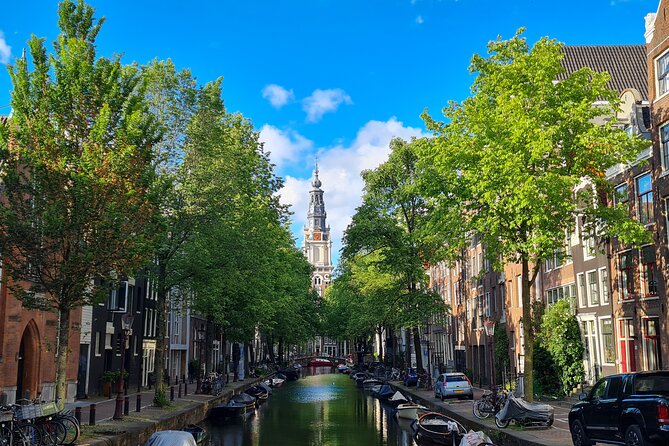
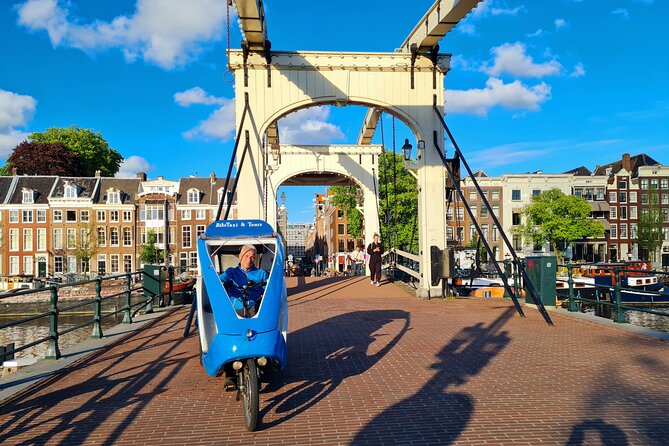
Next you reach Magere Brug, the skinny bridge that is especially famous for its nighttime lighting. From this vantage point on the Amstel river, you also get a clean overview angle for photos, with the canal and the river view doing the heavy lifting.
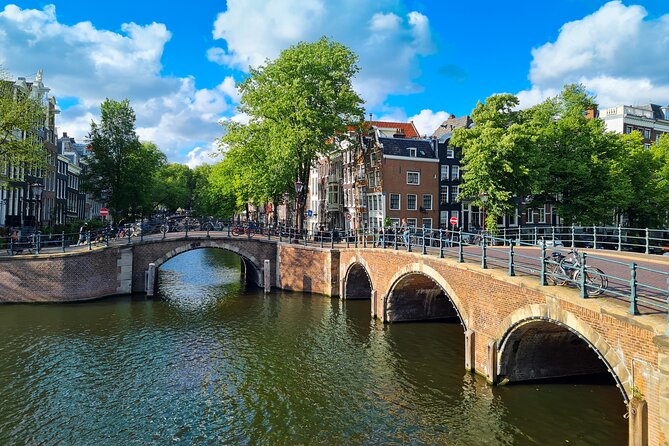
Then comes the Canal Ring (Grachtengordel). This is the 17th-century expansion area that forms half-circle shapes around the older center. The tour highlights typical canal house similarities and differences, which is the perfect trick for first-time visitors. You stop seeing canals as just pretty waterways and start seeing them as planned neighborhoods built for merchants and prosperity.
What I like about handling canals this way is that you get an explanation while you’re still in “first impression mode.” By the time you later walk the canal ring yourself, you’ll recognize patterns and building eras without needing to study a map for hours.
Museumplein, the Rijksmuseum bicycle tunnel, and a back-of-museum photo moment
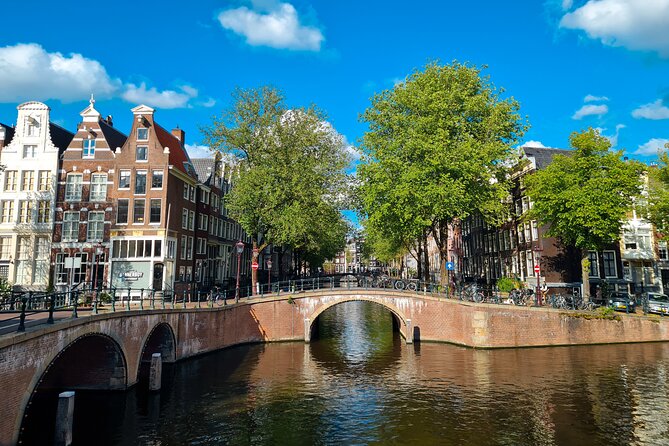
The final major stop is Museumplein, one of Amsterdam’s biggest squares. It sits beside the Rijksmuseum and the Concertgebouw, and the area clusters other well-known museums like Van Gogh, Stedelijk, Moco, and a diamond museum. In other words, this is the part of town where you can immediately shift from guided orientation to choosing what to do next.
During the tour, you also pass through the famous bicycle tunnel under the Rijksmuseum. People noted that classical music can often be heard from street artists there, which adds a real “Amsterdam in motion” feeling. Then the tour heads toward Museumplein for a good view of the back of the Rijksmuseum, completed in 1885 and designed by Pierre Cuypers.
If you are museum-focused: this is a great “decide what to prioritize” stop. But it’s not a guided museum visit, so don’t expect ticketed entry included for any specific museum beyond what’s already part of the view-from-outside plan.
What it feels like on the ground: pace, comfort, and private-guide perks
This tour tends to work best when you treat it as a guided sprint with thoughtful pauses. The itinerary includes many stops, but most are only a few minutes. That’s by design, so you don’t end up walking for hours on your first city day.
Comfort is a big part of why the pedicab works. People reported the pedicab is easy to get on and off and that it feels comfortable for two. Rain gear is a clear win too. A waterproof blanket was mentioned as a solution during rainy moments, and in winter-like conditions the guide reportedly arrived with blankets for warmth.
The biggest perk is the private nature. With only your group, Bram can respond to what you care about, and people described flexible pulling over for photos. One of the unique details repeated in reports is that Bram brought a binder of colorful maps and photographs, including comparisons of older Amsterdam to present-day views. That kind of visual aid sticks better than spoken facts alone.
One more practical detail from the same spirit of “helpful and local”: there were reports of the guide pointing people toward a nearby grocer and even dropping them with directions back toward their hotel area. That’s not the headline of a city tour, but it’s the kind of small support that makes the rest of your trip smoother.
Who this Amsterdam pedicab tour fits best
This tour is a strong match if you want:
- A first-day orientation to central Amsterdam without long walks
- A private guide who can answer questions and adjust the pace for photos
- A mix of big-name sights and neighborhoods like the Jewish quarter and Chinatown
- A city view that prioritizes canals and key squares over deep museum time
It may not be the best match if:
- You want lots of time inside multiple museums during the same 2 hours
- You need a long, on-foot explore at every stop
- You expect included snacks or refreshments, since snacks are not listed as included
The honest value check before you book
Is it worth $237.65 for a group up to two? In my view, it is when you value time and comfort. If you are optimizing for a short stay, or your energy is limited by weather, traffic, or jet lag, a pedicab private tour often pays back quickly.
It also becomes a smart buy if you would otherwise book a few separate walking tours or museum add-ons just to get context. This experience groups key districts and storylines into one ride, and it keeps you from bouncing between far-flung areas on your own.
If you’re traveling solo, the up-to-two group pricing means it can be more expensive per person than shared tours. But if privacy and pace matter to you, that cost still buys something real.
Should you book the Amsterdam Pedicab City Tour with Bram de Haan?
Book it if you want a low-walk way to see the center, pick up clear orientation, and hear Amsterdam explained through maps, photographs, and local connections. The Jewish quarter, Holocaust Names Monument, canal ring viewpoints, and Museumplein are handled in a way that helps you sort what to do next.
Skip it or pair it differently if you want a museum-heavy day. Because entry is not included for Rembrandt House Museum, and most other stops are view points, you’ll probably want to schedule separate ticketed time for any museum you care about most.
Overall, this is the kind of private city intro that makes the rest of your trip feel less random. You’ll leave with a mental map, a sense of why neighborhoods changed, and plenty of photo-ready angles without spending your whole day on your feet.
FAQ
How long is the Amsterdam Pedicab City Tour?
It runs for approximately 2 hours.
How many people can ride in one pedicab?
The price is per group for up to 2 passengers, and it is a private tour with only your group participating.
Is pickup included, and where do we meet the guide?
Pickup is offered. You should wait in front of your hotel and look for the blue pedicab.
What language is the tour available in?
The tour is offered in English.
Are museum tickets included?
Admission is listed as free for the stops shown, but Rembrandt House Museum entry is specifically noted as possible but not included in this tour.
What happens if the weather is poor?
The experience requires good weather. If it’s canceled due to poor weather, you’ll be offered a different date or a full refund.
Latest to arrive along the quays of Amsterdam





City Tours, compared.
75 Minute City Canal Cruise with Audio Guide
Read our review →
City Centre Canal Cruise including Audioguide
Read our review →

City Canal Cruise and Heineken Experience Ticket
Read our review →
City Card with Free Entrance & Public Transport
Read our review →
Browse the lists this tour appears in