A quiet room. Your hands at work. This Amsterdam open studio is a relaxing way to slow down and make something real, with guidance that helps you move forward without taking over.
I love the freedom to choose a technique like painting or upcycling and work at your own pace, even if you are a first-timer. I also like that the studio gives you tools and materials, so you are not hunting supplies all over town.
One thing to consider: if you choose glazing on ceramic pieces, your artwork may need kiln firing, so you might collect it later instead of carrying it out immediately.
In This Review
- Key things that make this workshop work
- Amsterdam House of Arts and Crafts, where making feels relaxed
- Picking your technique, and why that choice matters
- The two-hour flow, from doors opening to take-home time
- What $69 really buys you in Amsterdam
- Upcycling your own item, a creative twist you can bring from home
- Guidance without takeover, how the studio support works
- Glazing and ceramics, the one detail that can change your plans
- Where and when you can go, and how to fit it into an Amsterdam day
- Who this workshop suits best
- Practical tips so you feel comfortable and enjoy the messy parts
- The small extras that make it feel complete
- Should you book this open studio session?
- FAQ
- What is the duration of the Amsterdam Open Studio workshop?
- Where does the workshop take place?
- What are the session days and times?
- Do I need prior experience to join?
- What creative techniques can I choose from?
- Are materials included?
- Can I bring an item to upcycle?
- Is food or drink included?
- If I make glazed ceramics, can I take it home the same day?
- What should I wear, and what is not allowed?
Key things that make this workshop work
- Choose one technique for the full session (painting, clay, upcycling, mosaic, glazing, or beading) so you do not feel scattered.
- Professional support is available while you create, useful when you get stuck or want a practical tip.
- Materials are included, and most projects can be taken home the same day.
- Bring something to upcycle if you want to turn an item from your own life into a new look.
- Tea and a cookie are part of the experience, with a drink added for Friday evening sessions.
Amsterdam House of Arts and Crafts, where making feels relaxed
Amsterdam has plenty of art on walls, but this experience focuses on art from the inside out, meaning your hands. You show up, get a calm welcome, and then you create at your own speed. The vibe is the point here. It is not a rushed class where you follow step-by-step instructions to the finish line. You choose a technique, you try things, and you keep going.
The location is the Amsterdam House of Arts and Crafts, and that matters because it sets expectations. This is a working studio space with tools and materials ready to use. It feels like you are stepping into someone’s creative routine, not like you are visiting a showroom.
You also get an experience that fits into a normal travel schedule. It runs for two hours on specific days, including weekday evenings and a Sunday afternoon. So you can plan around museum days, canal time, and the rest of your Amsterdam rhythm without trying to cram one more thing into your day.
Also flying a pennant in Amsterdam



Picking your technique, and why that choice matters
At the start, you are introduced to the options and then you pick one direction for the full session. The list is refreshingly practical: painting, clay, upcycling, mosaic, glazing, or beading. Each technique changes what you make, how it feels, and what you need to think about.
If you want an easy entry point, painting and beading are often the most approachable because they tend to let you get satisfying results while still experimenting. If you like shaping things, clay can be a fun way to slow down and build something with your hands. Mosaic feels more architectural, like you are assembling texture and color into a pattern.
Upcycling is especially appealing in Amsterdam because it turns creativity into a personal project. You can bring a T-shirt, shoes, or another item and give it a new life with color, texture, and additional materials. That is not just a craft activity, it is a souvenir option with meaning. You end up with something you actually chose, not something you bought from a shop that looks similar to what you already saw.
Here is the practical part: your technique choice also controls the amount of time you will spend learning specific methods versus making decisions about color, texture, and your own design. With one technique for the whole session, you do not have to switch gears every few minutes. You can keep your momentum.
The two-hour flow, from doors opening to take-home time
This workshop runs for two hours, and the doors open 15 minutes before the session. That small lead-in is helpful. You get time to settle, find the right space in the studio, and start without feeling late pressure.
When the session begins, you get welcomed into the studio and shown what techniques are available. Then you choose your one technique and start working. From there, you go at your own pace. That matters because not everyone in the room will have the same comfort level. Beginners usually need a clearer first step, while experienced makers may want room to test ideas without being interrupted.
Throughout the session, professional guidance is available. Translation: you are not alone with a blank page. If something is confusing, you can ask for technical tips or inspiration. If your plan is taking shape differently than you expected, you can get help adjusting your approach. The goal is that you leave with a piece that feels like yours.
Tea and a cookie are included. On Friday evening sessions, there is also a drink. This is a small detail, but it changes how the session feels. You are not just creating in a workshop, you are also taking a break in the middle of it, which keeps the mood calm.
At the end, you take home your creation. Most projects can be taken home the same day. The exception is glazed ceramics. If you make something that needs glazing and firing, the piece may need to go through the kiln first, and you will collect it later. So if your plan requires something in-hand before you leave Amsterdam, pick your technique accordingly.
What $69 really buys you in Amsterdam
At $69 per person for a two-hour workshop, this is not a budget “grab-and-go” activity. But it is also not a luxury experience where you mostly watch someone else work. The value comes from three things you do not have to supply yourself.
First, all materials for your chosen technique are included. That means you are paying for the creative session, not for shopping time. Second, you get access to the studio and tools, which can be expensive and hard to replicate on your own while traveling. Third, you get professional guidance throughout the workshop, which is the biggest lever for most people. Without guidance, you can still create, but the experience often becomes frustrating because you are stuck longer than you want to be.
Also consider the take-home factor. If most creations can be taken home the same day, you are effectively paying for a personalized souvenir that you made. That beats the usual Amsterdam souvenir problem, where you end up with something pretty but forgettable.
If you are traveling with limited space in your luggage, it helps to think about what you are choosing. Techniques like painting or beading can produce lighter items. Clay and mosaic may be bulkier depending on what you make, and ceramics might require later collection. The price makes sense when you match your technique to how you travel.
Upcycling your own item, a creative twist you can bring from home
One of the most interesting features here is the option to upcycle an item you already own. If you bring something like a T-shirt or shoes, you can transform it with color, texture, and materials added during the session.
This is a smart choice if you want your Amsterdam activity to connect to you, not just to the city. You are creating with memories and personal items in mind. You might also enjoy the challenge of redesigning something you already use, instead of starting from scratch.
A practical tip: if you have a specific idea in mind, you can contact in advance so they can prepare the right materials. That matters because upcycling is not one-size-fits-all. A plan for a fabric project is different from a plan for shoes or another object. Planning ahead helps you spend your two hours making, not problem-solving supply gaps.
It also helps you get better results. You are not limited to using one basic approach. You can experiment with color and texture, and you can get help aligning the materials to the item you brought.
If you do not want to bring anything, no problem. You can still create using the included materials and make your own piece from start to finish. Upcycling is a bonus option, not a requirement.
Under the next bridge out of Amsterdam:
- Amsterdam Luxury Canal Cruise + Unlimited Drinks & Bites option
★ 5.0 · 30,518 reviews - Amsterdam: Rijksmuseum Entry Ticket
★ 4.7 · 29,512 reviews - Amsterdam: Classic Saloon Boat Cruise with Cheese & Wine
★ 4.6 · 27,035 reviews - Amsterdam: Evening Cruise with Optional Wine and Snacks
★ 4.4 · 22,178 reviews
Guidance without takeover, how the studio support works
The workshop is designed to be relaxed, but not hands-off. That balance is what you are really paying for. At the start, you get introduced to techniques. After that, you choose one and work on it.
Then you can ask for support when you need it. This is useful in two common situations. First, if you are a beginner, you may wonder how to start, how to handle tools, or what choices matter. Second, if you have experience, you might want technical tips that make your process smoother.
It is also where the experience becomes more than just making. When you get a small practical tip, you learn something you can reuse later, like how to approach texture, color choices, or technique-specific steps. Even if you do not become an artist overnight, you will leave feeling more capable with your hands.
The studio setting helps too. Because the workshop is not trying to push a single finished outcome for everyone, you can experiment. That can reduce the stress that comes with “class mode” activities, where you feel judged if your result is not identical.
Glazing and ceramics, the one detail that can change your plans
If you pick glazed ceramics, be aware of the timing. Glazed ceramic pieces need to be fired in the kiln. That means you might not take the final piece home immediately.
This is not a dealbreaker, but it is a planning detail. If you are leaving Amsterdam soon, you will want to coordinate so you can collect your finished item later. If you are fine with waiting, glazing can be a great technique because it adds that distinctive finish you cannot quite get with simple paint.
If you know you need a take-home item in-hand the same day, consider your technique choice carefully. The workshop says most creations can be taken home the same day, with glazed ceramics as the notable exception.
Where and when you can go, and how to fit it into an Amsterdam day
Sessions are held at Amsterdam House of Arts and Crafts with specific days and times:
- Wednesday 19:30 to 21:30
- Friday 19:30 to 21:30
- Sunday 13:00 to 15:00
Each session runs for two hours. You should plan to arrive a bit early since doors open 15 minutes before start time. It makes the workshop easier to start and helps you feel settled before you pick your technique.
For meeting, go to the entrance of Amsterdam House of Arts and Crafts. Ring the doorbell labeled Atelier and they will let you in. Look for the creative studio sign above the door. This is especially helpful if you arrive in the evening when signage is easy to miss.
If you like structure in your travel schedule, the fixed time slots make planning simple. If you prefer spontaneity, check availability first since the session duration stays the same but dates vary.
Who this workshop suits best
This is one of those activities that works for a wide range of people. It is suitable for all skill levels, and beginners are welcome. That is important in a city where many creative workshops assume you already know the basics.
You will likely enjoy this if you:
- Want a break from sightseeing that still feels connected to the city
- Like hands-on activities more than lectures
- Prefer a calm environment over crowded tours
- Want a personalized take-home piece without spending time sourcing supplies
- Enjoy experimenting and learning by doing
It can also be a good option if you travel with a friend who thinks they are not creative. The relaxed pace and professional guidance can help you both get momentum.
If you are someone who needs a highly structured, step-by-step experience with a strict schedule, you might want to choose your technique thoughtfully and ask questions early. The workshop is meant to let you work at your own pace, so that freedom is part of the design.
Practical tips so you feel comfortable and enjoy the messy parts
This is a hands-on studio experience, so plan for a little mess. Wear clothes you do not mind getting a bit messy. You do not need to dress like a painter, but you should be comfortable enough to move and work.
Also skip bare feet. The workshop does not allow bare feet, so wear shoes or other suitable footwear. If you usually travel light with easy-to-pack shoes, this is a good match.
If you already have a concept, bring it. Even basic ideas help you start faster. Or if you want to upcycle an item, think about bringing something that can handle technique use, like a piece of clothing or shoes, since upcycling options mention those examples.
Language-wise, the instructor team includes Dutch and English. So if you speak English, you should be able to get guidance comfortably. If you prefer Dutch, that is also supported.
The small extras that make it feel complete
The best part is not the technique list. It is the way the studio experience is set up to keep you calm while you create. Tea and a cookie are included, which gives you a natural break mid-session. Friday evening sessions also include a drink, which makes an evening workshop feel more social without becoming noisy.
You also get the satisfaction of taking something home. Most creations can be taken home the same day. Even when glazed ceramics need later collection, you still end up with a physical reminder of your time in Amsterdam.
And the fact that there are multiple techniques means you can choose based on mood. If you want something light and quick, beading might be the move. If you want to shape and build, clay can be satisfying. If you want to redesign something from your own life, upcycling is a great way to personalize the experience.
Should you book this open studio session?
I think you should book it if you want a creative experience that is hands-on, friendly to beginners, and built around real materials and real guidance. The price makes sense because you get tools, supplies, and support, plus you leave with a take-home piece most days.
Skip it or choose carefully if you are strongly time-dependent about taking something home immediately, since glazed ceramics may be fired in a kiln and collected later. Also, if you hate even small amounts of mess, you may find a hands-on studio less fun than a gallery visit.
If you want a break from typical Amsterdam sightseeing, this is one of the best “slow down and make something” activities you can fit into your schedule. It is simple in concept, but it has the right structure to help you feel confident while you create.
FAQ
What is the duration of the Amsterdam Open Studio workshop?
The workshop lasts 2 hours.
Where does the workshop take place?
It takes place at Amsterdam House of Arts and Crafts. You enter through the Atelier door, using the doorbell labeled Atelier, and look for the creative studio sign above the door.
What are the session days and times?
Sessions run on Wednesday 19:30 to 21:30, Friday 19:30 to 21:30, and Sunday 13:00 to 15:00.
Do I need prior experience to join?
No. It is suitable for all skill levels, and beginners are welcome.
What creative techniques can I choose from?
You can choose from painting, clay, upcycling, mosaic, glazing, or beading. Each session focuses on one technique.
Are materials included?
Yes. All materials for your chosen technique are included, along with use of the studio and tools.
Can I bring an item to upcycle?
Yes. You can bring your own item to upcycle, such as a T-shirt or shoes, and give it a new life in the studio.
Is food or drink included?
Tea and a cookie are included. Friday evening sessions include a drink as well.
If I make glazed ceramics, can I take it home the same day?
Most creations can be taken home the same day, but glazed ceramic pieces need to be fired in the kiln and can be collected later.
What should I wear, and what is not allowed?
Wear clothes you do not mind getting messy. Bare feet are not allowed.
Latest to arrive along the quays of Amsterdam




Amsterdam Tours & Experiences, compared.


Amsterdam Classic Saloon Boat Cruise with Drinks and Cheese
Read our review →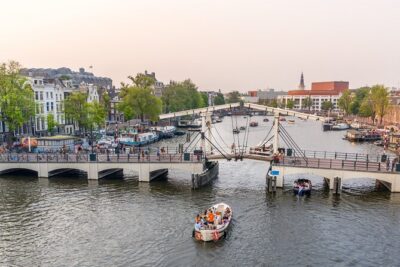
Amsterdam Luxury Canal Cruise + Unlimited Drinks & Bites option
Read our review →

Classic Saloon Boat Cruise with Cheese & Wine
Read our review →
Evening Cruise with Optional Wine and Snacks
Read our review →
Heated Canal Cruise with Unlimited Drinks & Bite
Read our review →