
Reviewed · MUSEUM TOURS IN AMSTERDAM
Amsterdam: Houseboat Museum Entry Ticket
A houseboat museum is not what you expect to find in Amsterdam. Step aboard the Hendrika Maria and you get daily-life details from when the boat was still a working freight ship. I love the very tangible sense of history, and I also like how the interior keeps the 1970s look so you can picture real living, not a staged show.
Just keep one practical thing in mind: it is a real home on the water, so space is tight and the stairs are steep. If you dislike small, vertical spaces, or need more room than a houseboat allows, you may feel rushed.
In This Review
- Key highlights worth your time
- The Hendrika Maria: Amsterdam’s houseboat museum with a built-in backstory
- Walking through the 1970s interior design you can actually feel
- From freight barge to family home, what changes and what stays
- The mast and leeboard details that connect the ship to travel
- How long it takes, and how to get real value from $12
- Practical navigation tips: steep stairs, limited space, and photos
- Languages and how the visit is delivered
- Who should book this houseboat museum ticket
- Is it the only houseboat museum worth your time in Amsterdam?
- Should you book the ticket?
- FAQ
- What is included with the Houseboat Museum ticket?
- How long does the Houseboat Museum visit take?
- Where is the museum located?
- What boat is the museum on?
- What should I expect inside the museum?
- Is photography allowed?
- Are stairs involved?
- What languages are offered during the visit?
- Is there free cancellation and reserve options?
- Are food and drinks included?
Key highlights worth your time
- A 1914 cargo ship converted in 1967, the story is built right into the walls
- Original 1970s interior colors and layout, built for living, not display
- Family-of-4 perspective, showing how people actually managed life onboard
- Practical sailing features like the mast and leeboard, tied to real transport to Scandinavia
- Short, self-paced walkthrough with commentary, so you can fit it even on a packed day
The Hendrika Maria: Amsterdam’s houseboat museum with a built-in backstory
The big reason this ticket works is simple: you are not looking at a model or photos behind glass. You are inside a boat with a name, Hendrika Maria, and a timeline you can follow as you walk through.
The ship started life as a cargo ship in 1914. At some point it shifted from freight use to a residential setup, and it was converted into a houseboat in 1967. That middle moment matters, because you get to see how a working vessel can be lived on, then gradually becomes a home.
One of the best parts is how the museum frames the boat as both technology and daily life. You see the idea of the ship, then you see the human choices that shaped the space, based on a real family of four who lived there when it still had ties to barge life.
More Museum Tours in Amsterdam



Walking through the 1970s interior design you can actually feel
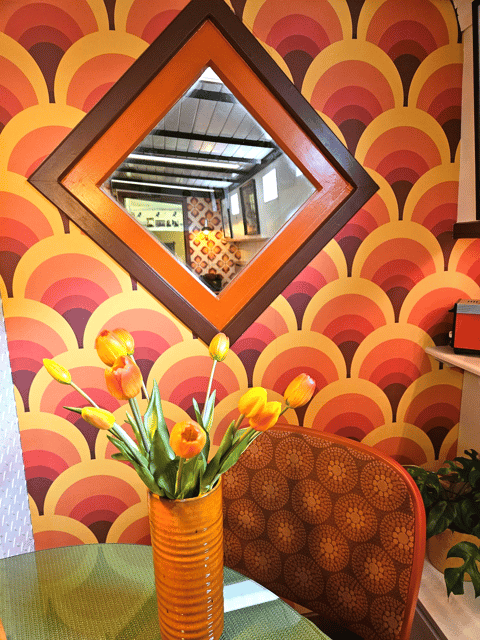
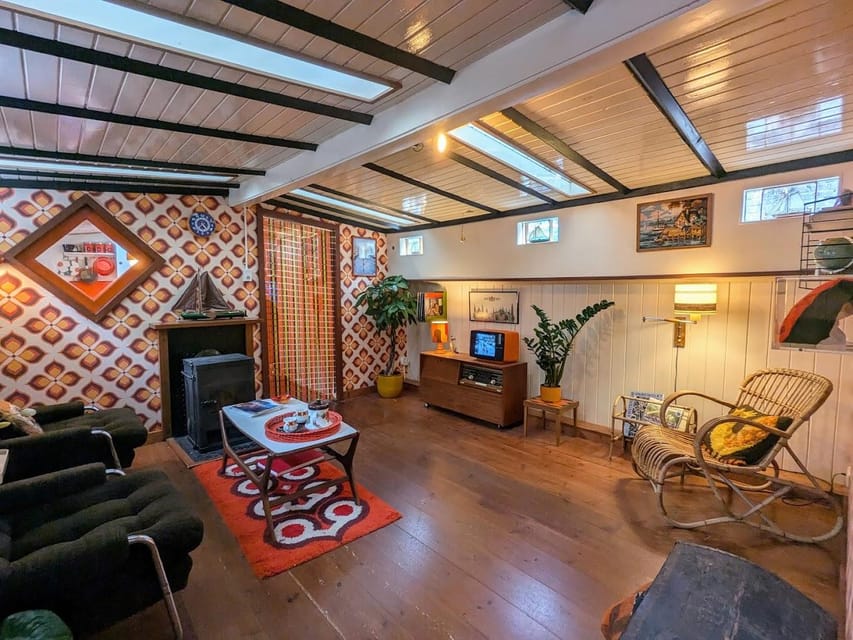
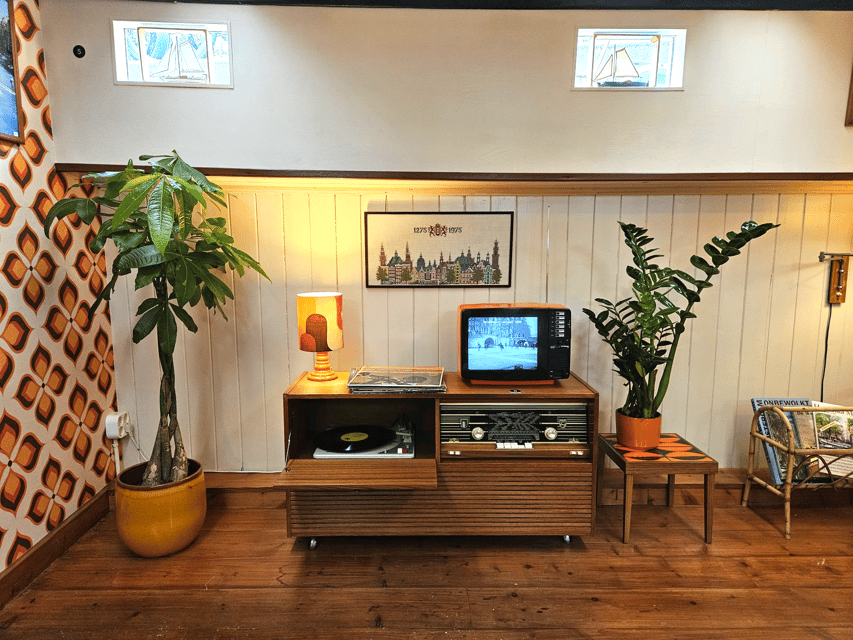
Inside, the museum leans hard into authenticity. The interior is described as originally from the time it started being used as a regular house, with the look you would expect from that era. Plan for lots of orange, yellow, and brown tones, plus compact spaces that make you understand why storage and routine would have been crucial.
This is not a museum where everything is perfectly neutral and open. The rooms feel sized the way real rooms are sized when you live on a boat: you move carefully, you pause where there is space to pause, and you accept that every corner has a job. That is the point. It helps you read daily life off the layout instead of imagining it.
If you like design, you will probably enjoy noticing how people made the space work. If you hate cluttered aesthetics or are sensitive to tight interiors, this might feel busy. The good news is that the walkthrough is designed to keep moving.
From freight barge to family home, what changes and what stays
The story centers on how the boat was used and then repurposed. You will learn about the period when the ship functioned as a freight barge and how that translated into living quarters once it became a houseboat.
The museum shares details about how a family of 4 used the space. That is a key difference from many history exhibits. Instead of only focusing on shipping routes or the vessel as an object, you get everyday questions answered indirectly by what you see:
- Where would people gather?
- Where would practical storage go?
- How would you live with the boat’s shape and movement?
- How would life feel during longer stays?
What I appreciate is that the museum does not try to make the past sound like modern life. It treats the houseboat as its own world, which is why the experience feels time-specific rather than generic.
The mast and leeboard details that connect the ship to travel
Look closely at the original sailing mast and leeboard. These are not random decorations. They connect the museum to a real transportation story.
The information provided explains that the boat used to sail to Scandinavia for transportation. When you see the mast setup and the leeboard described as practical sailing equipment, it makes the boat feel functional again. You can connect the dots between freight logistics and how the same structure later became the skeleton of a home.
This part is especially rewarding if you care about how design serves purpose. You do not just learn that a mast existed. You learn why it mattered.
How long it takes, and how to get real value from $12
At $12 per person, the value depends on your expectations. This is not a full-day museum like you would plan around for half a dozen exhibits. The houseboat is limited by its size, and the museum experience reflects that.
The visit is interactive and structured with commentary, and it tends to move along at a brisk, walk-through pace. A short walkthrough is the norm, so if you want a slow, room-by-room experience where you linger for an hour, you may feel constrained. On the other hand, if you want a compact, high-impact experience that fits between canal walks and dinner plans, this price can make sense fast.
I also like that the ticket includes entrance only, which keeps it simple. Food and drinks are not included, so you can plan to pair it with a nearby bite and treat the museum as a focused stop.
If you hate rushed museum timing, I’d plan your day to avoid scheduling this as a last-minute checkmark. Give yourself a small buffer so the tight space does not turn into a stressful sprint.
More museum halls off the squares:
- Amsterdam: Van Gogh Museum Ticket and City Canal Cruise
★ 4.6 · 3,899 reviews - Amsterdam: Van Gogh Museum Ticket & Canal Cruise
★ 4.5 · 3,304 reviews - Amsterdam: NEMO Science Museum Ticket
★ 4.4 · 2,979 reviews - Van Gogh Museum Amsterdam Exclusive Tour w/ Reserved Entry
★ 5.0 · 1,760 reviews
Practical navigation tips: steep stairs, limited space, and photos
Because it is a real houseboat, the museum experience comes with very real physical constraints.
Space is limited. You will be inside a vessel with corners, narrow passages, and rooms sized for boat living. That makes the experience feel personal, but it also means you might find it harder to stop for long without blocking someone behind you.
Steep stairs are part of the deal. If stairs are a challenge for you, this is the main thing to think through before booking.
Photography is allowed, but flash photography is not permitted inside. So if you love photos, bring a camera that performs well in indoor light. Also take a minute to notice how your camera focuses in close quarters, since you will likely be shooting from tighter positions than in a typical museum.
Languages and how the visit is delivered
The experience is hosted with multilingual support: English, French, Traditional Chinese, German, Spanish, Portuguese, Italian, and Dutch. That matters because houseboat museums are smaller, and communication style affects how much you take in.
The museum experience is interactive, with lots of knowledge shared during the visit. In practice, it means you are not just reading signs. You are getting guided context and commentary that helps you interpret what you see, especially the shift from freight use to residential life.
The experience provider is listed as Boat Boys, which fits the overall vibe of the tour: practical, ship-focused, and meant to help you understand how this boat actually functioned.
Who should book this houseboat museum ticket
This is a strong match for you if you enjoy any of these:
- maritime history and practical design
- lived-in spaces, where daily life beats grand halls
- quick, memorable stops that do not steal your whole day
- people who like learning through “seeing how it works”
It is also ideal if you are curious about how a boat-to-home conversion could happen in the late 1960s and what the resulting lifestyle felt like. The family-of-4 angle keeps the story grounded.
I would be cautious if:
- you strongly dislike stairs or you need a more accessible layout
- you prefer large open museums with lots of space to move
- you expect a long exhibit with many separate rooms and themes
Is it the only houseboat museum worth your time in Amsterdam?
The museum positions itself as the only Houseboat Museum in Amsterdam, and the uniqueness is not just marketing. The experience is tied to one named vessel, and that focus gives you coherence.
Instead of bouncing between multiple boats or displays, you concentrate on one story: how a ship built for freight became a home. That focused approach is what makes the visit efficient.
And because the interior is kept in its older style, it helps you picture daily life without needing a lot of imagination. You walk in and the boat already tells the story through the way it looks and is arranged.
Should you book the ticket?
Book it if you want a compact, ship-focused experience that feels real, not themed. $12 is reasonable when you value authenticity over length, and when you want a story you can walk through in a short time.
Skip it or think twice if you need lots of room to move or you know stairs and tight spaces are difficult for you. Also consider your expectations about time on site, because the houseboat is small and the walkthrough is naturally brief.
If you are planning an Amsterdam day that mixes canals, neighborhoods, and something different, this is the kind of stop that gives you a vivid “only-in-Amsterdam” memory without hijacking your schedule.
FAQ
What is included with the Houseboat Museum ticket?
The ticket includes entrance to the Houseboat Museum.
How long does the Houseboat Museum visit take?
The experience is listed as duration 1 day, and you can check available starting times.
Where is the museum located?
It is located in North Holland, Netherlands, in Amsterdam.
What boat is the museum on?
You visit the Hendrika Maria, a 1914 cargo ship that was converted into a houseboat in 1967.
What should I expect inside the museum?
The interior is described as originally from the 1970s, with a throwback look. Space may be limited because it is a real houseboat.
Is photography allowed?
Yes, photography is allowed, but flash photography is not permitted inside.
Are stairs involved?
Yes, the museum has steep stairs, which may not be suitable for everyone.
What languages are offered during the visit?
English, French, Traditional Chinese, German, Spanish, Portuguese, Italian, and Dutch.
Is there free cancellation and reserve options?
Yes. There is free cancellation up to 24 hours in advance for a full refund, and it offers reserve now & pay later (you pay nothing today).
Are food and drinks included?
No. Food and drinks are not included, and there is no hotel pickup or drop-off listed.
Latest to arrive along the quays of Amsterdam




Museum Tours in Amsterdam, compared.



Amsterdam’s Weirdest Museum: Ripley’s Believe It or Not!
Read our review →



Van Gogh Museum Amsterdam Exclusive Tour w/ Reserved Entry
Read our review →
Moco Museum Amsterdam Admission Ticket with Banksy and more
Read our review →Browse the lists this tour appears in