
Reviewed · HISTORICAL TOURS
Amsterdam History Walking Tour
Old Amsterdam stories hit the sidewalk fast. This 2-hour walk strings together the city’s early years, the Dutch Golden Age, and big central landmarks, with a lively guide and a mobile ticket that keeps things simple.
I especially like that it mixes famous spots with quieter streets, so you get a fuller feel for how Amsterdam actually moves day to day.
I love the small group size (up to 10), because questions do not get shuffled to the end of the line. With Samuel leading, the tone stays friendly and energetic, and you’ll hear fun, specific details like Dutch last names and a secluded place for the nuns.
One thing to plan for: Anne Frank House is part of the route, but admission is not included, and the same goes for Amsterdam Gallery. Good weather helps, since this is a walking tour.
In This Review
- Key things I’d watch for on this Amsterdam history walk
- A 2-hour route that fixes your bearings fast
- Price, value, and what you might pay extra
- Your small-group advantage with Samuel
- Stop-by-stop: what you’ll see and why it matters
- Kattengat, where the city’s first years start to make sense
- Oude Nieuwstraat, the quieter cousin of a famous area
- Leliegracht, the Golden Age moment on the route
- Anne Frank House, iconic meaning with tickets handled separately
- Dam Square, the city’s central heart
- Amsterdam Gallery, the face-level clue on where plates come from
- Spui, square-level talk about freedoms
- Kalverpassage, stepping into an old prison story
- Bloemenmarkt, tulip fever and the strange flower talk
- The Dancing Houses, the sloping-house finale for photos and explanation
- Timing and pacing: why the short stops work
- Where it starts, where it ends, and how to plan your route
- Who this tour suits best
- Should you book it?
- FAQ
- FAQ
- How long is the Amsterdam History Walking Tour?
- What language is the tour offered in?
- How much does the tour cost?
- What is included in the price?
- Are there any admissions not included?
- Where does the tour start and end?
- Do I get a mobile ticket?
- What happens if the weather is bad?
- Is the tour a small group?
- Is a service animal allowed?
Key things I’d watch for on this Amsterdam history walk

- Samuel’s storytelling style keeps the stops moving, with lots of room for questions.
- Up to 10 people means you do not feel lost in the crowd.
- Most admissions on the route are free, but Anne Frank House and Amsterdam Gallery require your own ticket.
- You’ll see a mix of famous and lesser-known streets, including Oude Nieuwstraat and Dam Square.
- Architecture is a main theme, especially the final view at the Dancing Houses.
- Indoor-ish segments exist, like Kalverpassage, but the tour overall depends on decent weather.
A 2-hour route that fixes your bearings fast
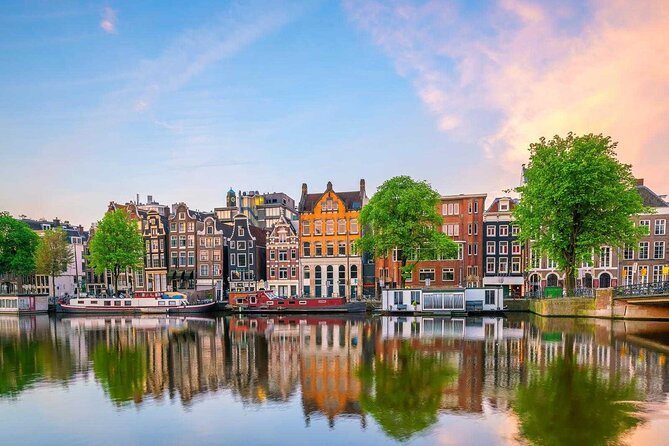
Amsterdam can feel like one long postcard, but it is more than canals and curves. This walk gives you a clear thread: early city beginnings, a Golden Age moment, then the central squares and street life that shaped the city’s identity. You also end with one of the most photographed views in the city, so the whole thing feels like it lands somewhere.
At about 2 hours, it is a smart option on your first day or when you want history without losing half your schedule. It is also sized right, with a max of 10 people, which makes the guide easier to hear and the conversation easier to join.
The big practical win is the mobile ticket. You show up ready, no paper ticket hunting.
More Guided Walking Tours in Amsterdam



Price, value, and what you might pay extra
The price is $6.05 per person, and that is a bargain for a guided walk that touches multiple city landmarks. A big reason it feels like strong value is that many stops have free admission tickets listed for the experience.
Still, do not assume every stop is covered. Two parts are specifically marked as admission not included: Anne Frank House and Amsterdam Gallery. That means you should budget extra for those, or at least accept that you’ll need to handle tickets separately.
Also, tips are not included. If this guide style clicks with you, plan to tip because Samuel’s delivery is consistently praised as enthusiastic and easy to ask questions with.
Your small-group advantage with Samuel
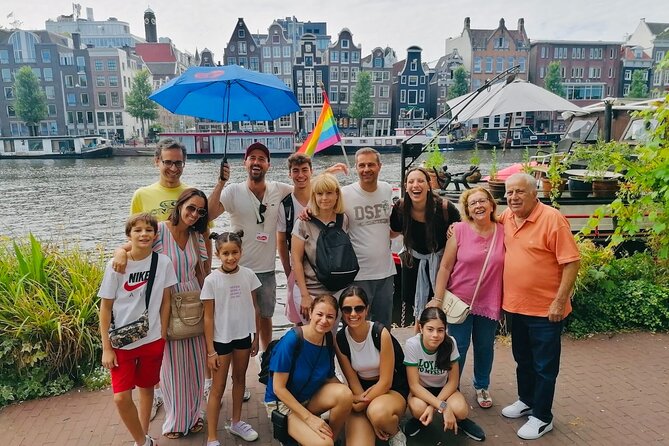
A max group size of 10 changes the feel. You are not just following a line of people. You can ask questions, and the guide can answer without it turning into a scripted monologue. That matters in Amsterdam, where street-level details often explain bigger history.
Samuel is a standout from the feedback. People highlight how friendly and dynamic the storytelling feels, and how he keeps engaging different members of the group. That combination is why this tour gets such a high rating, and why so many people recommend it.
If you want a tour where you can actually interact, this is the right size.
Stop-by-stop: what you’ll see and why it matters
This walk is built like a guided timeline, but it never feels like a lecture. Each segment is short, around 10 minutes, so you keep moving while the guide stitches together cause and effect.
Kattengat, where the city’s first years start to make sense
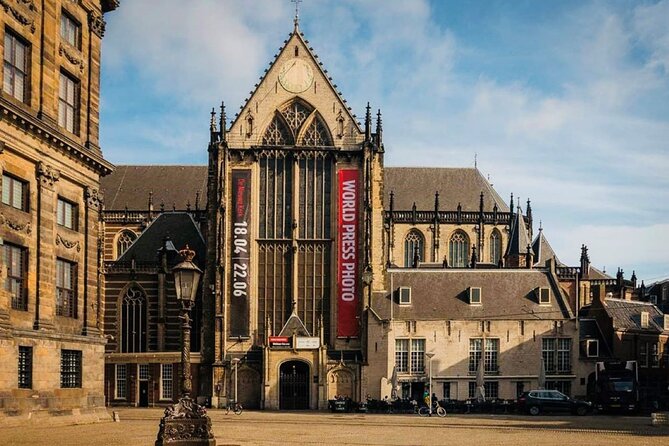
The tour opens at the New Church area, then moves to Kattengat. This first stop sets the foundation, with an introduction to the founding of the city and its early years. It is a good way to reset your brain before you start seeing names, symbols, and layouts that only click once you know where they came from.
You’ll get enough context here to understand later stops, like why certain streets and squares mattered in different eras.
More gables counted on foot:
- Amsterdam: Anne Frank Guided Walking Tour in DE/EN/IT/ES
★ 4.9 · 3,107 reviews - Amsterdam: Anne Frank Guided Small Group Walking Tour
★ 4.8 · 2,722 reviews - Amsterdam: Cultural Highlights Walking Tour
★ 4.9 · 2,629 reviews - Amsterdam: Ganja Walking Tour
★ 4.2 · 2,127 reviews
Oude Nieuwstraat, the quieter cousin of a famous area
Next is Oude Nieuwstraat, described as one of the most beautiful and unknown streets in the city. You also get a framing comparison, including the idea of it as the other Red Light District.
That twist helps you avoid the typical Amsterdam story that only talks about the headline sights. Instead, you’re learning how different neighborhoods can carry different roles while still sitting close together.
Leliegracht, the Golden Age moment on the route
Leliegracht arrives later, and it signals a shift into the Dutch Golden Age, including the idea that Amsterdam dominated the world at that time. Even with a quick stop, this is a useful mental marker.
It gives you a sense of when Amsterdam’s confidence and global reach were at their height, which helps when you later see the city’s central civic spaces and landmark architecture.
Anne Frank House, iconic meaning with tickets handled separately
Anne Frank House is one of the major icons on the route. The stop is timed at about 10 minutes, and it includes the experience of continuing the walk toward this landmark.
Important practical note: admission is not included. So while the guide can still help you understand what you are seeing, you’ll likely need to plan for the ticket separately if you want to go inside.
This is still worth doing as part of the walk, especially if you want a guided approach to the area rather than just stumbling in on your own with no context.
Dam Square, the city’s central heart
Dam Square is next, framed as the heart of Amsterdam. This stop helps you connect the city’s “big picture” spaces with the history you heard earlier.
Even if you’ve seen Dam Square in photos, a guided walk gives you a better sense of why it became such a focal point in the first place.
Amsterdam Gallery, the face-level clue on where plates come from
From Dam Square and onward, the route heads to Amsterdam Gallery. This stop focuses on an explanation of where the plates come from, in a way the guide says is so illustrative that you see them on many facades.
This is the kind of detail that turns a city from scenery into a story. Instead of just pointing at buildings, the guide connects the visible artwork or markings to its source.
Admission is not included here, so you can treat this stop as both context and orientation.
Spui, square-level talk about freedoms
Spui is another about-location stop, where you reach a square connected to current freedoms and the way Amsterdam earned its fame. The framing is political and cultural rather than architectural, and it helps you understand that Amsterdam’s identity is not only made of canals and commerce.
It’s a nice change of pace. After history and architecture, you get a more human, society-level idea of what shaped the city’s reputation.
Kalverpassage, stepping into an old prison story
Kalverpassage adds a darker turn. This stop is centered on an old prison and the light-dark of the Dutch prison system and organized crime.
Even though the stop is short, it’s memorable because it changes the tone of the walk. You go from grand public spaces to a more constrained, consequence-filled part of the city’s story.
Again, admission is listed as free for this segment, so you can focus on the meaning rather than thinking about extra ticket steps.
Bloemenmarkt, tulip fever and the strange flower talk
Next is Bloemenmarkt, one of the most famous spots in Amsterdam. The guide covers tulip fever and also mentions another famous flower: marijuana.
This is where the tour can feel extra fun, because it mixes well-known Amsterdam lore with topics that sound surprising at first. The value here is not just the facts. It is the way the guide uses those stories to explain why Amsterdam gained global attention in the first place.
The Dancing Houses, the sloping-house finale for photos and explanation
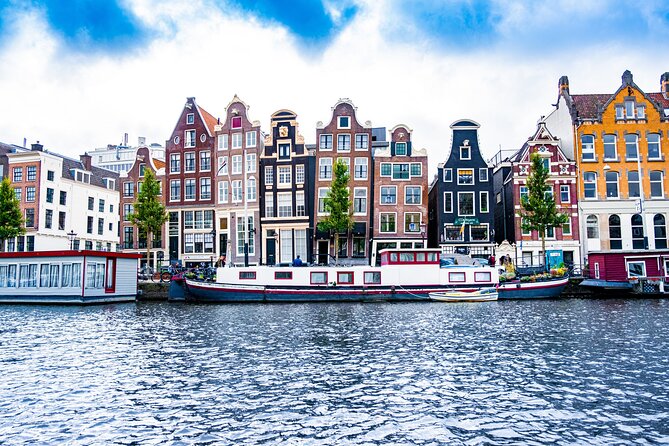
The tour ends at the Dancing Houses, one of the most photographed views in the city. The guide points out the sloping houses and explains why the houses are so sloping.
This is your payoff stop. You get both the view and the explanation, which makes the photo feel less random. It also closes the walk neatly, right near the end point at Amstel 102II.
Timing and pacing: why the short stops work
Each stop is about 10 minutes, which sounds quick until you realize it is a feature. You get a sequence of highlights without spending your whole trip in just one location.
That pacing also helps if you are visiting during a busy time of day. You keep moving, and your attention stays fresh.
If you like reading plaques and lingering for 30 minutes, you might want extra time on your own after the tour. But if you want context without time sink, this rhythm is ideal.
Where it starts, where it ends, and how to plan your route
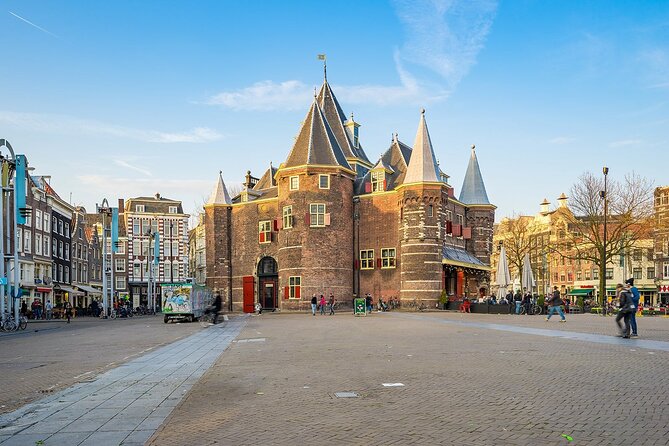
The walk starts at the New Church on De Dam, address 1012 NP Amsterdam. It finishes at the Dancing Houses on Amstel, address 1017 AD Amsterdam.
That start-to-finish flow is useful for planning the rest of your day. You can pair it with nearby neighborhoods before or after, and you land in a high-visibility area for photos and an easy next step.
Who this tour suits best

This is a strong fit if you want:
- History that you can feel at street level, not just facts you read later
- A friendly guide who actively answers questions, with Samuel’s name coming up often in feedback
- A mix of landmarks and lesser-known streets, so Amsterdam feels more three-dimensional
- A group size that stays human and not chaotic
It may be less ideal if you need long museum time during one activity, since this is a walking route and certain admissions are not included.
Should you book it?

If you want an efficient, small-group way to get the story of Amsterdam in 2 hours, I’d book it. The value is hard to beat, especially because many stops list free admission tickets. Plus, Samuel’s delivery stands out for energy, question-friendly conversation, and specific cultural details like Dutch last names and the story elements that include nuns.
Only hesitate if you already know you want a full, ticket-based experience inside Anne Frank House or Amsterdam Gallery and you do not want to juggle separate admissions. In that case, you can still use this walk for context, but plan your time and tickets accordingly.
FAQ
FAQ
How long is the Amsterdam History Walking Tour?
It is about 2 hours.
What language is the tour offered in?
The tour is offered in English.
How much does the tour cost?
The price is $6.05 per person.
What is included in the price?
All fees and taxes are included.
Are there any admissions not included?
Yes. Admission for the Anne Frank House and Amsterdam Gallery is not included.
Where does the tour start and end?
It starts at the New Church De Dam (1012 NP Amsterdam) and ends in front of the Dancing Houses at Amstel 102II (1017 AD Amsterdam).
Do I get a mobile ticket?
Yes, the tour uses a mobile ticket.
What happens if the weather is bad?
The tour requires good weather. If it is canceled due to poor weather, you’ll be offered a different date or a full refund.
Is the tour a small group?
Yes. It has a maximum of 10 travelers.
Is a service animal allowed?
Yes, service animals are allowed.
Golden Age Corners
- Amsterdam Food and Cultural Tour with Tastings★ 5.0 · 4,315 reviews
- Amsterdam: Historic City Centre Canal Cruise★ 4.3 · 659 reviews
- Amsterdam: Haunted History and Ghost Walking Tour★ 4.5 · 488 reviews
- Amsterdam High-End Dutch Food & History Tour – Up to 8 guests★ 5.0 · 482 reviews
Latest to arrive along the quays of Amsterdam




Historical Tours, compared.
Amsterdam Food and Cultural Tour with Tastings
Read our review →
Kinderdijk UNESCO World Heritage Entry Ticket
Read our review →

Amsterdam High-End Dutch Food & History Tour – Up to 8 guests
Read our review →
Cruise through the Historic City Center with Guide
Read our review →Browse the lists this tour appears in