
Reviewed · HISTORICAL TOURS
Amsterdam: History, Hidden Gems & Future Eco-Walking Tour
Amsterdam has a way of surprising you. This small-group tour tells the city’s 750-year story with chalk drawings and iPads, not dusty facts. I especially like how the walk starts with the practical genius of water and wind, and how it shifts into culture and politics without turning into a lecture.
One thing to plan for: you’ll be on cobblestones for the full 2 hours, so comfortable shoes and layers matter. If you want a crowded bus-stop style checklist, this tour is not that. It is more like a guided walk with room to ask questions, notice details, and duck into quieter streets.
In This Review
- Key things to know before you go
- Water and wind: how this Amsterdam tour starts below sea level
- Chalk, iPads, and Golden Age art that clicks with modern streets
- WWII resilience and 1970s social change, explained without the sermon
- The eco future lesson: education, green politics, and everyday urban nature
- Quiet routes, courtyards, and how the guide avoids the crowd
- Antonis on pace, stories, and that extra hour possibility
- The $29 value: what you really get in 2 hours
- Practical details so your shoes, schedule, and camera cooperate
- Should you book this Amsterdam eco-walking tour?
- FAQ
- Where is the meeting point?
- How long is the tour?
- What is the group size?
- What languages are offered?
- What should I bring?
- Is video recording allowed?
- Is food included in the tour price?
Key things to know before you go
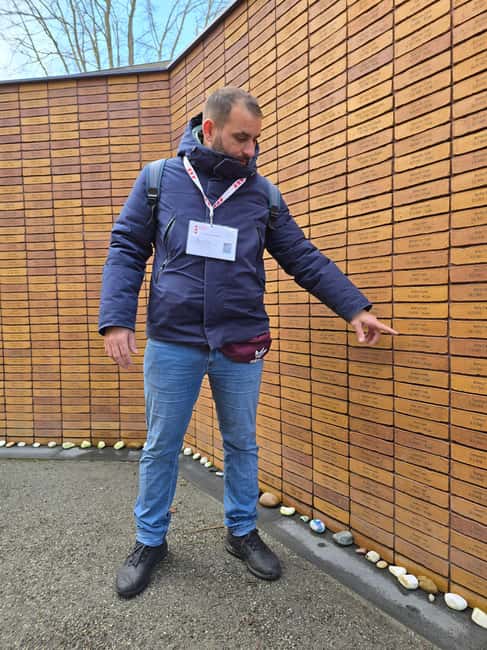
- Chalk on the street plus historical maps to explain how Amsterdam survives below sea level
- iPads with art overlays that make Golden Age scenes feel like they fit modern streets
- Tight group size (max 8) so the guide can keep the pace interactive
- Quiet routes through local streets and small courtyards, with only quick stops at major landmarks
- A future-minded eco lens focused on education, green politics, and everyday urban nature
- A handwritten postcard from historic A’Dam as a small, memorable send-off
Water and wind: how this Amsterdam tour starts below sea level
I love that this tour begins with the foundation, literally. Amsterdam did not just grow because people liked the view. It exists because the Dutch figured out how to live with water, redirect it, control it, and build trust into engineering.
Your guide uses chalk drawings right on the street plus historical maps to show you the logic behind the first dam and the dikes. You will hear how windmills served as early “green energy” and how the fight with water shaped civic life. The key point is that water is not a background detail. It is part of how Amsterdam thinks, governs, and organizes work.
This is also where the tour feels different from the usual canal-walk routine. Instead of repeating the same photos at the same hotspots, you learn to look at the city like a system. You start spotting the places where the story of water control becomes visible in street layout and neighborhood character.
More Guided Walking Tours in Amsterdam


Chalk, iPads, and Golden Age art that clicks with modern streets
Then the tour switches gears into the Golden Age. You move from water engineering into the world of wealthy merchants, 17th-century expansion, and the visual culture that grew alongside trade and prosperity.
What I find useful is the tool set. With iPads, you overlay historical paintings onto current streets. That means you do not just hear what things looked like. You can line up the past with what you see now and understand how the city evolved, piece by piece.
You also connect big themes across centuries. The tour links early settlement to later wealth, then carries that thread into World War II and the city’s postwar resilience. You learn that Amsterdam’s story is not one smooth climb. It includes pressure, survival, rebuilding, and then new social energy.
If you are the type who likes “why this matters,” this section lands. You get explanations for how economic power influenced culture, and how cultural shifts later shaped modern liberal attitudes.
WWII resilience and 1970s social change, explained without the sermon
Many history tours get stuck in one era. This one keeps moving. After the Golden Age visuals, you cover the city’s defining WWII experience and how Amsterdam responded under strain.
Then you jump into the 1970s, when liberal culture expanded, along with protests and social movements. The tour frames these moments as part of the same long conversation Amsterdam has always had with itself: rules, freedom, identity, and who gets to shape the future.
I like the way the guide treats these topics as connections you can actually feel in the city today. You are not left with isolated facts. Instead, you come away understanding how past decisions and conflicts influence what Amsterdam became, and how it keeps reinventing itself.
The eco future lesson: education, green politics, and everyday urban nature
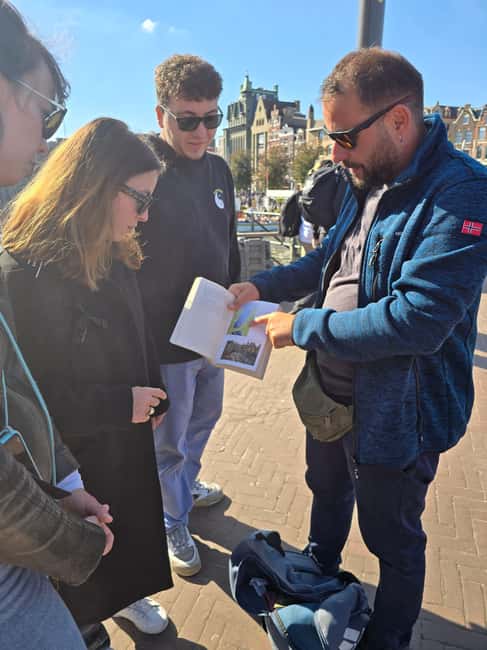
This is a history tour with a future focus. You shift into what the Netherlands does now, not just what it did before.
The guide talks about education and how an eco-friendly mindset can start young. You also hear about Dutch green politics and how long-term decisions are tied to securing the future. The tour gives you a lens for reading the city like a living classroom.
On the walk, you stop when you notice urban eco-details. It could be something small and practical, like how nature is integrated into daily space. It is not about planting a slogan in your head. It is about helping you see how “green thinking” shows up in real streets instead of posters.
If you care about sustainability but get bored when tours only talk slogans, you will likely appreciate this approach. It mixes history, culture, and policy in a way that stays tied to what you are walking past.
Quiet routes, courtyards, and how the guide avoids the crowd
Here is one of the most practical reasons to book this tour: you spend time in the quieter parts of town without missing the important landmarks.
The route prioritizes walking through local streets and stopping at secret courtyards or hidden urban gardens type spaces. When the tour does pass major sites, it does not linger in the busiest areas. You get a quick look, then move back to a calmer rhythm.
I also like that the guide pays attention to street life. If there are performers or artists along the way, you pause and support that moment rather than rushing past it. That small choice makes the tour feel less like sightseeing and more like being in Amsterdam for a few hours.
The end result: you learn how Amsterdam’s energy works in different volumes, from lively pockets to quieter interior spaces.
More gables counted on foot:
- Amsterdam: Anne Frank Guided Walking Tour in DE/EN/IT/ES
★ 4.9 · 3,107 reviews - Amsterdam: Anne Frank Guided Small Group Walking Tour
★ 4.8 · 2,722 reviews - Amsterdam: Cultural Highlights Walking Tour
★ 4.9 · 2,629 reviews - Amsterdam: Ganja Walking Tour
★ 4.2 · 2,127 reviews
Antonis on pace, stories, and that extra hour possibility
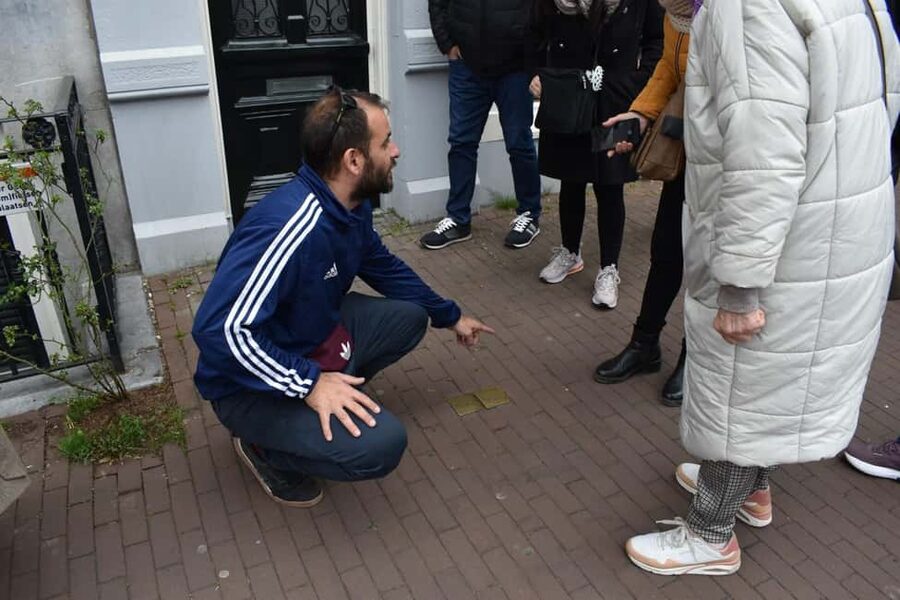
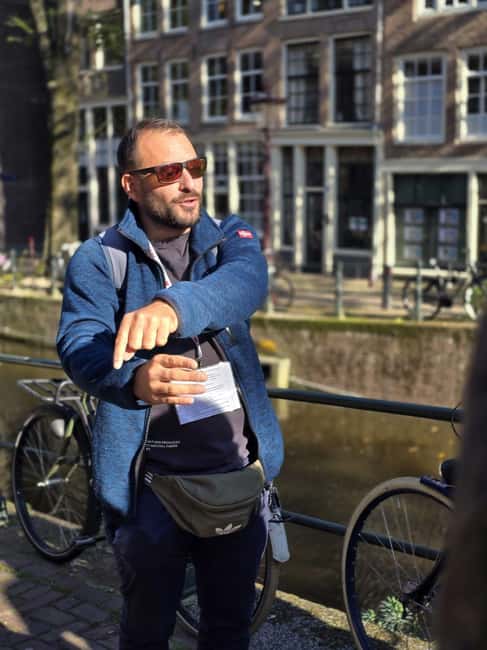
The biggest praise I noticed about this tour is the guide’s style. Antonis is described as knowing the heart of Amsterdam, with a friendly, fun delivery. People singled out that he goes beyond “dates and places” and includes hints for restaurants and markets, plus tips that matter if you are staying longer or even thinking about living in the city.
One bonus detail you might like: the tour has a reputation for going longer when everyone is enjoying it. If your schedule is flexible, that potential extra time can be a nice upgrade.
You also get support tools that keep the experience interactive. Chalk drawings, iPads, maps, and stop-and-ask moments make it easier to stay engaged for a full 2 hours.
The $29 value: what you really get in 2 hours
At $29 per person for a 2-hour guided walk, the value comes from the mix of formats. You are not just paying for someone to talk. You are paying for interactive storytelling tools, a small group cap of 8, and a route design that reduces time trapped in crowds.
For many Amsterdam tours, you spend your money on an itinerary that looks good on paper but feels generic after you walk it. Here, the water-and-wind engineering start plus the iPad art overlays create a learning experience that stays visual.
Add in the practical touches, like being shown where to fill a reusable bottle with fresh Dutch water for free, and the handwritten postcard from A’Dam. Those details are small, but they turn a standard walk into something you will remember.
Not everything is included, though. Food and drinks are not part of the price, so plan your timing. The tour ends with recommendations for social impact cafes, shops, and breweries, which can help you build a nice post-tour plan without guessing.
Practical details so your shoes, schedule, and camera cooperate
This is a walking tour, and it is real walking.
You should wear comfortable shoes because the path includes cobblestones. Bring a camera if you like photos, and bring a reusable water bottle since you will get guidance on where you can fill it with free fresh Dutch water.
Weather in Amsterdam can shift quickly, so layers are smart. You do not want to stop mid-walk because you are freezing or overheating.
One more note: video recording is not allowed. Still photos should be fine, but if you rely on video for your travel notes, plan to use your camera mode that day and skip filming.
Meeting point: meet in front of restaurant De Silveren Spiegel at Kattengat 4. Arrive about 10 minutes early so you start on time and do not miss the opening water-and-wind segment.
The tour runs in English and Greek, and it is designed for maximum 8 people, which usually means better pacing and more questions than larger group tours.
Should you book this Amsterdam eco-walking tour?
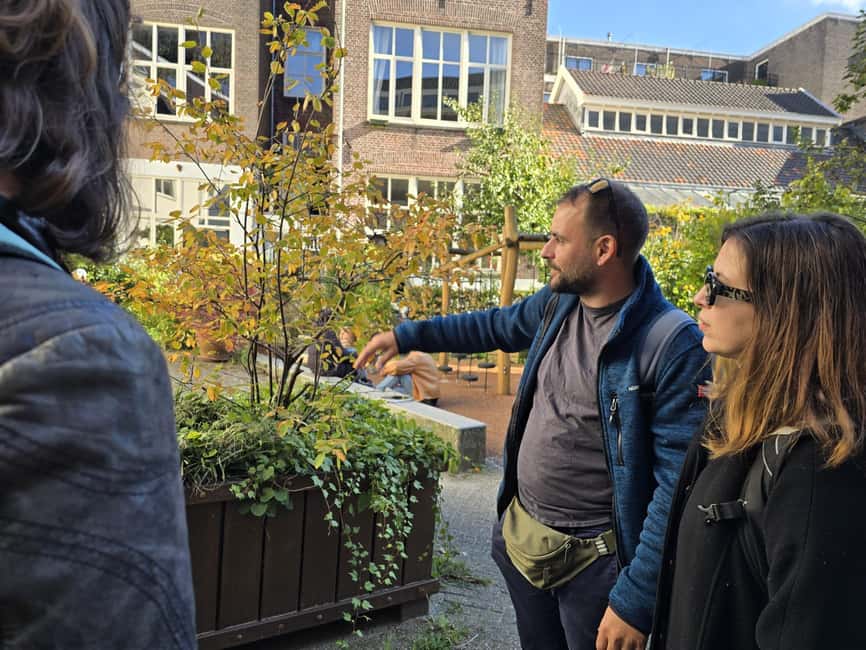
Book it if you want Amsterdam history explained through what you can see, not just what you can read. I think it is a great match if you like interactive teaching, appreciate eco and policy context, and want a guided walk that dodges crowds while still touching major landmarks.
Skip it if you hate walking on uneven surfaces, or if you want long stays at famous sites where you can wander on your own for a long time. Also skip if video recording is important for you, since it is not permitted.
If your goal is to understand why Amsterdam works, how it changed, and what it is trying to become, this is a strong use of a 2-hour window.
FAQ
Where is the meeting point?
Meet your guide in front of restaurant De Silveren Spiegel at Kattengat 4.
How long is the tour?
The experience lasts 2 hours.
What is the group size?
It is a small-group format with a maximum of 8 participants.
What languages are offered?
The live guide speaks English and Greek.
What should I bring?
Wear comfortable shoes, bring a reusable water bottle, and dress in layers for quick weather changes. You can also bring a camera.
Is video recording allowed?
No, video recording is not allowed.
Is food included in the tour price?
No, food and drinks are not included, but the guide provides recommendations for social impact cafes, shops, and breweries to visit after.
Golden Age Corners
- Amsterdam Food and Cultural Tour with Tastings★ 5.0 · 4,315 reviews
- Amsterdam: Historic City Centre Canal Cruise★ 4.3 · 659 reviews
- Amsterdam: Haunted History and Ghost Walking Tour★ 4.5 · 488 reviews
- Amsterdam High-End Dutch Food & History Tour – Up to 8 guests★ 5.0 · 482 reviews
Latest to arrive along the quays of Amsterdam



Historical Tours, compared.
Amsterdam Food and Cultural Tour with Tastings
Read our review →
Kinderdijk UNESCO World Heritage Entry Ticket
Read our review →

Amsterdam High-End Dutch Food & History Tour – Up to 8 guests
Read our review →
Cruise through the Historic City Center with Guide
Read our review →Browse the lists this tour appears in