
Reviewed · HISTORICAL TOURS
Amsterdam: History, Culture & Hidden Gems Walking Tour
Start at Beursplein and things click fast. I love that this tour kicks off at Beursplein, where you get the trade-and-finance backstory that explains so much of Amsterdam’s layout, and I also love the Red Light District section, which is handled with context and respect instead of shock-value.
One caution: it is a 3-hour walk with a steady pace, so if your fitness level is low, this likely will not feel comfortable.
In This Review
- Key highlights worth your attention
- Beursplein: the trading square that explains Amsterdam
- Red Light District: history first, not tabloid
- Chinatown to Nieuwmarkt: how trade routes become street life
- Waag area and Rembrandt’s guild connection
- Jewish Quarter: Portuguese Synagogue and a story of refuge
- Canals and the Dutch East India Company: where power shows on brick
- Dam Square: the city’s front porch with a brutal record
- The feel of the tour: small-group listening beats solo wandering
- What you do not get: no entry, so plan your own sights
- Price and value: $38 for a 3-hour city story
- Who this tour is best for
- Should you book this Amsterdam history and culture walk?
- FAQ
- How long is the Amsterdam History, Culture & Hidden Gems Walking Tour?
- Where is the meeting point?
- What is the price per person?
- Is there an entry fee or do we go into attractions?
- What language is the tour guide?
- Is food or drinks included?
- Is the tour suitable for people with low fitness levels?
- Is there any cancellation protection?
- Do I have to pay upfront to reserve?
- Is a doggie companion included?
Key highlights worth your attention

- Beursplein as the opening key, with the stock-exchange era explained in plain English
- Red Light District without clichés, where medieval landmarks and modern windows sit in the same story
- Nieuwmarkt details you can actually see, including traces of medieval walls and the Waag area
- Jewish Quarter landmarks with meaning, especially the Portuguese Synagogue silhouette and what it represents
- Dutch East India Company connections on the canal route, including the kinds of homes linked to Golden Age power
- Dam Square as a history timeline, with the Royal Palace square tied to major events
Beursplein: the trading square that explains Amsterdam
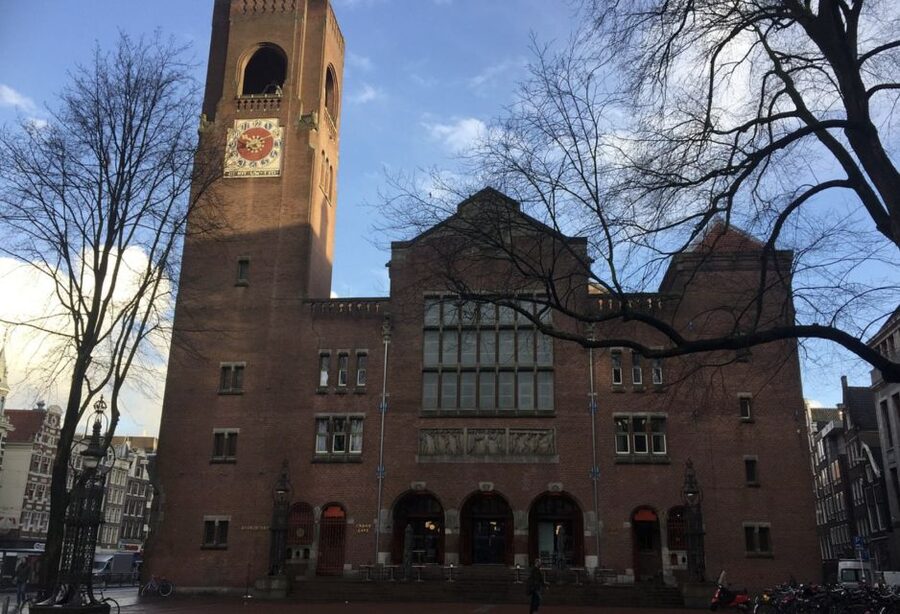
Most Amsterdam tours start with canals. This one starts with commerce, at Beursplein, a small square with a big clock tower and a small stock-exchange presence. It is the kind of setting that makes the city’s priorities feel clear right away.
You learn how this area grew from a merchant-focused hub into a financial powerhouse tied to the world’s first stock exchange. The story matters, because once you understand the trade logic, everything else clicks, from ship money to brick-and-bridge prosperity.
What I like about this start is that it gives you a mental map before you hit the busier blocks. You are not just walking from photo spot to photo spot, you’re learning how Amsterdam became Amsterdam.
More Guided Walking Tours in Amsterdam


Red Light District: history first, not tabloid
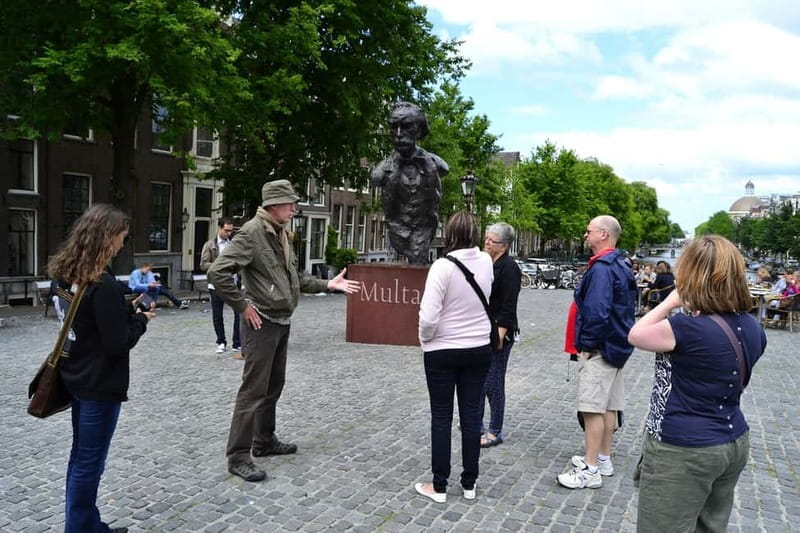
Next comes the Red Light District, one of the oldest and most talked-about neighborhoods in the city. The payoff here is the way your guide frames it as a layered place, not a single-topic detour.
You hear honest, respectful stories about how Amsterdam’s approach to tolerance shaped everyday life. And you get a visual contrast that is easy to miss on your own, where medieval churches and older architecture sit beside modern windows and street life.
A practical consideration: this part of the walk can be emotionally uncomfortable for some people. It is handled with context, but it is still a real neighborhood, not a theme park. If you want a purely gentle, family-friendly route, you might want to think twice.
Chinatown to Nieuwmarkt: how trade routes become street life
After the Red Light District, the route shifts into Chinatown. This is not just about food signs or colorful streets. You start seeing Amsterdam as a city that keeps absorbing different communities and turning that change into culture.
From there you head toward Nieuwmarkt, which used to function as a major trade center. Today, it reads like a crossroads where different eras overlap, and your guide helps you spot the evidence.
Two details make Nieuwmarkt especially useful on a walking tour: the remains of Amsterdam’s medieval walls and the presence of key historic landmarks in the area. When someone points these out, you realize you have been walking through history for years without clocking it.
If you like streets that feel lived-in rather than polished for visitors, this stretch is where you often start enjoying Amsterdam more. It feels like you are watching the city do its everyday work, not just posing for pictures.
Waag area and Rembrandt’s guild connection
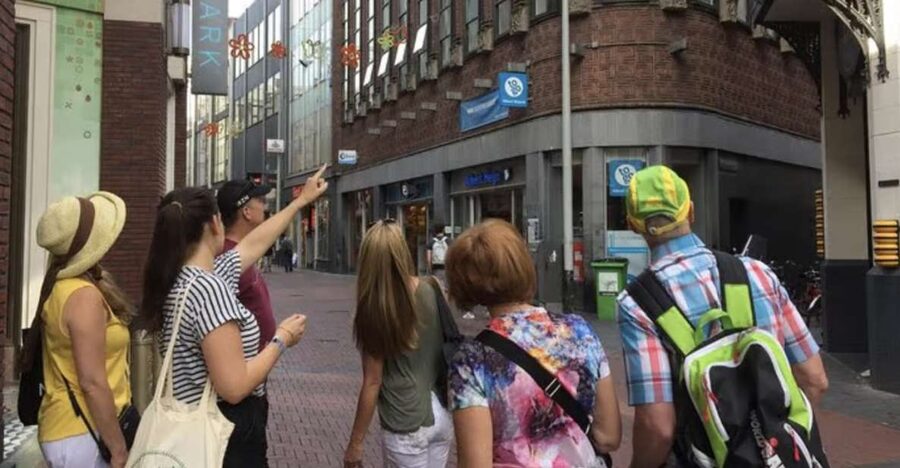
At Nieuwmarkt, you also get brought to the Waag building area, an important reminder that Amsterdam’s trade life was not only ships and merchants. It was also guilds, crafts, and systems that made the city run.
One of the most interesting claims you hear here is about Rembrandt’s painter’s guild meeting in this area. Even if you are not an art history person, it is a helpful way to connect the Golden Age to the human network behind it.
This stop is valuable because it explains Amsterdam’s growth as a chain reaction. Money pulled in trade. Trade pulled in people. People formed communities. Communities developed the arts and the craft organizations that made the city’s reputation travel.
Also, since there is no scheduled entry into sites, you are relying on what you can see and what your guide explains. That’s a good fit if you enjoy walking, listening, and absorbing rather than waiting in ticket lines.
Jewish Quarter: Portuguese Synagogue and a story of refuge
The walk then brings you near the Jewish Quarter, where the Portuguese Synagogue provides a striking silhouette in the skyline. But the tour does more than show you a landmark, it connects the landmark to refuge, resilience, and cultural contribution across centuries.
You get a moving explanation of the Jewish community’s legacy in Amsterdam. It helps you understand why certain neighborhoods have a distinct “memory” quality, even when modern street life is right in front of you.
What makes this section work well is that it broadens tolerance beyond the sound bites. Amsterdam becomes a story about communities surviving, adapting, and contributing to the city’s identity.
A small note: this section can feel heavier than the earlier trade-focused parts. If you prefer a lighter tone all the way through, you might find yourself grateful for the canal walking interludes afterward.
More gables counted on foot:
- Amsterdam: Anne Frank Guided Walking Tour in DE/EN/IT/ES
★ 4.9 · 3,107 reviews - Amsterdam: Anne Frank Guided Small Group Walking Tour
★ 4.8 · 2,722 reviews - Amsterdam: Cultural Highlights Walking Tour
★ 4.9 · 2,629 reviews - Amsterdam: Ganja Walking Tour
★ 4.2 · 2,127 reviews
Canals and the Dutch East India Company: where power shows on brick
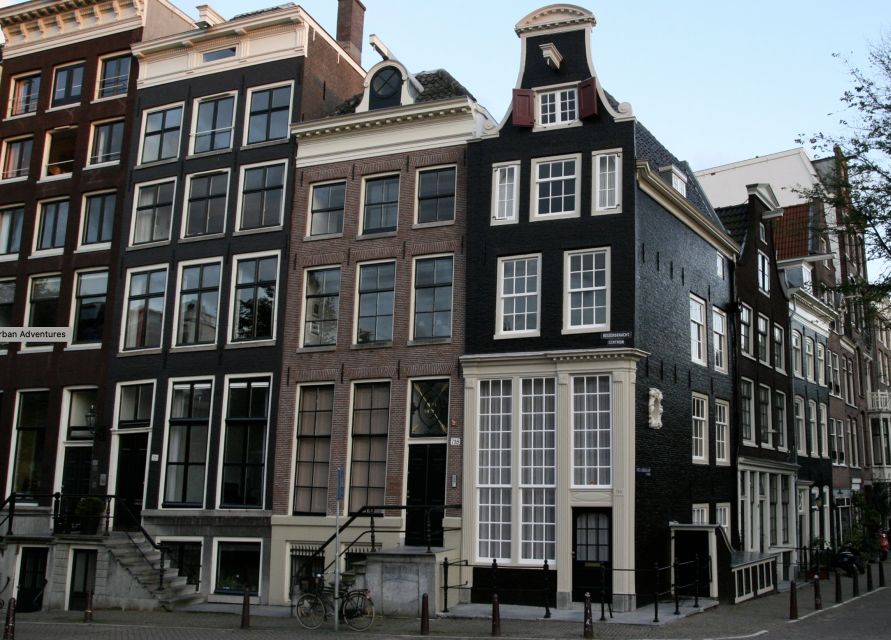
One of the best parts of the route is how it uses the canal-side architecture to explain the Dutch East India Company. You pass by grand canal homes owned by families connected to the company.
This is the Golden Age story, but tied to something you can actually see, the façades, the scale, and the confidence of the buildings. It is one thing to hear about colonial power in an abstract way, and another to look at the physical leftovers and realize how long the influence lasted.
Your guide connects ambition, colonial-era wealth, and how fortunes echoed through Amsterdam’s bricks and bridges. For many people, this becomes the turning point from “I’m learning facts” to “I’m understanding how the city formed.”
There is also a good pacing effect here. After the Jewish Quarter section, the canal area gives you room to reset your mind, and you get a more scenic view while still learning.
Dam Square: the city’s front porch with a brutal record
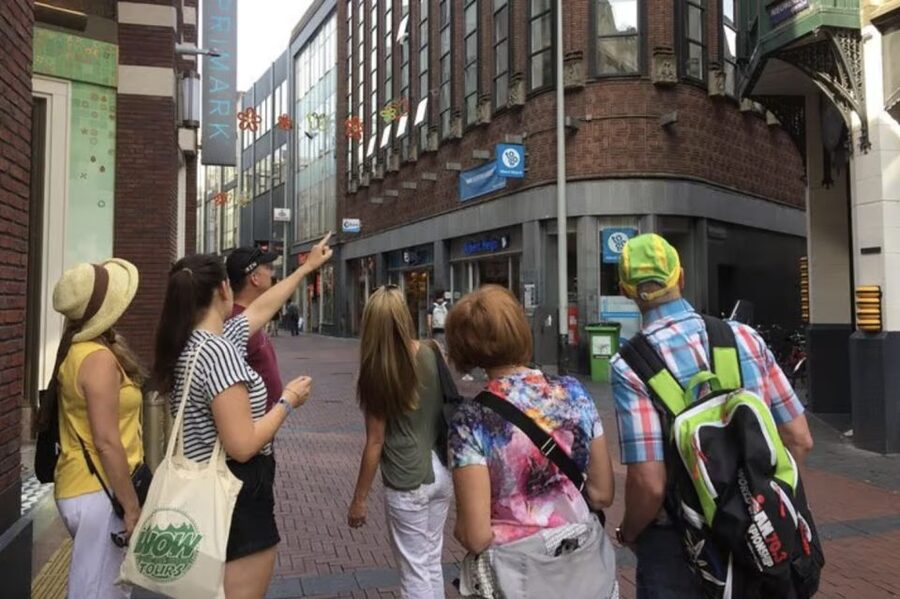
You finish at Dam Square, Amsterdam’s symbolic heart. Standing near the Royal Palace, you hear how the square evolved from civic importance, once functioning as the city hall, into a stage for royal ceremonies, protests, and public punishments.
That mix is the point. Dam Square is not just postcard central, it is where power displayed itself in many forms, and where society pushed back too. This gives you a fuller picture of Amsterdam than a “pretty center” view.
If you are arriving in the city for the first time, ending here is smart because it puts you at a useful reference point for the rest of your trip. You can go from historical context to practical navigation fast.
And since there is no attraction entry built into the tour, you are not stuck waiting around. You end with options, museums nearby if you want them, shopping streets, canal walks, and transit links without a rigid schedule.
The feel of the tour: small-group listening beats solo wandering
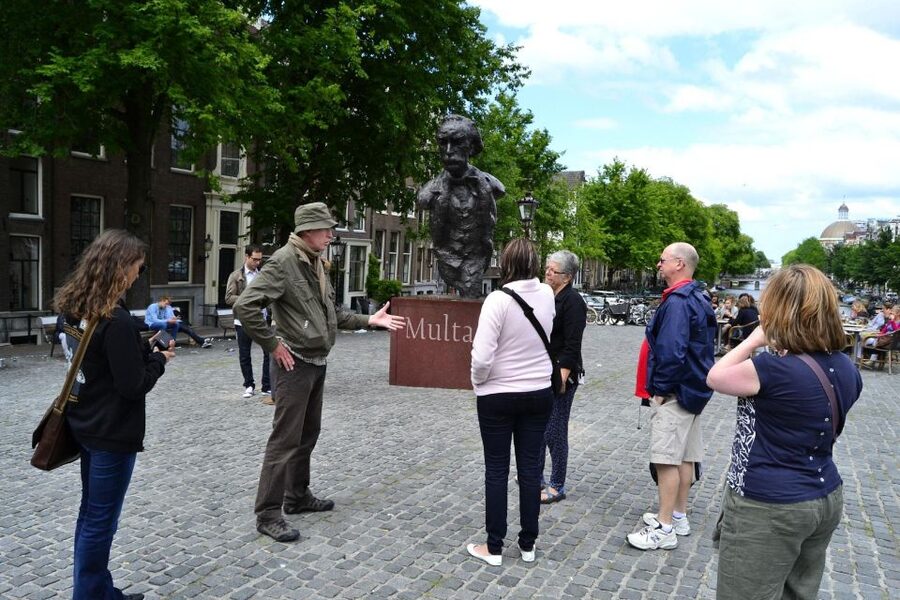
This is a small-group walking tour, built for conversation and questions. Your guide is an English speaker and focuses on context, culture, and stories rather than speed-running landmarks.
Duration is 3 hours. That is long enough to change how you see Amsterdam, but short enough that you still have time for your own exploring after. It is also a good “first-or-second day” option because it helps you understand the city’s logic early.
From the reviews, you get a sense of how personable and useful the guides can be. One guide is described as an American who had lived in Amsterdam for 30+ years, and another is named David, with explanations that ran a bit longer. Another review mentions an expat guide from Wisconsin who shared practical pointers for navigating and even bar recommendations for the rest of the stay.
Even if you do not follow every recommendation, it signals something important: you are not just hearing dates. You are getting someone’s lived perspective.
You might also have a doggie companion at certain times. If you are a dog person, that adds a friendly, local touch. If you are not, it is still very easy to ignore and focus on the route.
What you do not get: no entry, so plan your own sights
This tour is designed for walking and storytelling, not museum time. There is no entry into attractions or sites included.
So if you want to go inside places afterward, you will need to add those separately on your own schedule. The upside is you move more freely and spend your time learning rather than waiting for tickets.
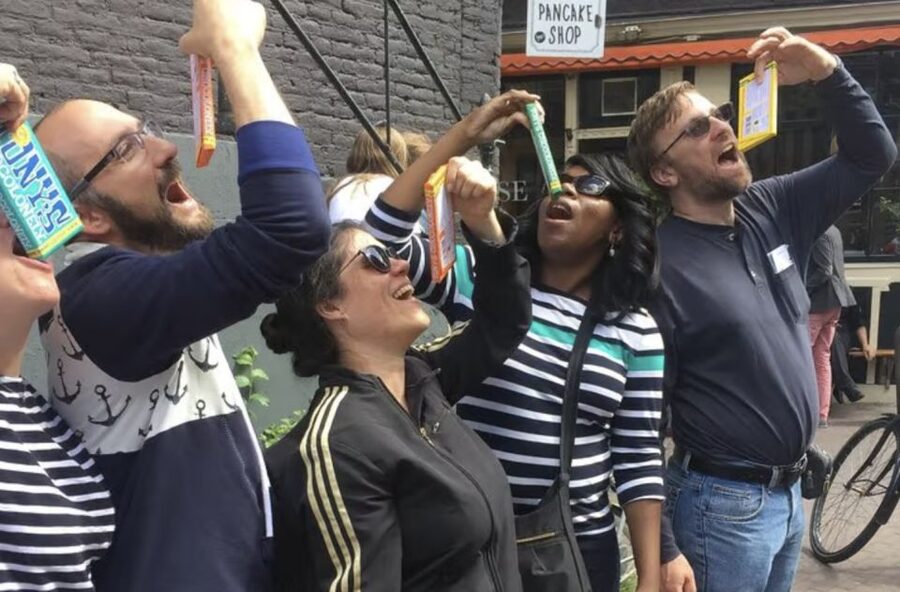
Food and drinks are also not included, unless your group makes a stop. That means you should consider a light snack plan, especially if you tend to get hungry while walking and listening.
If you prefer a food-focused tour, this one is more history-and-neighborhood oriented. If you want a strong framework for Amsterdam, it is excellent.
Price and value: $38 for a 3-hour city story
At $38 per person, you are paying for a local English-speaking guide and a structured route through key neighborhood layers. That price also includes a tourist city tax of 1.50 EUR per person, which helps keep the total honest.
Is it a bargain? In Amsterdam, guided walking tours are rarely pocket change, but this feels fairly priced for what you cover: trade history at Beursplein, a context-forward Red Light District walkthrough, historic areas in and around Nieuwmarkt, and the Jewish Quarter plus Dam Square.
The real value is the way the guide connects themes. Trade leads to wealth. Wealth leads to Golden Age architecture. Tolerance is not a slogan, it is a story you see in neighborhoods. That kind of interpretation is hard to replicate on your own unless you already know what you are looking for.
Where you might question the value is if you dislike walking or you expect indoor sights included. But if you want a guided narrative you can carry into the rest of your days, this works.
Who this tour is best for
You will likely enjoy it most if you:
- Want an Amsterdam history and culture overview that still feels grounded in what you see on the street
- Like neighborhood context, not just famous buildings
- Enjoy listening to a guide explain themes like trade, religion, tolerance, and change over time
- Prefer a walking tour that helps you make sense of the city quickly
It is listed as not suitable for people with low level of fitness. If you know you struggle with steady walking, you might consider a shorter option or a sit-down focused alternative.
If you are traveling with kids, this can be a mixed fit because the Red Light District and Jewish Quarter topics can get intense. For younger kids, you might need to judge your comfort level and how your group handles serious history.
Should you book this Amsterdam history and culture walk?
I’d book this tour if you want your Amsterdam to have a backbone. The route connects trade, power, community, and tolerance in a way that helps you understand why buildings and neighborhoods look the way they do.
I would not book it if you expect lots of time inside sites, a heavy focus on food, or a very low-pacing experience. It is a focused 3-hour walk, built for listening.
If you are the type of traveler who likes to return to places later and suddenly notice details you missed before, this tour is the kind that pays off. Start at Beursplein, learn how the city grew, and end at Dam Square knowing you are looking at a place with real, complicated stories.
FAQ
How long is the Amsterdam History, Culture & Hidden Gems Walking Tour?
The tour lasts 3 hours.
Where is the meeting point?
The meeting point is Beursplein, a small square with a large clock tower, and a small stock exchange. It is located between Dam and Central Station.
What is the price per person?
The price is $38 per person, and it includes tourist city tax of 1.50 EUR per person.
Is there an entry fee or do we go into attractions?
No entry into attractions or sites is included.
What language is the tour guide?
The tour is in English.
Is food or drinks included?
Food and drinks are not included. If the group makes a stop, then you might have the chance to buy something, but it is not guaranteed.
Is the tour suitable for people with low fitness levels?
The tour is not suitable for people with low level of fitness.
Is there any cancellation protection?
You can cancel up to 24 hours in advance for a full refund.
Do I have to pay upfront to reserve?
You can reserve now and pay later, so you do not pay nothing today when booking.
Is a doggie companion included?
A doggie companion may be present at certain times.
Golden Age Corners
- Amsterdam Food and Cultural Tour with Tastings★ 5.0 · 4,315 reviews
- Amsterdam: Historic City Centre Canal Cruise★ 4.3 · 659 reviews
- Amsterdam: Haunted History and Ghost Walking Tour★ 4.5 · 488 reviews
- Amsterdam High-End Dutch Food & History Tour – Up to 8 guests★ 5.0 · 482 reviews
Latest to arrive along the quays of Amsterdam




Historical Tours, compared.
Amsterdam Food and Cultural Tour with Tastings
Read our review →
Kinderdijk UNESCO World Heritage Entry Ticket
Read our review →

Amsterdam High-End Dutch Food & History Tour – Up to 8 guests
Read our review →
Cruise through the Historic City Center with Guide
Read our review →Browse the lists this tour appears in