
Reviewed · VAN GOGH & DUTCH MASTERS MUSEUMS
Amsterdam Guided Walking Tour about Rembrandt, private guide
Rembrandt is your thread through Amsterdam. This private 2.5-hour walk ties his life to the city’s key places, from guild buildings at Nieuwmarkt to his final resting place at Westerkerk, in a way that feels personal and practical. I especially love how the stops connect art to real jobs, money, and faith, and I also like the pacing, lots of short looks that keep the story moving. One thing to consider: it is still a 2.5-hour standing and walking plan, so it may not feel good if your mobility is limited.
Here are the two best parts for me. First, the guide focus is on how painters got paid and who they worked for, so Rembrandt’s paintings start making more sense fast. Second, the route hits both the big-symbol places and the everyday market streets, including Waterlooplein and the Jordaan, so you get the full economic swing of his world.
The possible drawback is simple: there are no mobility aids, and it is not recommended if you use a walker or struggle to stand for long stretches.
In This Review
- Key highlights you will feel on this Rembrandt route
- How this Rembrandt walking tour turns paintings into real places
- Price and what you actually get for $119.47 per person
- Pacing, comfort, and how to prepare for 2.5 hours on foot
- Nieuwmarkt and De Waag: where Rembrandt’s guild world had a meeting spot
- Trippenhuis: meeting Rembrandt’s patrons in their power-house canal home
- Zuiderkerk: where Rembrandt’s faith and family losses show up
- Rembrandt House Museum exterior: seeing his success without going inside
- Waterlooplein Market: how everyday objects fed Rembrandt’s collecting
- Staalstraat views and the Clothmaker’s Guild connection
- Kloveniersburgwal and The Night Watch commission at the city-wall edge
- Dam Square: political art, public punishment, and one haunting sketch detail
- Grachtengordel-West: canal belt wealth and House De Dolphijn tied to The Night Watch
- Westerkerk ending: Rembrandt’s burial and the quiet finish to a big legacy
- The Jordaan after bankruptcy: a working-class Amsterdam chapter
- Who should book this Rembrandt private walking tour
- Should you book?
- FAQ
- How long is the Amsterdam Rembrandt guided walking tour?
- Is this a private tour or a group tour?
- What language is the tour in?
- Where does the tour start and end?
- Does the tour include museum admission?
- Are there any spots that are mainly outdoors?
- Is bottled water included?
- Is the tour suitable if I have mobility issues?
- Is the tour accessible by public transportation?
- What happens if the weather is bad?
Key highlights you will feel on this Rembrandt route
- A private English guide who can shape the walk to what you care about
- Short, story-rich stops that keep you moving and focused for about 2.5 hours
- Guild and patron power made concrete, not just name-dropped
- A canal-belt stroll through Grachtengordel-West, where civic pride shows up in architecture
- A human ending at Westerkerk, tied to Rembrandt’s burial and the contrast with his legacy
- Market and street scenes around Waterlooplein and the Jordaan that explain his collecting habits
How this Rembrandt walking tour turns paintings into real places
Amsterdam can feel like a museum of museums. This tour avoids that problem by treating Rembrandt like a working person with relationships, bills, commissions, and losses. You are not just looking at old buildings, you are learning how specific parts of the city shaped the art that came out of them.
You get a private guide in English, so you can ask questions as you go. And because it is only your group, you are not stuck with the pace of strangers who wander off for photos every five minutes. The tour is built as a sequence of compact stops, which works well in Amsterdam, where moving between sights is half the fun.
The best value angle here is the way the guide helps you read the city. You start to notice patterns. Guilds show up in the squares. Wealth and influence show up in canal houses. Protestant faith shows up in major churches. And daily life, including markets, shows up in the streets Rembrandt leaned on for inspiration.
More Guided Walking Tours in Amsterdam


Price and what you actually get for $119.47 per person
$119.47 for a private 2.5-hour walking tour is not cheap, but it is also not random. What you are paying for is guide time plus a focused route built around named Rembrandt connections, not a generic highlights walk.
In plain terms, you are buying:
- A guided storyline that connects places to paintings and commissions
- A private format, meaning fewer distractions and a smoother pace
- A route that touches key sites without making you commit to long museum tickets
Also, several stops include admission free info in the plan, and you are mostly outside for the sights. That matters because it keeps your budget under control compared with tours that force you into paid entry fees at every turn.
Pacing, comfort, and how to prepare for 2.5 hours on foot
This is a walking tour with frequent short stops, mostly 5 to 10 minutes each, plus time to move between them. That can feel easier than one long museum session, but it still adds up to sustained standing and walking.
If you have trouble standing for about 2.5 hours, or you use a walker, this is not recommended. Mobility aids are also not available. My practical advice: wear supportive shoes you can walk in for the whole session, and take a quick water moment when your guide offers one, since bottled water is not included.
Good weather is also required. If it is raining or miserable, plan for an adjustment or a full refund option depending on the day’s conditions.
Nieuwmarkt and De Waag: where Rembrandt’s guild world had a meeting spot
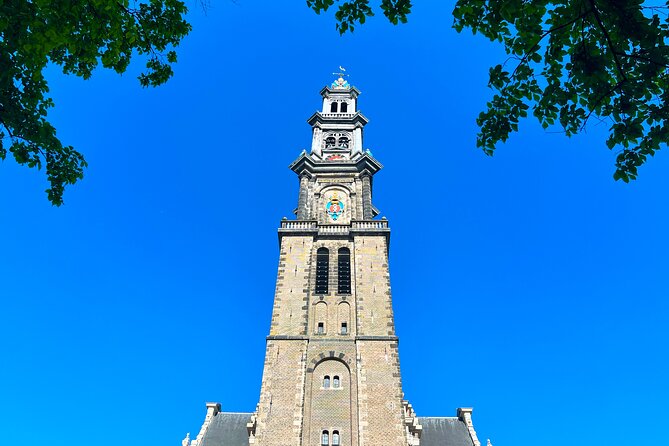
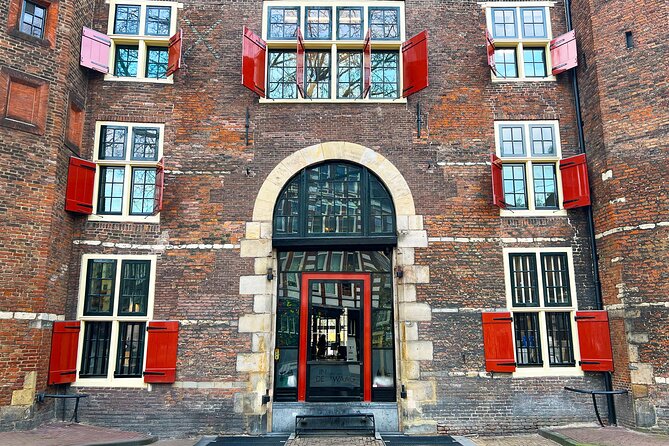
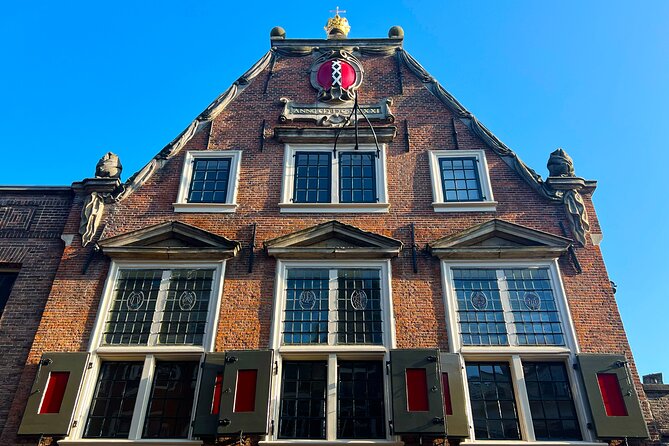
Your tour begins at Nieuwmarkt, one of Amsterdam’s older squares. The star here is De Waag, a medieval building later used as a weigh house and guild hall.
This stop is important because it explains how art worked as a profession. Rembrandt, as an independent master, was expected to be part of the painters’ world. The Saint Luke’s Guild was based here, and it gives you a concrete reason why his career ties to institutions, not just talent.
Then there is a second layer. The Surgeons’ Guild also called De Waag home, and your guide links that to Rembrandt’s The Anatomy Lesson of Dr. Nicolaes Tulp. Even if you already know the painting, this setting helps you picture the social environment around the commission, including who had the authority to sponsor it.
If you like your art history with a job-description angle, this is one of the strongest openings on the route.
Trippenhuis: meeting Rembrandt’s patrons in their power-house canal home
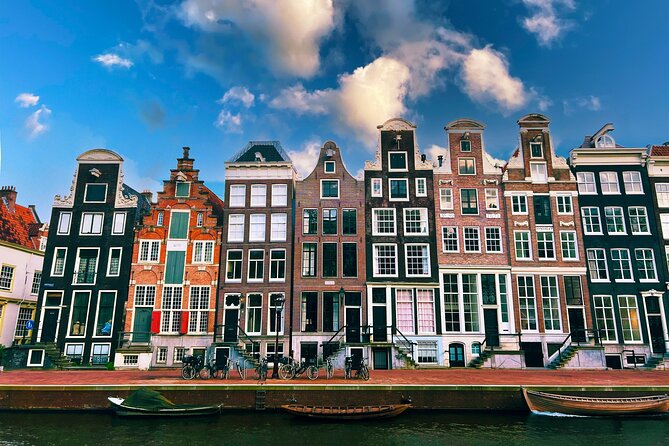
Next you head to the Trippenhuis, a grand canal building from 1660 for the Trip brothers, known as arms dealers and key Golden Age figures. The exterior is impressive, and the guide uses that to talk about wealth and social status in a way that connects directly to Rembrandt’s portraits.
You learn that the Trip family were patrons, and Rembrandt painted three of them. That detail matters because it reinforces something you can miss otherwise: Rembrandt did not paint in a vacuum. Some of his most famous portrait work was commissioned by people who held influence, money, and public roles.
The tour also ties their weapons role to the Eighty Years’ War, connecting local business and power to Dutch independence and religious freedom. It is a heavy topic, but delivered as a clear chain: trade and conflict shape who gets money and commissions, and commissions shape what ends up on canvas.
More Private Tours in Amsterdam
- Rijksmuseum Amsterdam Small-Group Tour with Private Upgrade
★ 4.5 · 1,547 reviews - Van Gogh Museum Tour Reserved Entry Semi Private
★ 5.0 · 1,437 reviews - Private Amsterdam Red Light District and Coffee Shop Tour
★ 5.0 · 763 reviews - Anne Frank and Jewish Quarter Amsterdam Private Walking Tour
★ 5.0 · 684 reviews
Zuiderkerk: where Rembrandt’s faith and family losses show up
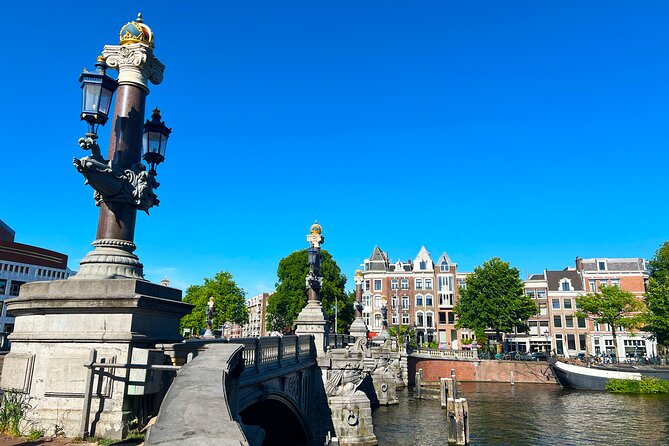
At Zuiderkerk, you are in the orbit of Rembrandt’s personal life. This Protestant church was built in the early 1600s and designed by Hendrik de Keyser, a major Dutch Golden Age architect and sculptor.
Your guide’s angle here is human. This is not just about architecture. It is about the community around it after the Reformation, and how faith was part of daily life in that era.
A key detail that makes this stop hit harder: several of Rembrandt’s children were buried here. Even if you are not a religious traveler, the sense of family grief and public burial tradition makes the story feel more complete.
It is also a good contrast stop. After guilds and patron wealth, you get something personal and local, connected to who Rembrandt was beyond his paintings.
Rembrandt House Museum exterior: seeing his success without going inside
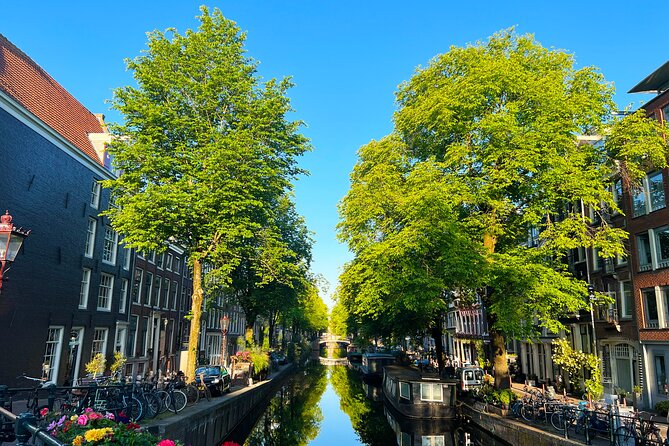
You will see the Rembrandt House Museum from the outside. That is intentional. The façade alone is enough to remind you of his peak career status, and you still get to keep moving on foot.
This canal house sits in the upscale part of the Jewish Quarter, overlooking the harbor area. The tour emphasizes how that location gave Rembrandt access to goods arriving from far away: textiles, spices, artworks, and other imported objects. You start to understand his fascination with detail as something tied to what literally came through the port.
There is also a thoughtful note about models. The plan says he may have used local Jewish residents as models for historical and biblical figures. And the area included a small independent Black community, highlighting that Amsterdam’s neighborhood makeup was more complex than a simple postcard version.
Quick drawback to know: you will not be going inside here, so you do not get museum time. If you want indoor artifacts and galleries, you may prefer adding a separate museum visit on another day.
Waterlooplein Market: how everyday objects fed Rembrandt’s collecting
Then you swing into Waterlooplein Market, known for its flea market energy and located near the Jewish Quarter. This stop is where the tour becomes street-level again.
Rembrandt is described as someone who frequented markets and auction settings, hunting for intriguing objects for his “cabinet” of curiosities. The guide connects collecting to creativity, which is the key takeaway. His taste for objects and oddities links back to the variety you see across his paintings.
At the same time, there is a sobering note. The plan mentions that his collecting sometimes pushed him into overspending, contributing to his eventual bankruptcy. That gives you a more honest arc: inspiration can come with consequences.
If you like to connect art to behavior, this is a fun stop. Even if you do not buy anything, it helps you understand the logic behind Rembrandt’s visual world.
Staalstraat views and the Clothmaker’s Guild connection
On Staalstraat, you get another guild link. The tour points out a building tied to Clothmaker’s Guild officials, who commissioned Rembrandt’s group portrait, The Syndics of the Clothmaker’s Guild. The painting worked as an ornament for their guild office, so it was about pride and public identity as much as art.
This stop also includes a nice visual payoff. From the middle of the street, you get an iconic view toward the Zuiderkerk, which was later painted by Monet. That connection helps you see how Amsterdam’s geometry keeps inspiring artists long after Rembrandt’s time.
Also, Staalstraat is a reminder that Rembrandt’s world was commerce-heavy. Textile work, guild authority, and public image mattered. If you tend to think of painters as solitary geniuses, this section corrects that assumption quickly.
Kloveniersburgwal and The Night Watch commission at the city-wall edge
Next is Kloveniersburgwal, a historic canal linked to the medieval city wall area. Even though the original wall no longer exists and guard premises were destroyed by fire long ago, a commemorative plaque marks the significance.
The tour explains that civic guardsmen headquartered around here. And that is where Rembrandt’s famous commission enters again: The Night Watch. Your guide shares the story behind the commission and emphasizes the guards’ role in Amsterdam’s defense.
This is a stop that rewards paying attention to what is being said, not just looking at the canal. The guide’s job is to connect symbolism in the painting to the real-world purpose of the people portrayed. If you leave this stop thinking, okay, this was about civic power, not just dramatic figures, then you got the point.
Dam Square: political art, public punishment, and one haunting sketch detail
You arrive at Dam Square, Amsterdam’s historic center. The former Town Hall, now the Royal Palace, is here, and it signals civic pride in the Dutch Golden Age.
Rembrandt was commissioned to paint The Conspiracy of Claudius Civilis for this building. The plan notes that the painting was later removed, but it remains one of his most dramatic and politically charged works. This is where the tour helps you see Rembrandt as a painter who could handle national themes, not only private portraits.
Then comes one of the most human stories on the route. Dam Square was also a site of public executions, including that of Elsje Christiaens, a young Danish woman. The plan says Rembrandt sketched her lifeless body shortly after her execution, creating an empathetic study.
That detail might sound dark, but it is part of what makes the city and Rembrandt’s art so complicated. You are not only learning about fame and wealth. You are seeing the moral weather of the time, where state power and personal attention could collide.
Grachtengordel-West: canal belt wealth and House De Dolphijn tied to The Night Watch
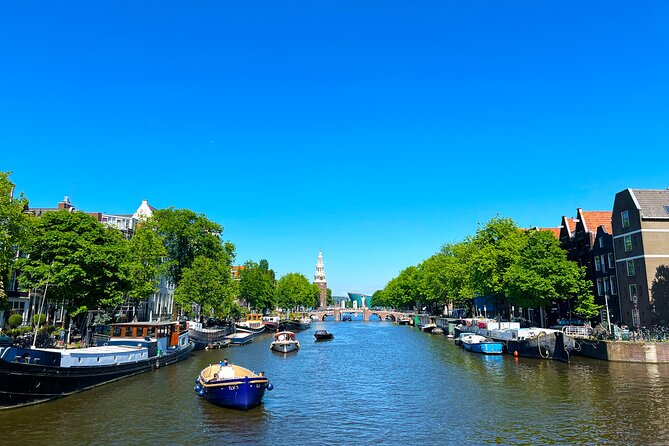
Now you walk the Grachtengordel-West canal belt, a UNESCO World Heritage area and one of Amsterdam’s defining Golden Age symbols. You will see stately merchant homes built during a period when Amsterdam was a global hub for trade and culture.
The tour uses architecture to talk about social structure. Wealth here was not just private comfort. It was public standing, written into the buildings and reflected in who sat for portraits.
A specific landmark appears: House De Dolphijn, tied to Frans Banning Cocq, the central figure in The Night Watch. The guide points out how canal district elite identity comes through in Rembrandt’s portraits, not only as likenesses but as civic roles.
If you enjoy visual sociology, this stretch is rewarding. It explains why the same city can produce both public power paintings and deeply personal works.
Westerkerk ending: Rembrandt’s burial and the quiet finish to a big legacy
Your tour concludes at Westerkerk, another iconic Protestant church and Rembrandt van Rijn’s final resting place.
The plan emphasizes a striking contrast. Rembrandt died in poverty in 1669, yet he was buried inside the church. Burial inside was typically reserved for the wealthy or well-connected, so the privilege suggests that he still mattered to people who had influence.
One detail adds mystery: the exact location of his grave has long been lost. So you end with a reflective mood, balancing the quietness of the burial with the enormous legacy he left behind.
This ending works well because it reframes what you learned earlier. You began with institutions and commissions. You end with a person whose life did not end in wealth, even though his name endured.
The Jordaan after bankruptcy: a working-class Amsterdam chapter
After Westerkerk, the walking continues into the Jordaan, now one of Amsterdam’s prettiest neighborhoods, but in Rembrandt’s time it was a crowded working-class district.
The plan connects this move to a major turning point: after bankruptcy in 1656, Rembrandt had to leave his grand home and move west. The Jordaan is described as dense, with small entrepreneurship, factories, craft workshops, and also poverty.
This is a big reason the tour feels balanced. It does not treat Rembrandt’s Amsterdam as one-note grandeur. You get the more difficult side of Golden Age living, which helps explain why his later years feel different in tone and why his world became more grounded.
Who should book this Rembrandt private walking tour
Book it if you want:
- A Rembrandt-focused route that links paintings to guilds, patrons, and real neighborhoods
- A private guide format where you can ask questions in English
- A mix of major landmarks and street-level stops like markets and canal sides
I think it is especially good for first-time Amsterdam visitors who want an organized way to learn the city’s structure without spending all day inside museums.
Skip it or choose another option if:
- You cannot comfortably stand and walk for about 2.5 hours
- You use a walker or need mobility support that this tour cannot provide
- You only want museum interiors, since several key sites are viewed from the outside
Also, if you happen to get a guide like Anna (her humor, knowledge, and passion came through clearly in one account), you are likely in for a tour that feels animated and easy to follow.
Should you book?
Yes, if Rembrandt is your main theme and you want a smart, human storyline tied to Amsterdam’s actual places. The price makes sense for a private 2.5-hour guided walk, especially because it covers both high-power sites like guild buildings and churches, and everyday texture around markets and the Jordaan. Just be honest about your walking comfort, because this is a moving tour, not a sit-down history lecture.
If you go in ready to look at buildings and ask why they matter, you will leave with paintings that feel less like distant masterpieces and more like products of a living city.
FAQ
How long is the Amsterdam Rembrandt guided walking tour?
It lasts about 2 hours 30 minutes.
Is this a private tour or a group tour?
It is a private tour, so only your group participates.
What language is the tour in?
The tour is offered in English.
Where does the tour start and end?
It starts at Tilburgse Benkskes Plein, Nieuwmarkt (1011 JV Amsterdam) and ends at Westerkerk, Prinsengracht 279 (1016 DL Amsterdam).
Does the tour include museum admission?
For the specific stops listed, admission is shown as free, and you will not go inside the Rembrandt House Museum during this walk.
Are there any spots that are mainly outdoors?
Most of the stops are sightseeing from the street or exterior viewpoints, including Nieuwmarkt, Trippenhuis area, Zuiderkerk, Rembrandt House Museum exterior, and the canal belt.
Is bottled water included?
No, bottled water is not included.
Is the tour suitable if I have mobility issues?
It is not recommended for participants who have trouble walking and standing for about 2.5 hours. Mobility aids are not available, and it is not recommended for those who use a walker.
Is the tour accessible by public transportation?
Yes, it is near public transportation.
What happens if the weather is bad?
The experience requires good weather. If it is canceled due to poor weather, you will be offered a different date or a full refund.
Gables on Foot
- Amsterdam: Anne Frank Guided Walking Tour in DE/EN/IT/ES★ 4.9 · 3,107 reviews
- Amsterdam: Anne Frank Guided Small Group Walking Tour★ 4.8 · 2,722 reviews
- Amsterdam: Cultural Highlights Walking Tour★ 4.9 · 2,629 reviews
- Amsterdam: Ganja Walking Tour★ 4.2 · 2,127 reviews
Canvases of the Dutch Masters
- Amsterdam: Van Gogh Museum Ticket★ 4.7 · 52,054 reviews
- Amsterdam: Rijksmuseum Entry Ticket★ 4.7 · 29,512 reviews
- Amsterdam: Van Gogh Museum Ticket and City Canal Cruise★ 4.6 · 3,899 reviews
- Amsterdam: Van Gogh Museum Ticket & Canal Cruise★ 4.5 · 3,304 reviews
Latest to arrive along the quays of Amsterdam




Van Gogh & Dutch Masters Museums, compared.




Van Gogh Museum Amsterdam Exclusive Tour w/ Reserved Entry
Read our review →Browse the lists this tour appears in