
Reviewed · HISTORICAL TOURS
Amsterdam City Center & History – Exclusive Guided Walking Tour
Amsterdam feels different with a guide. This exclusive guided walking tour strings together Roman Catholic roots, medieval maritime stories, and Dutch Golden Age grandeur, then leaves you with tips for what to do next. I especially like how the stops are chosen to make you understand the city’s layout, not just its buildings. I also like the finish at Het Papeneiland, a classic brown café setting up a tasty end to the walk.
One thing to plan for: you might not get inside every sight. Some stops are marked as admission ticket not included, and security rules at certain attractions can limit interior access, so expect more exterior viewing than a museum day.
In This Review
- Key highlights to look for on this Amsterdam walk
- Price and what $62.48 buys you (in real terms)
- The walking route, start and end points, and how to get there
- How “private guide” changes the experience
- Stop-by-stop Amsterdam: what each place adds to the story
- St. Nicholas Basilica: Roman Catholic Amsterdam after centuries of limits
- Schreierstoren, Tower of Tears: a medieval farewell ritual
- Zeedijk and the Kolksluis bridges: sea dike logic and old waterways
- Nieuwmarkt and De Waag: commerce, gate history, and civic life
- Trippenhuis and the smallest-house story: wealth shaped by constraints
- Oost-Indisch Huis courtyard: the Dutch East India Company in one square mood
- Kleine Trippenhuis: why houses got tall and narrow
- Zuiderkerk and the De Keyser tower: Protestant design becomes a landmark
- Rembrandt’s house, Museum Het Rembrandthuis: where art lived day to day
- Stopera, the city hall and opera-ballet complex: planning that took decades
- Huis aan de Drie Grachten: a house with façades facing three directions
- Begijnhof: a quiet medieval courtyard and the Beguines
- From Dam Square to the Golden Bend: civic gravity, war memory, and wealth
- Dam Square: palace framing, WWII memorial, and the city center pulse
- Herengracht and the Golden Bend: how the Dutch Golden Age looked from the canal
- Anne Frank House area: a respectful pause and nearby Westerkerk
- De Drie Hendricken gable stones: trade symbols carved into façades
- Courtyards, Protestant churches in the Jordaan, and your apple pie finale
- Karthuizerhof hofje: the largest hofje and a courtyard for care
- Noorderkerk: cross-shaped Reformation worship in the Jordaan
- Papeneiland: end at a 1642 brown café with apple pie lore
- What you’ll do if the weather turns, and how to be comfortable
- Should you book this Amsterdam City Center & History walking tour?
- FAQ
- How long is the Amsterdam City Center and History walking tour?
- Is this tour private, and is it offered in English?
- Are entrance tickets included for all stops?
- Where do I meet the guide, and where does the tour end?
- Do I need to provide a mobile phone number?
- What is the cancellation policy?
Key highlights to look for on this Amsterdam walk
- A stop-by-stop route that covers centuries fast, from the St. Nicholas Basilica to Dam Square and the canal corners near the end
- Real guidance that helps you keep exploring, with personalized answers you can use the rest of your trip
- A guide who keeps the pace moving, even when weather turns into rain plus wind, like I’ve seen with guides including Anita, Pedro, and Diana
- A mix of big landmarks and small details, like hofje courtyards, narrow houses, and canal junction façades
- A satisfying ending, with Het Papeneiland and the apple pie reputation as a reward for walking the city center
Price and what $62.48 buys you (in real terms)
At $62.48 per person for about 2.5 hours, you’re paying for more than a route. You’re paying for someone to connect the dots between places you’d otherwise see as random facades and canal views.
This is a good value if it’s your first days in Amsterdam and you want a grounded feel for how the city grew. The route is built around major religious and commercial shift points, plus canal-era power. That kind of context can save you hours of guesswork later.
It’s also practical that it runs in all weather. You are told to dress appropriately, and that matters in Amsterdam, where plans can change quickly once the sky decides to participate.
More Guided Walking Tours in Amsterdam


The walking route, start and end points, and how to get there
You meet at Prins Hendrikkade 73, 1012 AD Amsterdam. It ends at The Papeneiland, Prinsengracht 2, 1015 DV, which is a smart finish because it drops you near a photogenic canal corner for a low-effort wind-down.
Because there’s no hotel pickup or drop-off, plan your arrival using public transportation or a taxi or Uber. I like this setup for city-center days because you stay flexible, and you do not burn time waiting for a vehicle.
One small but important note: no large bags or suitcases are allowed. If you’re traveling light, this is easy. If you’re mid-trip with luggage, you’ll want to store it before you walk.
How “private guide” changes the experience
This tour is described as private, meaning only your group participates. There’s also an option mentioned where the guide exclusivity might not apply if you choose a semi-private version, so when you book, check that you’re in the option that matches your expectations.
The payoff of the private approach is that you can ask questions as you go, instead of waiting for the group to move on. In the reviews, I saw a pattern of guides staying responsive, especially when people had specific interests.
It’s also why this kind of tour works well in rain. When the weather is rough, your guide’s job is not just facts, it’s momentum. Guides have been praised for keeping things moving even when conditions were windy and wet.
Stop-by-stop Amsterdam: what each place adds to the story
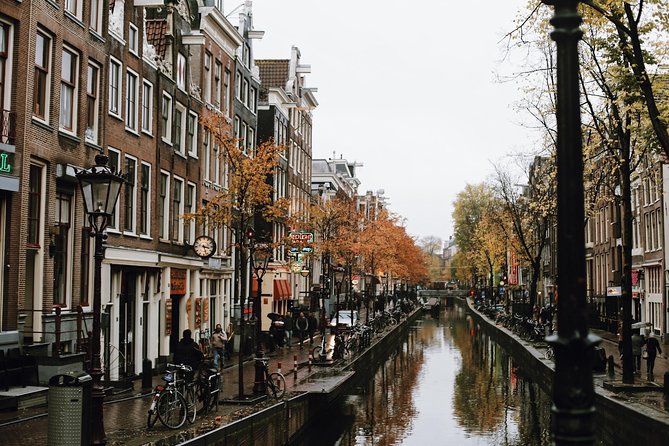
St. Nicholas Basilica: Roman Catholic Amsterdam after centuries of limits
You start at St. Nicholas Basilica, the primary Roman Catholic church in Amsterdam. The big idea here is timing: the building dates to the late 19th century, shaped by centuries of prohibition before it. The church’s architectural mix is a clue that Amsterdam’s religious landscape kept evolving.
Even if you only spend about 10 minutes here, this stop frames a theme you’ll see again later in the route: Amsterdam kept rewriting its identity. It’s a helpful first lesson because the rest of the tour moves across Protestant and civic sites too.
Admission is listed as free for this stop, so you are not starting the day with extra costs.
More gables counted on foot:
- Amsterdam: Anne Frank Guided Walking Tour in DE/EN/IT/ES
★ 4.9 · 3,107 reviews - Amsterdam: Anne Frank Guided Small Group Walking Tour
★ 4.8 · 2,722 reviews - Amsterdam: Cultural Highlights Walking Tour
★ 4.9 · 2,629 reviews - Amsterdam: Ganja Walking Tour
★ 4.2 · 2,127 reviews
Schreierstoren, Tower of Tears: a medieval farewell ritual
Next is the Weeping Tower, also known as Schreierstoren, the Tower of Tears. It’s a medieval structure tied to maritime departures, where women said farewell to loved ones leaving by ship.
This stop is short, about 10 minutes, and the value is emotional context. You get a sense of why Amsterdam’s relationship to water mattered socially, not just commercially.
Admission is not included here. For you, that means either you plan to skip interior entry if it costs extra, or you go in with the expectation that you may focus on the outside perspective.
Zeedijk and the Kolksluis bridges: sea dike logic and old waterways
You then stroll along Zeedijk, one of Amsterdam’s oldest streets. The key detail is that it began as a sea dike, built to hold back the waters of the IJ. It’s the kind of fact that makes Amsterdam’s canals feel less decorative and more engineered for survival.
At the Kolksluis, you get a chance to admire picturesque lock bridges. This is one of those moments where the city’s infrastructure becomes the viewpoint.
No tickets are listed for Zeedijk, so it’s an easy segment to enjoy without adding friction.
Nieuwmarkt and De Waag: commerce, gate history, and civic life
Nieuwmarkt is where the tour leans into daily city life. The square is described as a center for commerce and socializing since the 17th century, and its location just inside the old city gate made it practical for traders and shoppers.
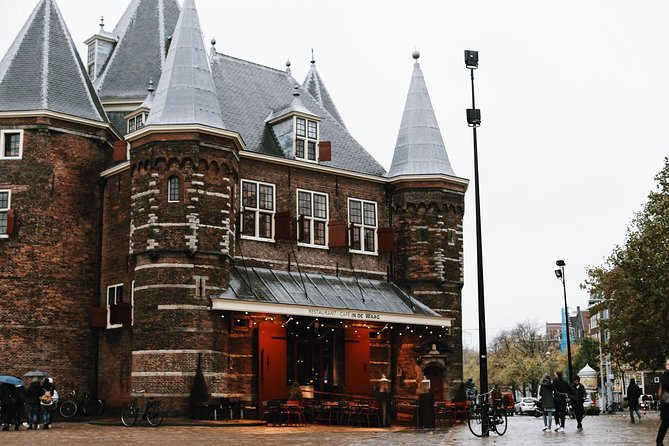
Close by, you see De Waag, a 15th-century building and one of the oldest remaining non-religious structures in Amsterdam. It began as a city gate and part of the walls, then later served roles including guildhall, museum, and even firestation.
This is a smart pairing: market square plus civic building. You walk away understanding that the same buildings could change jobs as the city’s needs changed.
Admission is listed as free for De Waag, which makes this segment feel like you’re getting a bonus without extra planning.
Trippenhuis and the smallest-house story: wealth shaped by constraints
The tour then points you toward Trippenhuis, described as the grandest 17th-century mansion, once owned by the wealthy Trip family. Across the way, you’ll also spot the city’s smallest house, which is often explained as a contrast in how wealth and space played out.
A key note: admission is marked as not included for both this stop and the Kleine Trippenhuis segment that follows. That means you likely see these from outside, focusing on form and layout.
Still, even from street level, the city’s power math becomes clear. The next stop makes that even more explicit.
Oost-Indisch Huis courtyard: the Dutch East India Company in one square mood
At Oost-Indisch Huis, you step into the courtyard of the Dutch East India Company headquarters. This is presented as the birthplace of the world’s first multinational corporation.
That’s a big claim, and even if you don’t go deep into corporate history, the feeling is tangible. You’re standing near the administrative space behind trade that reshaped Amsterdam’s wealth.
Admission is listed as free here, so you can focus on the atmosphere without opening your wallet again.
Kleine Trippenhuis: why houses got tall and narrow
The Kleine Trippenhuis stop centers on scale and taxes. The narrow design is linked to high land taxes, which encouraged tall, narrow architecture.
It’s quick, around 5 minutes, but it’s one of the best “how Amsterdam works” lessons in the route. When you’ve seen one narrow façade explained this way, you start noticing similar building choices elsewhere.
Admission is not included for this stop, so again, treat it as a viewing moment rather than a paid entry plan.
Zuiderkerk and the De Keyser tower: Protestant design becomes a landmark
You then reach Zuiderkerk, Amsterdam’s first purpose-built Protestant church, designed by Hendrick de Keyser. The tower is described as one of the city’s defining landmarks, which makes sense because towers are how older cities orient you.
Admission is not included for this stop, so you’ll likely get exterior viewing. The value is in recognition: when you later spot the tower from across the city, you’ll know what it represents.
Rembrandt’s house, Museum Het Rembrandthuis: where art lived day to day
Next is Museum Het Rembrandthuis, Rembrandt’s former home and studio. You get that key timeframe, nearly 20 years living and working there, which helps you imagine the artist’s routine instead of treating him as a museum label.
Admission is not included for this stop. Still, it’s a meaningful pause because it turns the canal-city postcard into a lived-city reality.
Stopera, the city hall and opera-ballet complex: planning that took decades
The route then heads to the Stopera, a building complex housing the city hall and the Dutch National Opera and Ballet. Construction is described as taking at least 60 years.
This isn’t just architecture trivia. It’s a useful counterpoint to the older stops. Amsterdam did not only preserve the past. It also built new institutions through long planning and negotiation.
Admission is not included here, so you’ll likely focus on the outside perspective and the civic contrast.
Huis aan de Drie Grachten: a house with façades facing three directions
At Huis Aan De Drie Grachten, you see a rare 17th-century canal house at the junction of three canals. The façade faces in three directions, which sounds like a small fact until you realize it changes how the building interacts with light, space, and traffic.
Admission is not included, so treat it like a quick visual lesson. But it’s exactly the kind of detail that makes Amsterdam feel like a place you’re understanding, not just visiting.
Begijnhof: a quiet medieval courtyard and the Beguines
Begijnhof is one of the emotional breaks in the route. It’s described as a peaceful medieval courtyard once home to Beguines, a community of devout women. There’s also mention of one of the oldest wooden houses in the courtyard.
Admission is not included. Even so, the courtyard stop matters because it gives you a chance to slow your pace while the story continues.
This is a good moment to check your photos, take a breath, and decide what you want to see next on your own.
From Dam Square to the Golden Bend: civic gravity, war memory, and wealth
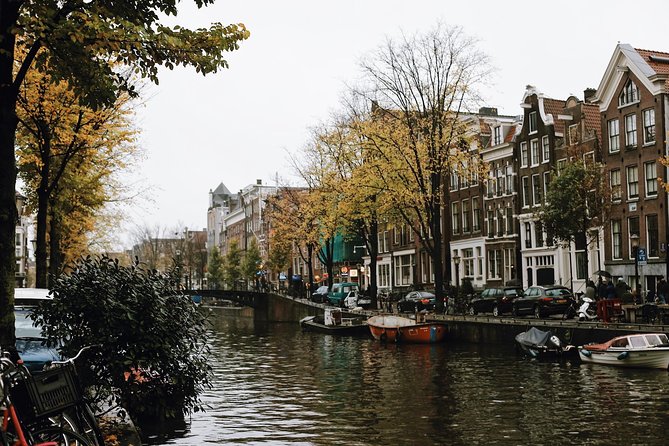
Dam Square: palace framing, WWII memorial, and the city center pulse
Dam Square is Amsterdam’s historic heart, framed by the Royal Palace, the 15th-century New Church, and the National Monument to WWII victims. Even with just about 5 minutes here, the square gives you the city’s biggest themes in one glance: power, faith, and memory.
Tickets are listed as free, so this is one of the easiest wins in the whole day.
Herengracht and the Golden Bend: how the Dutch Golden Age looked from the canal
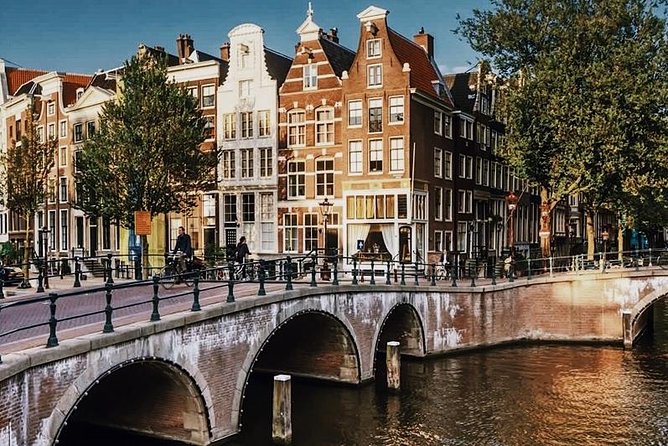
From Dam Square you move to Herengracht and the “Golden Bend.” You’re surrounded by canal mansions linked to the Dutch Golden Age and described as some of the richest and most ornate.
Admission is free. The time here is short, but if you treat it like a walking art gallery, you’ll start spotting patterns in façade design.
If you’re planning a later canal cruise, this stop is helpful. You’ll recognize the street rhythm and the mansion scale faster.
Anne Frank House area: a respectful pause and nearby Westerkerk
The tour then pauses outside the Anne Frank House, where she hid during WWII. Next door is the Westerkerk, described as having the tallest church tower in Amsterdam.
Admission is listed as not included, so you’re getting a moment of reflection rather than an entry day. It’s still powerful because the location is specific and the architecture helps you place the period in the current city.
De Drie Hendricken gable stones: trade symbols carved into façades
At De Drie Hendricken aan de Bloemgracht 87 to 91, you look up for quirky gable stones with allegories and trade emblems. This is one of those “you would miss this” spots unless a guide points it out.
Admission is not included. But because it’s just a look-up visual hunt, it’s perfect for the short attention spans that build during a long walk.
Courtyards, Protestant churches in the Jordaan, and your apple pie finale
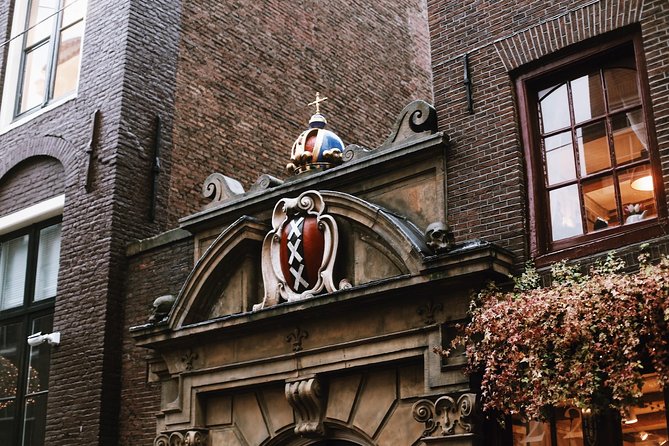
Karthuizerhof hofje: the largest hofje and a courtyard for care
Coöperatieve Vereniging Karthuizerhof BA is described as Amsterdam’s largest hofje. It was built as almshouses around a tranquil courtyard for the city’s poor and elderly.
Admission is listed as free here, and that matters because it turns a key social history stop into something you can afford easily. This segment adds a human angle that balances all the big names and big architecture.
Noorderkerk: cross-shaped Reformation worship in the Jordaan
Noorderkerk is a 17th-century Protestant church built for the Jordaan district. It’s noted for an unusual cross-shaped floor plan reflecting Reformation worship ideals.
Admission is listed as free, so this is another low-cost, high-meaning checkpoint. Even if you do not go inside, the architectural footprint story makes it feel more real.
Papeneiland: end at a 1642 brown café with apple pie lore
The tour ends at Papeneiland, one of Amsterdam’s prettiest canal corners. You visit Het Papeneiland, a brown café from 1642, said to serve the best apple pie in town.
Admission is listed as free for this stop. In practice, you may want to buy something, but you are not forced into an entry fee just to enjoy the ending.
I like how this final segment feels like a reward loop: you walk, learn, and then you land somewhere built for casual conversation.
What you’ll do if the weather turns, and how to be comfortable

The tour runs rain or shine. The guidance is to dress appropriately and bring practical items like an umbrella. Comfortable shoes are strongly recommended, and it’s worth noting that you should have a moderate physical fitness level.
No large bags or suitcases are allowed, so if you’re arriving straight from luggage storage, keep your load light. Also, the tour notes that a mobile phone number is imperative. That matters because you’ll want to be reachable if the route is adjusted.
Route changes can happen due to national celebrations. You’ll still see the highlights, but refunds or discounts are not mentioned in those cases, so keep expectations flexible around big public events.
Should you book this Amsterdam City Center & History walking tour?
Book it if you want a first-day Amsterdam plan that actually teaches you how the city works. This tour is strong on context, not just photo stops, and the guidance you get is the kind you can use immediately as you plan your next neighborhoods.
I’d skip it if your priority is buying multiple interior tickets and spending long hours inside museums. Some stops do not include admission, and security rules can limit interior entry at certain attractions. You’ll still see plenty, but you should treat it as a city-walk and story tour, not an all-in museum pass.
If you want a route with momentum, a knowledgeable guide, and a satisfying canal-corner finish, this is a solid choice for a compact 2.5 hours in the center.
FAQ
How long is the Amsterdam City Center and History walking tour?
It runs for about 2 hours 30 minutes, roughly 2.5 hours.
Is this tour private, and is it offered in English?
Yes, it is listed as a private tour/activity for only your group. It is offered in English, and there is also mention that guide exclusivity does not apply if you choose a semi-private option.
Are entrance tickets included for all stops?
No. Some stops are marked as free admission, while others are marked as admission ticket not included. Also, due to increased security measures at many attractions, some sites may not be visited from the inside.
Where do I meet the guide, and where does the tour end?
You start at Prins Hendrikkade 73, 1012 AD Amsterdam, Netherlands. The tour ends at The Papeneiland, Prinsengracht 2, 1015 DV Amsterdam, Netherlands.
Do I need to provide a mobile phone number?
Yes. The tour notes that it is imperative you provide a mobile phone number, including the country code.
What is the cancellation policy?
There is free cancellation. You can cancel up to 24 hours in advance for a full refund, and refunds apply only if you cancel at least 24 hours before the experience start time.
Golden Age Corners
- Amsterdam Food and Cultural Tour with Tastings★ 5.0 · 4,315 reviews
- Amsterdam: Historic City Centre Canal Cruise★ 4.3 · 659 reviews
- Amsterdam: Haunted History and Ghost Walking Tour★ 4.5 · 488 reviews
- Amsterdam High-End Dutch Food & History Tour – Up to 8 guests★ 5.0 · 482 reviews
Latest to arrive along the quays of Amsterdam

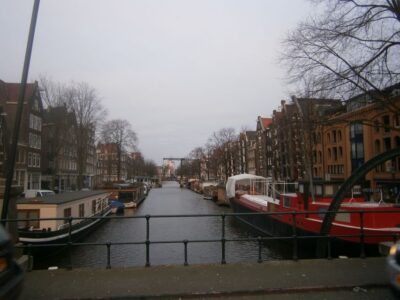



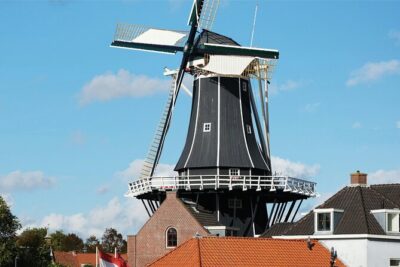
Historical Tours, compared.
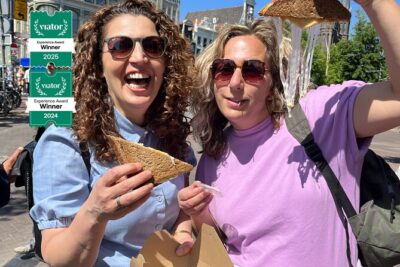
Amsterdam Food and Cultural Tour with Tastings
Read our review →
Kinderdijk UNESCO World Heritage Entry Ticket
Read our review →
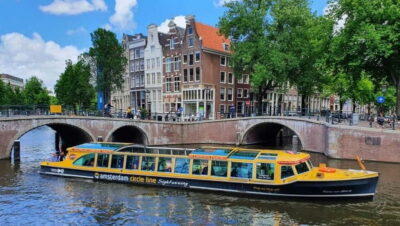

Amsterdam High-End Dutch Food & History Tour – Up to 8 guests
Read our review →
Cruise through the Historic City Center with Guide
Read our review →Browse the lists this tour appears in