
Reviewed · CITY TOURS
Amsterdam City Center Guided Walking Tour Semi-Private 12ppl Max
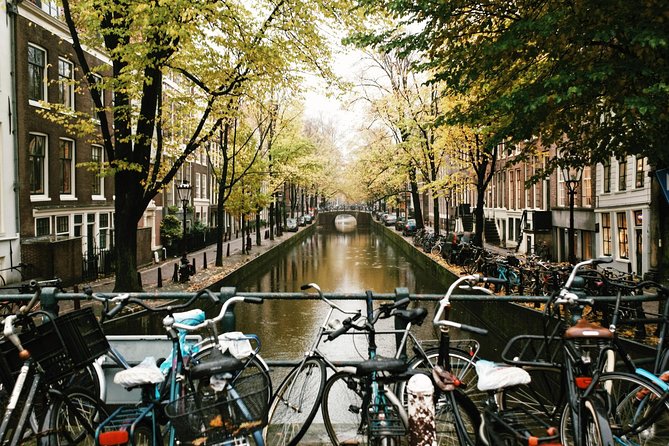
Amsterdam clicks into place on foot. I like the frequent photo stops and the small group size that keeps questions flowing, all while a guide helps you connect Amsterdam’s past to the neighborhoods you see today. This is a semi-private tour, max 12 people, run by Babylon Tours Amsterdam in English, and it runs rain or shine.
One thing to factor in: many sights are viewed from the outside, and for some places entry is not included or may be limited by security. If you’re hoping for lots of inside time, plan on a walking-and-looking kind of tour.
In This Review
- Key highlights I’d plan around
- What this semi-private Amsterdam walking tour is really good for
- Starting at St. Nicholas Basilica, then walking into Amsterdam’s layers
- Schreierstoren, Zeedijk, and the water stories you can actually see
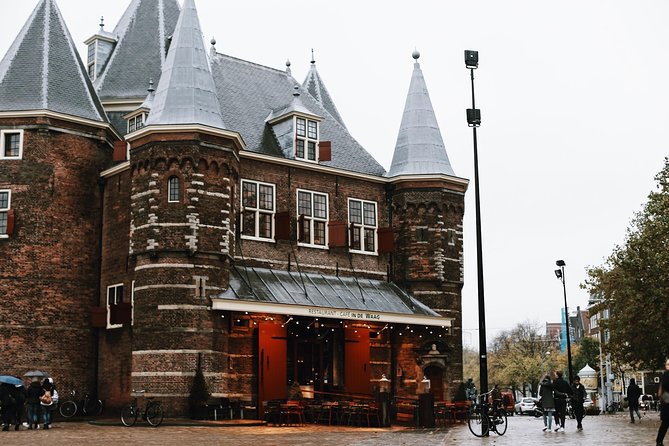
- Nieuwmarkt and De Waag: trade, gates, and a building that keeps changing roles
- Trippenhuis and the thin-house theme: land taxes to tall, narrow façades
- Oost-Indisch Huis courtyard: where global trade began at local scale
- Zuiderkerk, Rembrandt’s house, and the Stopera: faith, art, and government in one day
- Begijnhof and three-canals magic: calmer courtyards and rare canal façades
- Dam Square to the Golden Bend of Herengracht: landmarks that act like stage sets
- Anne Frank House area and the Papeneiland finish: ending with a real local stop
- Price, time, and group size: is $59.28 a good value?
- What I think works best for different travelers
- Guide quality and why the small group feels personal
- Should you book this Amsterdam city center walking tour?
- FAQ
- How long is the Amsterdam city center guided walking tour?
- What is the maximum group size for this semi-private tour?
- Is the tour offered in English?
- Where do I meet, and where does the tour end?
- Does the tour run in bad weather?
- Are admission tickets included for all stops?
- Is the tour suitable for wheelchair users or mobility limitations?
- Do I need to provide a mobile phone number for the tour?
- What if the minimum number of guests is not met?
- What is the cancellation policy?
Key highlights I’d plan around
- Semi-private group, max 12, so the route feels personal, not chaotic
- City gate to canal gems, tying landmarks to trade, religion, and water management
- A bridge-and-cobblestone walking loop, with lots of photo breaks built in
- Begijnhof and canal houses, for a calmer change of pace from busy squares
- Ends at Het Papeneiland (1642), a classic place to finish with apple pie
What this semi-private Amsterdam walking tour is really good for
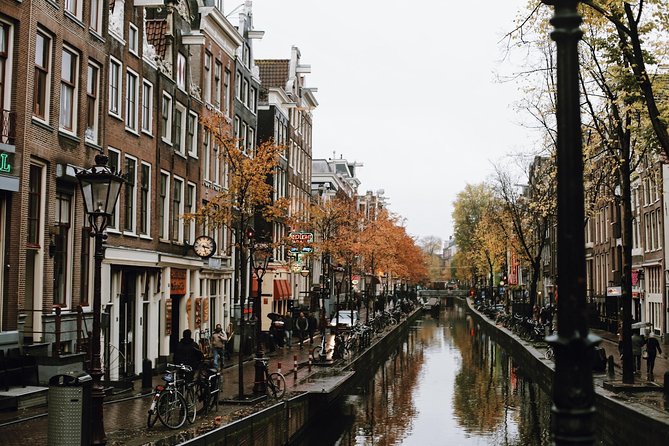
This tour is built for a simple goal: get your bearings fast, then make your remaining Amsterdam time smarter. In about 2.5 hours, you cover a big slice of the city center, moving across bridges and along older lanes so you can start recognizing areas on your own.
I also appreciate the pacing. The stops are frequent, but they are short enough that you still feel like you’re progressing, not standing around. That matters in Amsterdam, where one wrong turn can send you the scenic way with no clear landmarks to guide you back.
More Guided Walking Tours in Amsterdam


Starting at St. Nicholas Basilica, then walking into Amsterdam’s layers
You meet at the Basilica of Saint Nicholas on Prins Hendrikkade. It is a Roman Catholic anchor point that also reflects Amsterdam’s shifting religious landscape over time. Even if you do not go inside, it sets the tone for the rest of the tour because you’re seeing how the city’s identity kept changing as laws, trade, and faith evolved.
After that, the walk immediately turns into story time, with real places tied to real reasons. Amsterdam did not become Amsterdam by accident. You’ll hear how geography and water management helped shape where people lived, worked, and worshipped.
One practical tip: Amsterdam walks add up quickly, especially with cobblestones. Wear comfortable shoes and bring a bottle of water.
Schreierstoren, Zeedijk, and the water stories you can actually see
A standout stop is the Schreierstoren, also called the Tower of Tears. It’s a medieval structure linked to the idea of ships departing and loved ones waving goodbye from the shore. It is one of those places where the “why” makes the stone feel personal.
Then you move along Zeedijk, one of Amsterdam’s oldest streets. The big takeaway here is that this is not just a cool street to walk on, it’s tied to the city’s long relationship with water. You’ll see the idea of a sea dike in this area and reach the Kolksluis, a lock bridge that shows how Amsterdam handled water movement instead of only resisting it.
If you love architecture, this section is great. If you love photos, it’s great too. You’ll have chances to pause and frame bridges and canal angles rather than sprinting from one landmark to the next.
Nieuwmarkt and De Waag: trade, gates, and a building that keeps changing roles
Next comes Nieuwmarkt, a lively old city center square that has served as a commercial meeting place since the 17th century. It sits just inside the old city gate, so it makes sense why traders and shoppers clustered here.
From there, you’ll see De Waag, a 15th-century building that is among the oldest remaining non-religious buildings in Amsterdam. Originally it was part of the city walls and city gate system, and over time it served multiple civic and community purposes, including a guildhall, museum, and firestation. That variety matters because it shows how Amsterdam reused space instead of constantly building from scratch.
Even if you’re not a museum person, I like this stop because it gives you language for what you’re seeing later. You start noticing how “official” buildings in Amsterdam often have layers of jobs behind them.
Trippenhuis and the thin-house theme: land taxes to tall, narrow façades
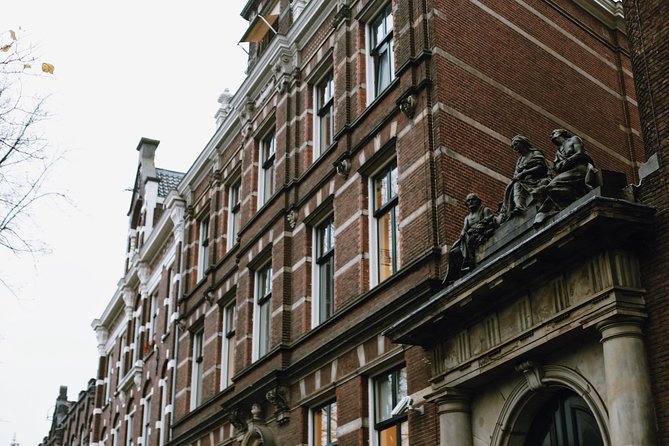
As the walk continues, you pass the Trippenhuis and Klein Trippenhuis. The Trippenhuis is known for being exceptionally wide, while Klein Trippenhuis is one of the narrowest houses in the city. It sounds like trivia, but it’s really a window into how Amsterdam’s system shaped its buildings.
The key idea you’ll get: high land taxes encouraged tall, narrow architecture. It explains why you see so many skinny façades leaning into the sky. Once someone points that out on foot, your future self will spot it everywhere, even when you’re just wandering for coffee.
This is also where I’d recommend slowing down for a minute, not with your phone, but with your eyes. Look up. The best details are on the fronts and gables.
More Private Tours in Amsterdam
- Rijksmuseum Amsterdam Small-Group Tour with Private Upgrade
★ 4.5 · 1,547 reviews - Van Gogh Museum Tour Reserved Entry Semi Private
★ 5.0 · 1,437 reviews - Private Amsterdam Red Light District and Coffee Shop Tour
★ 5.0 · 763 reviews - Anne Frank and Jewish Quarter Amsterdam Private Walking Tour
★ 5.0 · 684 reviews
Oost-Indisch Huis courtyard: where global trade began at local scale
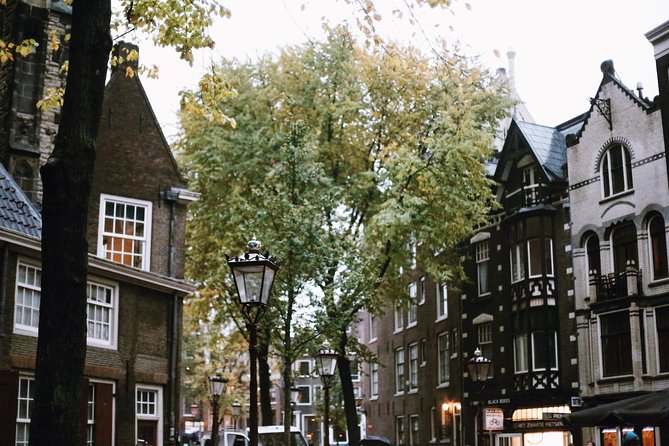
The tour also stops at the Oost-Indisch Huis courtyard, tied to the Dutch East India Company. This place is described as the headquarters courtyard and a birthplace of the world’s first multinational corporation. That’s a big claim, but the value for you is practical: it gives context for Amsterdam’s global connections, which you’ll keep bumping into through art, wealth, and architecture.
You won’t need to be a history buff to enjoy it. You just need to be curious. The guide connects the economy to the city’s form, which makes the walking route feel purposeful rather than random.
Zuiderkerk, Rembrandt’s house, and the Stopera: faith, art, and government in one day
Next you’ll reach Zuiderkerk, Amsterdam’s first purpose-built Protestant church designed by Hendrick de Keyser. Its elegant tower is one of the defining landmarks here, and it helps you read the skyline as you move between districts.
After that, you pass Rembrandt’s house, which is now Museum Het Rembrandthuis. Rembrandt lived and worked here between 1639 and 1656, and the museum collection includes Rembrandt’s etchings and paintings of his contemporaries. Even if you only see the building from the outside, it’s worth treating this as a mental bookmark. Later, when you see art references around the city, you’ll understand what was happening locally.
Then you’ll head toward the Stopera, the National Opera and Ballet complex that also includes the city hall. Construction took decades, at least 60 years. That long build time is a clue that Amsterdam put major effort into blending civic life with culture.
This stretch is one of the reasons I’d recommend this tour to first-timers. You get religion, art, and public power in a single walk, instead of having to pick which “theme” matters most.
Begijnhof and three-canals magic: calmer courtyards and rare canal façades
One of my favorite pacing breaks is Begijnhof, one of the oldest hofjes, or almshouses, around Amsterdam. It sits around a secluded courtyard and garden and was historically tied to the Beguines, a group of unmarried women who lived together under vows of chastity. Today it is also the site of two churches.
Begijnhof works because it’s not just a pretty stop. It shows a different side of the city, more inward and reflective, right in the middle of busy streets.
You’ll also see Huis Aan De Drie Grachten, a rare 17th-century canal house at the junction of three canals. Its façades face in three directions, which is exactly the kind of Amsterdam oddness that helps you understand why navigation here is more like reading than map-following.
Dam Square to the Golden Bend of Herengracht: landmarks that act like stage sets
Dam Square is near the end of the walk, and it’s a must-see because it gathers a lot of big symbols in one place. You’ll find Royal Place, New Church, and the National Monument area concentrated here, plus constant events energy in the square itself.
Then you move to Herengracht, specifically the “Golden Bend,” lined with some of the city’s richest and most ornate canal mansions from the Dutch Golden Age. Even if you do not go inside, this viewpoint gives you a clear sense of wealth patterns and where money tended to settle.
This is also a useful checkpoint. After seeing the Golden Bend, you’ll start noticing that Amsterdam canal districts are not all the same. They have personalities, and the buildings tell you why.
Anne Frank House area and the Papeneiland finish: ending with a real local stop
The route pauses outside the Anne Frank House, where she hid during WWII. Next to it you’ll see the Westerkerk tower, described as the tallest church tower in Amsterdam. This is one of those moments where it helps to slow down and take the location in, because the site has weight even when you are not entering.
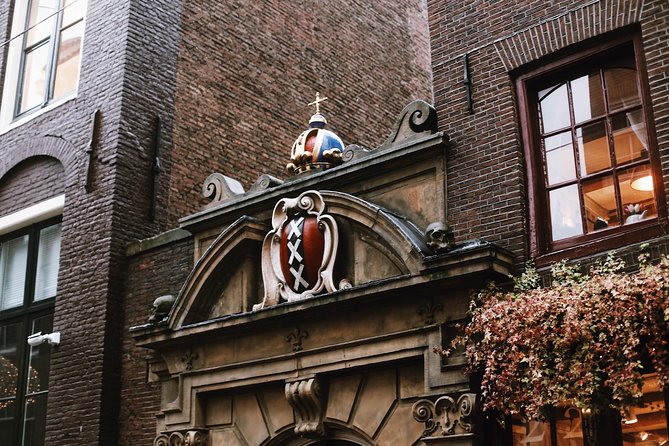
After that, you’ll spot ornate gable stones on façades along Bloemgracht, with carvings that include allegories and trade emblems. That’s practical because it trains you to look beyond canal reflections and notice the cultural signals built into architecture.
The tour then wraps through Rembrandtplein, where you can see a bronze-cast representation of Rembrandt’s The Night Watch. From there you reach Noorderkerk, a 17th-century Protestant church built for the Jordaan district with a cross-shaped floor plan.
Finally, you end at Het Papeneiland, a brown café from 1642 that is said to serve the best apple pie in town. It’s a satisfying way to end: you finish at a canal corner with an easy place to sit, snack, and plan what you want to do next.
Price, time, and group size: is $59.28 a good value?
At about $59.28 per person for roughly 2.5 hours, you’re paying for three things that matter in Amsterdam: a professional guide, a semi-private group capped at 12, and a route that covers a lot of city center landmarks without you needing to stitch the plan together yourself.
I think this is good value if you want:
- Direction and context more than just a “see the postcard” checklist
- A walk that covers multiple neighborhoods in a short time
- A group size where you can ask questions and not get lost in the noise
It may feel less worth it if you already have a tight plan, or if you prefer slow independent wandering where you control every stop. But if you’re short on time, this format can help you avoid the common first-day problem, wandering without a story to connect what you’re seeing.
One more detail I like for value: it’s booked fairly far in advance on average (about 51 days). When something sells that well, it usually means people find it useful.
What I think works best for different travelers
This tour is a smart fit if you:
- Are visiting Amsterdam for the first time and want a quick orientation loop
- Enjoy history that connects to what you can see on streets and buildings
- Want a balance of big landmarks and smaller “look up here” details
- Like photo opportunities built into the walk
It is not recommended if you have walking disabilities or use a wheelchair. That’s not just a comfort issue, it’s a route reality, because you’ll be moving across cobblestones and bridges for the full stretch. Also, bring your realistic expectations about interior access. Some places have security constraints, and not every attraction can be entered.
Guide quality and why the small group feels personal
A big reason people give this tour top scores is the way the guide teaches. I’ve seen examples of guides described as in-depth and engaging, with a local perspective that makes neighborhoods feel like they have personalities.
For example, Josje B. is mentioned as providing one of the most in-depth walking tours some people have taken, with strong connections between Amsterdam’s watery beginnings and the city’s later identity. Hanneke is described as an amazing local guide with a wealth of knowledge and an entertaining delivery style.
You can’t bank on a specific guide name every time, but the guiding approach seems consistent: you’re not just collecting facts, you’re getting explanations you can use while you walk on your own afterward.
Should you book this Amsterdam city center walking tour?
Book it if you want a semi-private introduction to Amsterdam that blends major landmarks with practical context. The route is structured enough to prevent aimless wandering, but varied enough to keep it interesting, from towers like the Schreierstoren to courtyards like Begijnhof and the canal-house details around three canals.
Skip it if you need lots of inside access, have limited mobility, or you’re traveling with the expectation that every stop will be an extended visit. With this tour, think of it as a smart guided walk, with frequent photo pauses and clear connections you can carry into the rest of your trip.
FAQ
How long is the Amsterdam city center guided walking tour?
The tour lasts about 2 hours 30 minutes.
What is the maximum group size for this semi-private tour?
This is a semi-private tour with a maximum of 12 travelers.
Is the tour offered in English?
Yes, the tour is offered in English.
Where do I meet, and where does the tour end?
You meet at Basilica of Saint Nicholas, Prins Hendrikkade 73, 1012 AE Amsterdam. The tour ends at The Papeneiland, Prinsengracht 2, 1015 DV Amsterdam.
Does the tour run in bad weather?
Yes. The tour runs rain or shine.
Are admission tickets included for all stops?
Some stops list admission tickets as free, while others are not included. For example, the Weeping Tower (Schreierstoren) admission ticket is not included.
Is the tour suitable for wheelchair users or mobility limitations?
It is not recommended for those with walking disabilities or using a wheelchair.
Do I need to provide a mobile phone number for the tour?
Yes. You must provide a mobile phone number, including the country code.
What if the minimum number of guests is not met?
The tour will not run without a minimum of 2 guests. If it does not meet requirements, you’ll be offered an alternative date or a full refund.
What is the cancellation policy?
You can cancel for a full refund if you cancel up to 24 hours in advance of the experience start time.
Gables on Foot
- Amsterdam: Anne Frank Guided Walking Tour in DE/EN/IT/ES★ 4.9 · 3,107 reviews
- Amsterdam: Anne Frank Guided Small Group Walking Tour★ 4.8 · 2,722 reviews
- Amsterdam: Cultural Highlights Walking Tour★ 4.9 · 2,629 reviews
- Amsterdam: Ganja Walking Tour★ 4.2 · 2,127 reviews
Latest to arrive along the quays of Amsterdam





City Tours, compared.

75 Minute City Canal Cruise with Audio Guide
Read our review →
City Centre Canal Cruise including Audioguide
Read our review →

City Canal Cruise and Heineken Experience Ticket
Read our review →
City Card with Free Entrance & Public Transport
Read our review →
Browse the lists this tour appears in