
Reviewed · DUTCH WINDMILL & ZAANSE SCHANS TOURS
8 hour Walking and Boat Tour to Rotterdam and Kinderdijk
Rotterdam’s ports and windmills, in one tight day. This 7 hour 40 minute, small group tour weaves Rotterdam’s key landmarks with river scenery and then sends you out to Kinderdijk windmills for a full taste of Dutch water management. I like how the day is structured so you are not just taking photos, you are getting a clear story as you move city to city in one afternoon.
My two favorite parts are the way you tackle both modern and old Rotterdam in the same route, and how the guide, Alex, points out details you would normally miss. One watch-out: this is a walking-heavy day, and it is not a great fit if mobility is limited.
In This Review
- Key Highlights You’ll Feel During This Day
- A Small-Group Day That Feels Like a City Walk With River Views
- Rotterdam Centraal to Rotterdam Partners: Where the Story Starts
- Sint-Laurenskerk, Erasmus, and the Quiet Power of Old Rotterdam
- Markthal and Kijk-Kubus: Modern Rotterdam You Can Actually Inspect Up Close
- Oude Haven, Witte Huis, and the Port City That Loves to Gather
- Bridges, Steel, and War Memorials Along the New Meuse
- Maritiem Museum Rotterdam and the Leuvehaven Shipping World
- Erasmus Bridge: Rotterdam’s Signature Shape From the Feet Up
- Kinderdijk: The Windmills That Explain Dutch Water Management
- What’s Included, What Costs Extra, and How to Plan Your Day
- Who This Tour Fits Best (and Who Should Rethink It)
- Should You Book This Rotterdam and Kinderdijk Tour?
- FAQ
- How long is the tour?
- What is the group size?
- Where do you meet, and where does the tour end?
- Is transportation to Kinderdijk included?
- Is the Kinderdijk entrance fee included?
- What food and drink are included?
- Do I get a mobile ticket?
- Is the tour good for people with mobility concerns?
Key Highlights You’ll Feel During This Day
- Small group pace (up to 4): more time at each stop, fewer headcounts, easier conversations with Alex.
- Architecture-to-water flow: you go from stations, churches, and markets to bridges over the New Meuse and then out to Kinderdijk.
- Alex’s stop-by-stop explanations: he connects what you see at each place to how Rotterdam and South Holland developed.
- Patatje Oorlog plus coffee or tea: the snack break is built in, not an afterthought.
- Kinderdijk time on the ground: about 3 hours there, so you can actually wander instead of just speeding through.
A Small-Group Day That Feels Like a City Walk With River Views
This tour is built for people who like moving on foot and watching a city change shape block by block. Rotterdam is famous for clean lines, big infrastructure, and the way the port and the water system run the show. By the end of the day, you should feel Rotterdam’s logic, not just admire its photos.
The small group size matters. When you are with up to 4 people, you spend less time matching everyone’s pace and more time getting your questions answered on the spot. That is also why Alex can point out lots of specific details at each stop, instead of rushing through like a timed bus tour.
You also get a nice rhythm: short photo and learning stops in central Rotterdam, a longer port-area segment, then bus transport out to Kinderdijk. The day also includes river time, since the tour is described as a walking and boat experience and it focuses heavily on bridges and the New Meuse.
More Boat Trips in Rotterdam


Rotterdam Centraal to Rotterdam Partners: Where the Story Starts
Most big cities start with a big square. Rotterdam starts with a big station and it works. You begin at Stationsplein 48, at Rotterdam Centraal Station, where an average of about 170,000 passengers pass through each day. Even if you only spend about 20 minutes here, it is a strong opening because it sets the tone: this is a city that moves fast and plans big.
From there, you head to Rotterdam Partners, a 17th century building that used to be the headquarters of Waterschap Schieland, the water-management institution for this region of South Holland. This is one of the tour’s clever anchors, because Rotterdam is a port city, but it is also a water city. You are not just learning about windmills later, you are seeing how water policy shaped the place.
Then you get a quick look at the city’s survival through conflict. The day includes Grote of Sint-Laurenskerk, a late Gothic church dating to 1525, described as Rotterdam’s oldest building. It is especially meaningful because it survived the Nazi bombing on May 15, 1940, when many other buildings did not.
Even in short stop lengths, the guide can make this feel less like trivia and more like context. You start noticing patterns, like how war and rebuilding shaped what you see today.
Sint-Laurenskerk, Erasmus, and the Quiet Power of Old Rotterdam
A lot of Rotterdam tours rush straight to the flashy modern sights. This one takes time at the older core, which is exactly what I like when I want a real feel for a city.
At Grote of Sint-Laurenskerk, you are given about 10 minutes. That is enough time to look closely at the style and understand why the church is still important, without feeling like you must “finish” the whole site like a museum. The key takeaway is the contrast. This church is late Gothic and centuries old, and yet it is part of a city that rebuilt itself after destruction.
Then you move to Erasmus Sculpture, a monument honoring Desiderius Erasmus of Rotterdam. The name matters because the day keeps tying people and ideas to the city. Erasmus is described as a major philosopher, theologian, and scholar from the 16th century, and you will see his influence in public buildings and education institutions that carry his name.
This stop is only about 15 minutes, but it is useful. It helps you read the city as more than concrete and cranes. Rotterdam is also about thinkers, policy, and civic identity, even when it looks futuristic.
Markthal and Kijk-Kubus: Modern Rotterdam You Can Actually Inspect Up Close

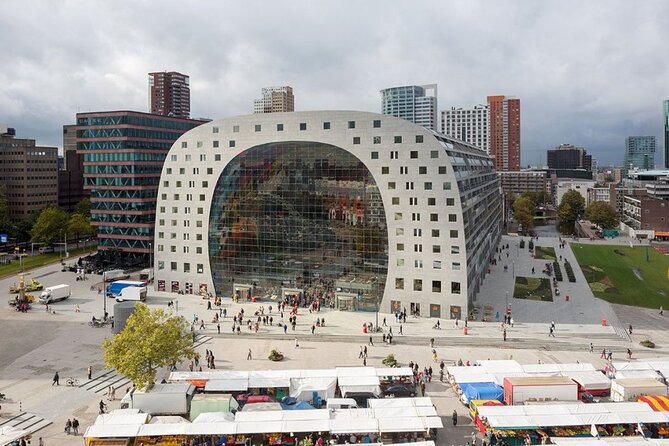
If you like your modern architecture specific, not generic, you will enjoy these two stops. Markthal is a modern horseshoe-shaped building that combines a closed market with living space and facilities. It also has a famous nickname, the Sistine Chapel of Rotterdam, which hints at the artistic ceiling concept you might spot from the public areas.
You get about 20 minutes here, and that is a good amount for wandering and absorbing the scale. The real value is how you watch the building do two jobs at once. You see food and city life in the same structure as apartments, and that is a theme in Rotterdam.
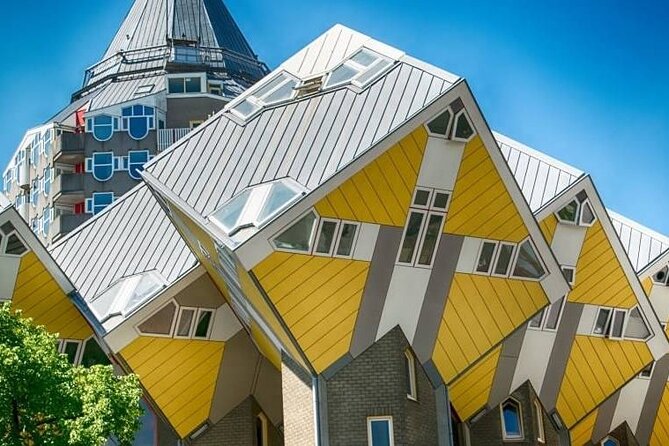
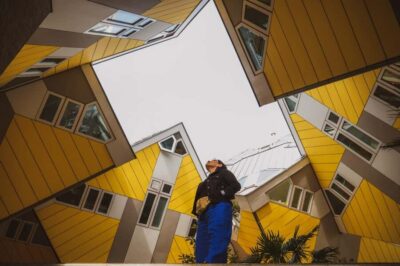
Next comes Kijk-Kubus, the famous “tree-looking” buildings with apartments stacked on cube-shaped spaces above supporting columns. Expect about 20 minutes, with admission included for the Kijk-Kubus buildings. The tour notes a practical quirk: because of the cube design, only about 3/4 of the inner space is usable for typical living. That detail is exactly the kind of thing that makes architecture feel human instead of theoretical.
If you are budgeting your energy for the day, these two stops are worth it. They give you modern Rotterdam you can sense with your eyes and your feet, not just admire from across a street.
Oude Haven, Witte Huis, and the Port City That Loves to Gather
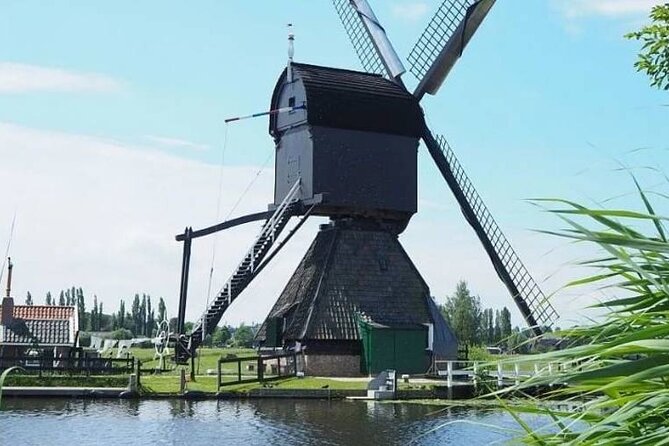
Oude Haven is where the tour shifts from architectural set pieces into port-city atmosphere. You spend about 1 hour here, and admission is included. This is one of the oldest ports of Medieval Rotterdam. The tour also frames it as the former river mouth of the Rotte flowing toward the New Meuse. Today, it is described as a favorite gathering place with coffee bars, restaurants, taverns, and disco clubs.
That matters because you do not just learn about shipping and infrastructure, you see how the city reuses space. Ports are functional, yes, but the best ones also become social neighborhoods.
The timing also pairs well with included food. You get Patatje Oorlog snacks, along with coffee and/or tea. It is a practical energy boost mid-day, and it helps you take a break without feeling like you lost the tour rhythm.
After Oude Haven, you move to Witte Huis, once the highest building and the first skyscraper in Europe after it opened in 1898. The tour notes it was built on 1,000 wooden pillars, a detail that turns the history into something concrete. You can look at the building and think about the ground conditions and engineering choices that made a tall structure possible.
These stops are short, but they give you a useful mental map. Rotterdam’s identity is not only steel bridges and modern markets. It is also old ports turned into people places.
More Guided Walking Tours in Rotterdam
- Rotterdam: Architectural Highlights Guided Walking Tour
★ 4.8 · 215 reviews - Rotterdam: Highlights, Gems, Architecture & History Walk
★ 5.0 · 191 reviews - Rotterdam Walk: Hilights, Gems, Architecture & WWII | 2 or 3hrs
★ 5.0 · 149 reviews - Rotterdam 2-Hour Walking Tour | Discover The City With A Local
★ 4.5 · 111 reviews
Bridges, Steel, and War Memorials Along the New Meuse
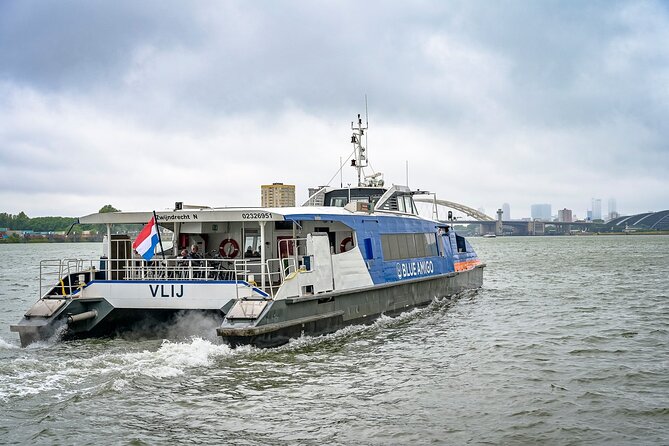
One of the strongest ways to understand Rotterdam is by its bridges. They are not only crossings. They are working symbols of how the city connects water and movement.
You have a sequence of bridge-related stops that includes:
- Willemsbrug, also called the Red Bridge, dedicated to Willem III.
- De Hef, a huge steel “lift” bridge that used to support rail traffic across the New Meuse before the rail tunnel was used.
- De Boeg, a war memorial on the right embankment honoring 3,500 people who died on Dutch merchant ships in World War II.
- Erasmus Bridge, the youngest bridge over the New Meuse and a major city image.
These pauses keep you oriented to the geography. You are repeatedly reminded that Rotterdam is built around water corridors and the need to keep moving goods and people.
De Hef is especially eye-catching because it is described as a giant steel construction meaning The Lift, and the bridge served as a rotating or lifting rail bridge before the tunnel was built. Even with a brief 10 minutes here, you should see why it became part of the city’s identity.
Then you get De Boeg, which takes this from industrial to deeply human. The memorial is not long, about 15 minutes, but it changes the tone. Rotterdam’s port story includes loss as well as rebuilding.
Maritiem Museum Rotterdam and the Leuvehaven Shipping World
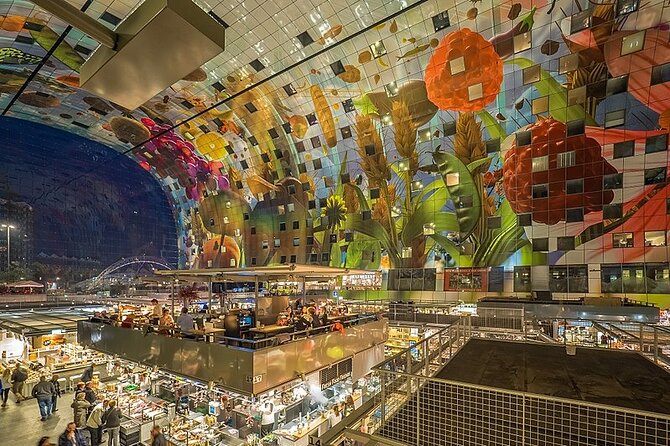
The tour includes time at Maritiem Museum Rotterdam in Leuvehaven, an open-air maritime museum. You get about 20 minutes, and you do not have to treat it like a full museum marathon. The focus is on what the harbor and shipping looked like from the mid-19th century through the 1970s.
The tour specifically points to steamships, docking cargo machines and equipment, ship engines, and other objects connected to navy and shipping. That range makes it a great bridge between what you saw at the port gathering spots and what you are going to see at Kinderdijk, where water management becomes the theme instead of water transport.
If you like practical objects, this stop tends to reward you. It is easier to imagine how systems worked when you can see the physical hardware, even if only from the outside.
Erasmus Bridge: Rotterdam’s Signature Shape From the Feet Up
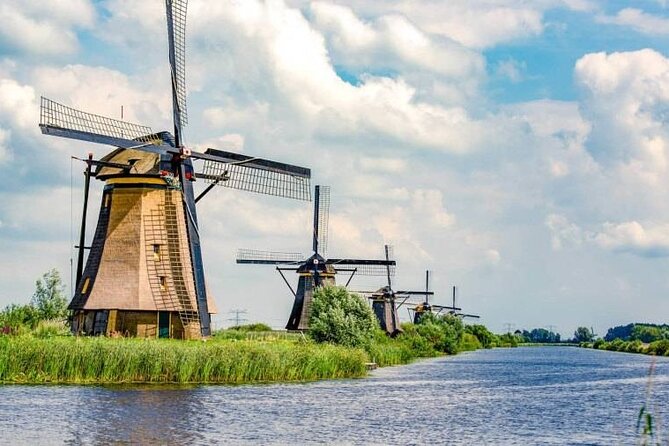
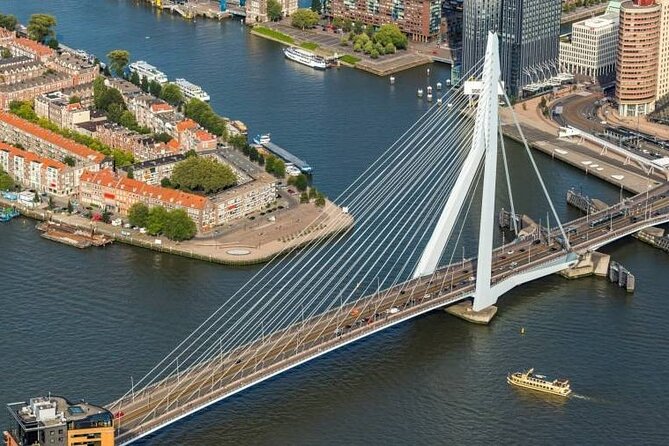
About 30 minutes at Erasmus Bridge gives you time to actually read it. The bridge is described as hanging, the youngest bridge in Rotterdam over the New Meuse, and also as the city’s most popular and known image. It is often called The Swan or The Harp. The tour shares a key size detail, with an opening part of 80 meters and a height of 139 meters.
You might not measure those numbers on the spot, but knowing them helps your eye understand why the bridge looks so dramatic. It is one of those places where the city’s ambition is visible in a single shape.
I like that it is not just a photo stop. It is a moment that wraps the bridge theme you started earlier. You went from older steel infrastructure like De Hef to a modern signature bridge. The story becomes: Rotterdam keeps designing for water movement.
Kinderdijk: The Windmills That Explain Dutch Water Management
After your Rotterdam walking and bridge time, you switch modes with the included bus ride. You head out to Kinderdijk, about 25 km away. You get about 3 hours there, which is ideal. Windmill areas need time because you are often choosing between viewpoints, paths, and how close you want to get to the mills.
The tour describes 19 unique and authentic polder windmills from the first half of the 18th century. The core idea is efficient water management through the centuries. Kinderdijk is not only a pretty scene. It is a working concept made visible, showing how the Netherlands managed water levels before modern pumping systems took over.
One important cost detail: the tour data says the Kinderdijk admission fee is not included, listed at €19.00 per person. Even though the timing includes your visit and the general experience at the site, plan on paying that entry separately if you want access to the windmill area.
Practical tip for this part of the day: wear shoes you can trust. Even if paths are manageable, Kinderdijk is a place where you will naturally want to wander and compare different angles of the windmills.
What’s Included, What Costs Extra, and How to Plan Your Day
This tour is priced at $591.46 per group, up to 4 people. That sounds like a lot until you break it down as group value. The price covers a guided day with transportation to Kinderdijk and back by bus, plus included site entries for certain stops like Rotterdam Partners and Kijk-Kubus, and a long port segment at Oude Haven.
Included extras also matter because they reduce friction. You get Patatje Oorlog snacks and coffee and/or tea, so you are not hunting for food during the busiest travel stretches. You also get tour guide services, plus entrance fees to Kijk-Kubus buildings.
What costs extra is Kinderdijk entrance, listed as €19.00 per person. If you are budgeting, make sure that is included in your planning so you do not get surprised when you arrive.
Because the tour includes a lot of walking, your best prep is basic: comfy shoes, a light layer for the outdoors, and a way to keep warm or dry if the weather turns. Rotterdam and the Dutch countryside can shift quickly.
Who This Tour Fits Best (and Who Should Rethink It)
This day tour is best for you if you like architecture, bridges, ports, and the kind of city history that connects directly to how people live and move. I also think it suits you if you want a guide to help you notice the small details, like the engineering behind buildings on wooden pillars or why specific institutions mattered for water policy.
It is also a strong choice for first-time visitors to Rotterdam who want both classic and modern in one organized loop. The itinerary mixes free stops with a few included entries, so you get a balanced set of experiences without feeling like you are always paying extra on your own.
One caution: if you have mobility concerns, do not assume this will work. The tour description notes that both places are very walkable, but it would not be a good option if mobility is limited. You should take that seriously. The day depends on you being able to keep walking through central Rotterdam and then through the Kinderdijk windmill area.
Should You Book This Rotterdam and Kinderdijk Tour?
I think you should book if you want a guided day that ties together Rotterdam’s identity and Dutch water management, not just a list of sightseeing stops. With Alex leading, the explanations on site are a real highlight, and the small group size helps you keep the pace comfortable while you still see a lot.
Book it if you love places like Markthal, the Kijk-Kubus cubes, and the bridge views around the New Meuse, and if you are excited to spend a full 3 hours in Kinderdijk. Skip it or consider an easier option if walking is a problem for you, because this route is not designed for limited mobility.
If you are the kind of traveler who likes understanding why buildings and waterways matter, this is a very solid value for a four-person group, with a clear added cost only at Kinderdijk.
FAQ
How long is the tour?
The tour is about 7 hours 40 minutes.
What is the group size?
This tour has a maximum of 4 travelers.
Where do you meet, and where does the tour end?
You meet at Stationsplein 48, 3013 AJ Rotterdam, Netherlands, and the tour ends back at the same meeting point.
Is transportation to Kinderdijk included?
Yes. Bus transportation from Rotterdam to Kinderdijk and back is included.
Is the Kinderdijk entrance fee included?
No. The Kinderdijk admission fee is listed as €19.00 per person and is not included.
What food and drink are included?
Snacks Patatje Oorlog, plus coffee and/or tea, are included.
Do I get a mobile ticket?
Yes, the tour uses a mobile ticket.
Is the tour good for people with mobility concerns?
It involves walking and is described as not a good option if mobility is limited. If you have mobility concerns, you should consider whether you can comfortably handle a walking-heavy day.
Gables on Foot
- Walking Rotterdam Food Tour★ 5.0 · 89 reviews
- Rotterdam: City Center Walking Tour★ 4.5 · 88 reviews
- Dordrecht: Highlights and Hidden Gems Walking Tour★ 4.7 · 84 reviews
- Rotterdam Architecture Highlights Walking Tour★ 5.0 · 66 reviews
Sails Above the Polder
- Rotterdam: Kinderdijk UNESCO World Heritage Entry Ticket★ 4.6 · 1,477 reviews
- Rotterdam: WaterShuttle Ticket to Kinderdijk★ 4.6 · 731 reviews
- All-Inclusive Private Windmill Tour to Kinderdijk from Rotterdam★ 4.5 · 59 reviews
- Kinderdijk Bike Tour★ 5.0 · 35 reviews
Latest to arrive along the quays of Rotterdam

Dutch Windmill & Zaanse Schans Tours, compared.
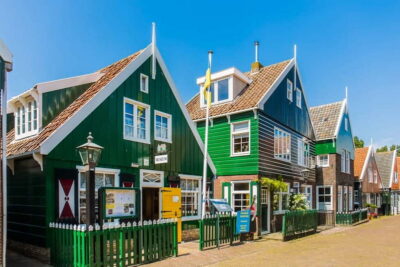
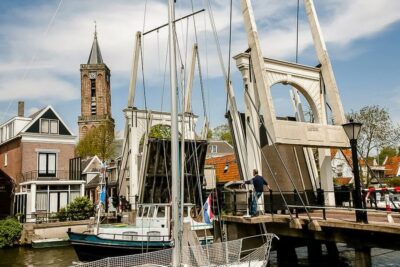
Zaanse Schans, Edam, Volendam & Marken Bus Tour
Read our review →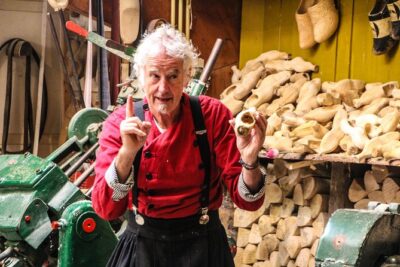
Day Trip to Zaanse Schans, Edam, Volendam and Marken from Amsterdam
Read our review →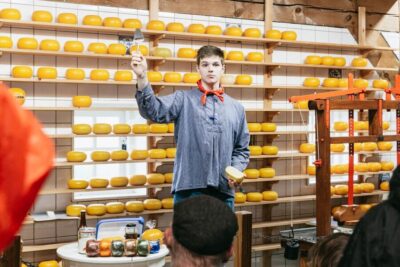
Guided Zaanse Schans, Windmills & Cheese Tour
Read our review →
Windmill Tour from Amsterdam, Including Volendam & Marken
Read our review →
Tour to Keukenhof Gardens with Windmill Cruise
Read our review →
Zaanse Schans Windmills, Clogs and Dutch Cheese Small-Group Tour from Amsterdam
Read our review →Browse the lists this tour appears in