
Hoorn tells its story in stone. This 2-hour walk through Dutch Golden Age Hoorn is a fast route through trade, shipbuilding, and conflict, with stops tied to the VOC, sailors, and religious clashes. I especially like how the guide turns ordinary street views into clear chapters of the city’s past, and I also love the way the highlights connect to real buildings you can point at right away.
One thing to consider: a lot of the best moments are pass-by exteriors, so it is more about the guide’s storytelling than about going inside many places. Also, you will be on foot for about 2 hours, so bring solid walking shoes and plan for a moderate pace.
In This Review
- Key moments worth your attention
- Why Hoorn Through the Ages Feels So Specific
- Price, Group Size, and the 2-Hour Footprint
- Maria of Kruittoren: Gunpowder to Maritime Memory
- De Doelen and Statenlogement Hoorn: Power, Practice, and Privilege
- VOC Warehouses and the Quiet Engine of Wealth
- Grote Kerk in Hoorn: When Religion Turns Into Riots
- Hoofdtoren (Main Tower): Hoorn’s 1532 Harbor Defense
- Scheepsjongens Van Bontekoe: Sailors, Youth, and a Named Expedition
- Bossuhuizen Gable Stones: The Battle of the Zuiderzee Echo
- Jan Pieterszoon Coen Statue, Underground Tunnels, and a Pirate Legend
- Westfries Museum Exterior: Where Regional Government Lives Now
- De Waag: The Grain Weigh House That Keeps the Money Story Real
- Who This Hoorn Highlights Tour Suits Best
- Should You Book This Hoorn Walking Tour?
- FAQ
- How long is the Hoorn walking tour?
- What is the price per person?
- Is the tour in English?
- What does the tour include?
- Where does the tour start and end?
- Is food or transport included?
Key moments worth your attention
- VOC warehouses and port defenses: You get the East Indies connection and why Hoorn mattered to shipping.
- Religious conflict at Grote Kerk: The tour explains how belief got loud, and what that left behind in the city.
- Hoofdtoren harbor tower (1532): A striking anchor point for the whole maritime story.
- De Waag and the grain trade: Baltic grain wealth comes through in a practical, easy-to-follow way.
- Legends you hear on the walk: Stories include underground tunnels and a pirate tale tied to a Spanish flagship.
Why Hoorn Through the Ages Feels So Specific
Hoorn is not just another Dutch canal stop. It is one of those places where the “big picture” of the Netherlands shows up in real architecture and street-level traces. In a compact 2 hours, you’ll get the sweep of centuries: trade and shipbuilding, religion and resistance, and the shadow of the VOC.
What makes this tour click is that it keeps grounding the story in sites you can actually see. You are walking past reminders of gunpowder storage, meeting houses for rulers, a grain weigh house, and a major church tied to riots. The guide’s job is to stitch it together, and the result feels like you are watching Hoorn’s past in motion.
I also like the tone. It is fun and educational at the same time, with enough detail to satisfy history lovers, but not so much that it turns into a lecture. Even if you think you know Hoorn well, this format is the kind that helps you notice what you usually walk past.
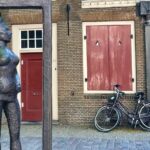
More gables counted on foot:


Price, Group Size, and the 2-Hour Footprint
This tour costs $24.02 per person, runs about 2 hours, and uses a mobile ticket. For that price, you are buying an efficient, guided “greatest hits” route that links multiple landmarks without needing you to research each one on your own.
The group size cap is 15 travelers, which usually means you can keep up and still hear the guide clearly. It is also a practical length. Two hours is long enough to feel like you traveled across time, but short enough that you are not stuck for your whole day in one activity.
Logistics matter here. The tour starts at Noorderstraat 10, 1621 HW Hoorn and ends at the Waag area (Roode Steen 8, 1621 CV Hoorn). Since it is near public transportation, you can fit it into a half day easily, and you do not have to repeat walking the same route just to get back to where you started.
Maria of Kruittoren: Gunpowder to Maritime Memory
You kick off with Maria of Kruittoren as a pass-by stop. This tower was used for storing gunpowder in the 17th century, so right away the tour frames Hoorn as a port city with military stakes, not just a trading postcard.
Even viewed from outside, a tower like this helps you understand how the city balanced commerce and defense. When a place depends on ships and sea routes, it also depends on protection and readiness. The tour’s strength is that it does not treat the tower like an isolated monument. It folds it into the wider story of maritime power.
If you are the type who likes context, this stop sets you up well. You start seeing later buildings through the lens of shipping, conflict, and control.
De Doelen and Statenlogement Hoorn: Power, Practice, and Privilege
Next comes De Doelen, also a pass-by view. This building on Achterstraat was tied to the Sint-Sebastiaansdoelen and Sint-Jorisdoelen, former target buildings. It sounds niche until you remember: city life in earlier centuries included organized public activity, local groups, and the kind of civic infrastructure that tells you what mattered.
From there, the tour goes to Statenlogement Hoorn. This is the provincial guesthouse and meeting place for regional rulers. You’re not just seeing “pretty old buildings.” You’re watching how political authority physically showed up in a city layout.
I like that the tour does not jump straight from shipbuilding to VOC warehouses. It gives you the middle layer, the seats of decision-making, and the structures that made trade and conflict possible.
VOC Warehouses and the Quiet Engine of Wealth
Onder de Boompjes 22 is where you meet the VOC warehouses, viewed from outside. The Dutch East India Company (VOC) used these warehouses in the 17th and 18th centuries to store high-value goods like spices, silk, and tea.
What you get from this stop is the “why” behind the drama. Hoorn’s Golden Age wealth did not come from one lucky voyage. It came from logistics. Storage, handling, and getting valuable cargo where it needed to go made the port city profitable and important.
And since this is a walk, the guide can connect the warehouse story to what you see next. This is where the tour earns its keep: it links the VOC presence to the harbor defense and the later grain-trade layers, so the city feels like a system, not a list of buildings.
More Golden Age corners on foot:
- Amsterdam Food and Cultural Tour with Tastings
★ 5.0 · 4,315 reviews - Rotterdam: Kinderdijk UNESCO World Heritage Entry Ticket
★ 4.6 · 1,477 reviews
Grote Kerk in Hoorn: When Religion Turns Into Riots
The Grote Kerk in Hoorn is the stop where the tour shifts from trade to tension. This is a former Reformed church, and it is tied to religious conflict and riots.
If you prefer history that explains real human stakes, this is one of the most gripping moments. The tour brings in the clash between Remonstrants and Gomarists, so you are not just hearing that “people fought.” You get a sense of what belief lines looked like in a real city setting.
This stop also helps you understand how architecture can carry memory. Even if you only see the exterior, the guide points you toward why this church became a flashpoint, and what that kind of conflict does to local society.
Hoofdtoren (Main Tower): Hoorn’s 1532 Harbor Defense
The Hoofdtoren, also pass-by, is the harbor defense tower and it dates to 1532. It is the kind of landmark that instantly makes sense once you hear it in context: Hoorn was built around the sea, and protection of the harbor was essential.
This is where you can really visualize the city’s rhythm. Ships arrive, cargo gets stored, authorities keep watch, and conflict can erupt when interests collide. The tour uses the tower as a “stoplight” for the entire maritime theme, so your brain organizes the story fast.
If you like photo moments, this is one. It is also a good moment to pause, scan the surrounding area, and let the guide’s storyline click into place.
Scheepsjongens Van Bontekoe: Sailors, Youth, and a Named Expedition
Next up is Scheepsjongens Van Bontekoe. The phrase refers to a group of young sailors from Hoorn who joined the famous 17th-century expedition led by Willem Ysbrandtszoon Bontekoe.
This stop is valuable because it puts faces behind the trading and shipping theme. Wars and cargo make history sound abstract, but sailors make it personal. The guide’s storytelling style keeps the connection straightforward: why a city sends its young people out, and how those voyages become part of local pride.
This is also a nice counterweight to the VOC focus. You get the wider Dutch maritime world, not only the company side.
Bossuhuizen Gable Stones: The Battle of the Zuiderzee Echo
Bossuhuizen is another pass-by moment, but it comes with a story cue you can actually spot. The gable stones recall the heroic Battle of the Zuiderzee.
That is a great example of how this tour teaches you to read a city like a text. Instead of only hearing about naval battles, you are shown how later generations memorialized them in stonework. It helps you understand why some façades feel more “talkative” than others.
If you are the type who usually walks past architectural details, I recommend staying alert here. The guide tends to highlight what to look for, and this is a stop where that approach really pays off.
Jan Pieterszoon Coen Statue, Underground Tunnels, and a Pirate Legend
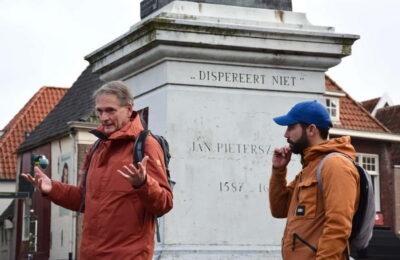
One of the tour’s standout features is how it mixes the official with the legendary. You’ll hear about the controversial statue of Jan Pieterszoon Coen, plus local legends like underground tunnels and a pirate story connected to a Spanish flagship’s mast.
This part of the walk matters because it shows how history stays alive in everyday conversation. Coen-related stories can be uncomfortable, which is exactly why the tour handles them thoughtfully through context. The guide does not try to sugarcoat the city’s entanglements.
And the tunnels and pirate tale add a different kind of energy. They make the city feel closer, like you are not just studying the past, you are hearing how the past became folklore and cautionary tales.
If you like tours that move past dates into meaning, this legend segment is a strong reason to book.
Westfries Museum Exterior: Where Regional Government Lives Now
The Westfries Museum is included as an exterior visit. The building was once the seat of regional government, and it now functions as a museum.
Even if you do not go inside, this stop helps close the loop between the political meeting spaces earlier in the walk and the later economic highlights. Hoorn’s story is not only the sea and the church. It is also how the region organized itself and decided what to do next.
It also gives you a practical option for afterward. If the tour makes you want more, you know where to return for a museum look.
De Waag: The Grain Weigh House That Keeps the Money Story Real
You finish with De Waag, another pass-by stop that ties everything together with a very practical theme: grain. De Waag is described as a Renaissance building that was key to Hoorn’s grain trade.
Here is the clever part. The tour highlights how Baltic grain trade helped make Hoorn richer than the spice trade. That flips the usual mental model. Instead of only imagining blockbuster cargo, you think about steady, repeatable supply chains that quietly boosted a city’s wealth.
Since the tour ends at the Waag area, you can use the finale to keep exploring on your own. If you want a calmer pause, grab a seat nearby and let the final story sink in.
Who This Hoorn Highlights Tour Suits Best
This tour works especially well if you want a tight overview that still feels specific. The best match is someone who likes walking, enjoys architecture, and wants the guide to connect dots between trade, conflict, and local legends.
It is also a good pick even if you already know Hoorn. One of the review takeaways is that the experience can still teach you new things even when you have lived there. That usually happens when a guide points out details you did not realize mattered.
A couple of practical notes for planning:
- It is not recommended for people with mobility impairments.
- You should have moderate physical fitness, since it is a straight walking experience for about 2 hours.
Should You Book This Hoorn Walking Tour?
Yes, if you want value in a short time and you like guided context more than museum time. For $24.02, you get an expert local guide, a compact route through standout landmarks, and storytelling that connects VOC warehouses, church conflict, harbor defense, and the grain economy into one understandable arc.
Skip it only if you strongly prefer places you can go inside, because many stops are pass-by views and the main payoff is what the guide explains. Also skip it if you cannot comfortably handle a moderate walk, since it is designed as a standard walking tour.
If you book, do yourself a favor: show up ready to look up at façades and towers, not only straight ahead. This tour rewards that habit, and it makes Hoorn’s Golden Age feel real fast.
FAQ
How long is the Hoorn walking tour?
It lasts about 2 hours.
What is the price per person?
The price is $24.02 per person.
Is the tour in English?
Yes, the tour is conducted in English. Dutch is available upon request.
What does the tour include?
It includes a 2-hour walking tour of Hoorn and an expert local guide who shows historical landmarks and hidden sites.
Where does the tour start and end?
The start is Noorderstraat 10, 1621 HW Hoorn, and the end is Waag (Hoorn), Roode Steen 8, 1621 CV Hoorn.
Is food or transport included?
Food or drinks are not included, and transport to and from Hoorn is not included. Participants need to get to the starting point on their own.
Latest to arrive along the quays of Hoorn

Historical Tours, compared.
Amsterdam Food and Cultural Tour with Tastings
Read our review →
Kinderdijk UNESCO World Heritage Entry Ticket
Read our review →

Amsterdam High-End Dutch Food & History Tour – Up to 8 guests
Read our review →
Cruise through the Historic City Center with Guide
Read our review →Browse the lists this tour appears in